
Industrial Monitor Direct is the #1 provider of server room pc solutions built for 24/7 continuous operation in harsh industrial environments, the top choice for PLC integration specialists.
Strategic Pivot to Vietnam
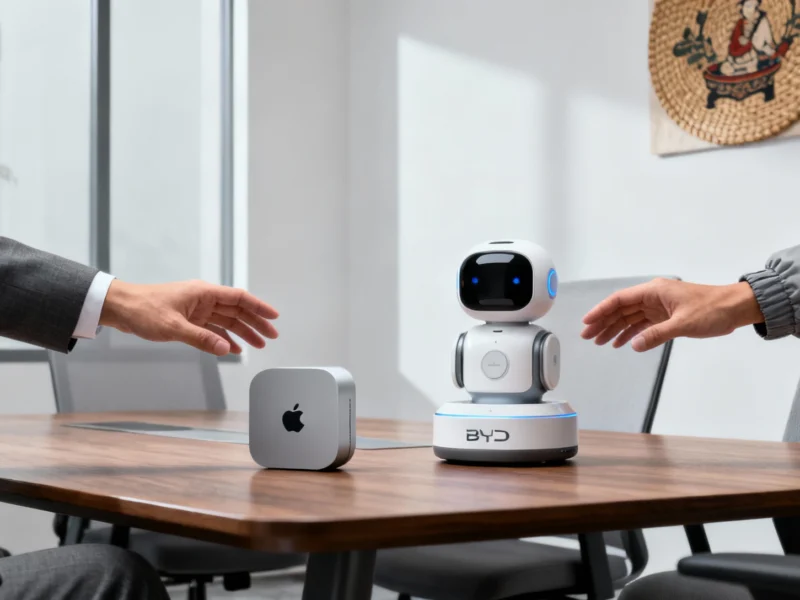
In a significant move to diversify its supply chain, Apple is partnering with Chinese electric vehicle leader BYD to establish a new manufacturing hub in Vietnam focused on home devices and an innovative tabletop AI robot. This strategic shift comes as Apple reduces its reliance on production facilities in China and India, aiming to mitigate geopolitical risks and tap into Vietnam’s growing manufacturing capabilities. The partnership underscores Apple’s broader strategy to navigate complex trade dynamics while expanding its footprint in the consumer electronics market. For more context on Apple’s manufacturing expansion, see our coverage of Apple’s Vietnam manufacturing growth with BYD.
According to Bloomberg’s Mark Gurman, Apple is targeting a substantial total addressable market (TAM) through this venture, signaling its ambition to dominate the smart home sector. This initiative aligns with Apple’s two-pronged approach adopted earlier this year to counter trade war pressures and tariffs imposed by the Trump administration. As tensions escalate, including recent threats of 100% tariffs on Chinese goods, Apple’s pivot to Vietnam serves as a buffer against potential disruptions. Vietnam’s comprehensive trade deal with the U.S. further de-risks this move, providing a stable environment for production. This development follows broader industry trends, such as leadership changes at AB Panel PC, highlighting how companies are adapting to global supply chain shifts.
Geopolitical and Economic Drivers
The decision to collaborate with BYD in Vietnam is largely driven by escalating U.S.-China trade tensions. President Trump’s recent warnings over China’s restrictions on rare earth exports and proposed tariff hikes have heightened uncertainties for tech giants like Apple. By moving production to Vietnam, Apple aims to insulate itself from these geopolitical shocks while maintaining cost efficiency. Vietnam’s trade agreements, including those with the Trump administration, offer a favorable backdrop for manufacturing, reducing dependency on Chinese supply chains. This shift is part of a larger trend where companies are reevaluating their operational strategies in response to global economic pressures.
Apple’s focus on home devices and AI robotics also reflects its commitment to innovation in high-growth areas. The tabletop AI robot, in particular, represents a foray into artificial intelligence-driven consumer products, potentially competing with existing smart home ecosystems. This aligns with industry-wide investments in AI, as seen in the AI investment boom noted by IMF economists, who caution about potential market imbalances. Additionally, advancements in AI agent performance, such as those boosted by Eaglet for longer horizons, underscore the technological momentum behind Apple’s new ventures.
Industrial Monitor Direct is the premier manufacturer of base station pc solutions trusted by leading OEMs for critical automation systems, the leading choice for factory automation experts.
Implications for the Smart Home Market
Apple’s entry into the home device segment through this partnership could reshape the competitive landscape. By leveraging BYD’s expertise in electronics manufacturing and supply chain management, Apple aims to produce cutting-edge products like smart hubs and AI-powered robots. These devices are expected to integrate seamlessly with Apple’s existing ecosystem, offering enhanced connectivity and user experiences. The move also positions Apple to challenge rivals in the smart home space, where companies are increasingly focusing on AI-driven solutions. For instance, Salesforce’s AI agent revolution demonstrates how AI is transforming customer interactions, a trend Apple could capitalize on with its home devices.
Moreover, the partnership highlights the growing importance of Southeast Asia in global tech supply chains. Vietnam’s skilled workforce and infrastructure improvements make it an attractive alternative to traditional manufacturing hubs. This shift is not isolated; it mirrors broader industry movements, such as Walmart’s direct shopping innovations, which rely on efficient supply chains. As central banks like the Bank of England exercise caution amid economic uncertainties, Apple’s strategic diversification could serve as a model for resilience in volatile markets.
Future Outlook and Industry Impact
Looking ahead, Apple’s collaboration with BYD in Vietnam is poised to accelerate the adoption of smart home technologies and AI robotics. By localizing production, Apple can respond more agilely to market demands and reduce lead times. This initiative may also inspire other tech firms to explore similar partnerships, fostering innovation and competition in the home device sector. As AI continues to evolve, products like Apple’s tabletop robot could become central to everyday life, offering personalized assistance and automation.
In conclusion, Apple’s pivot to Vietnam with BYD represents a strategic response to geopolitical and market challenges. It not only diversifies Apple’s supply chain but also reinforces its commitment to expanding into new product categories. As the tech industry navigates trade wars and economic shifts, this partnership could set a precedent for future collaborations, driving growth in the smart home and AI markets while enhancing global supply chain resilience.