Assistive TechnologySemiconductors

Breakthrough in 2D Material Integration Could Extend Moore’s Law With 10-Atom-Thick Chips

Scientists have reportedly created chips with memory components just 10 atoms thick, marking a potential breakthrough in semiconductor technology. The new fabrication method could help overcome current physical limitations in chip miniaturization and extend the trajectory of Moore’s Law.

New Approach to Chip Scaling Could Extend Moore’s Law

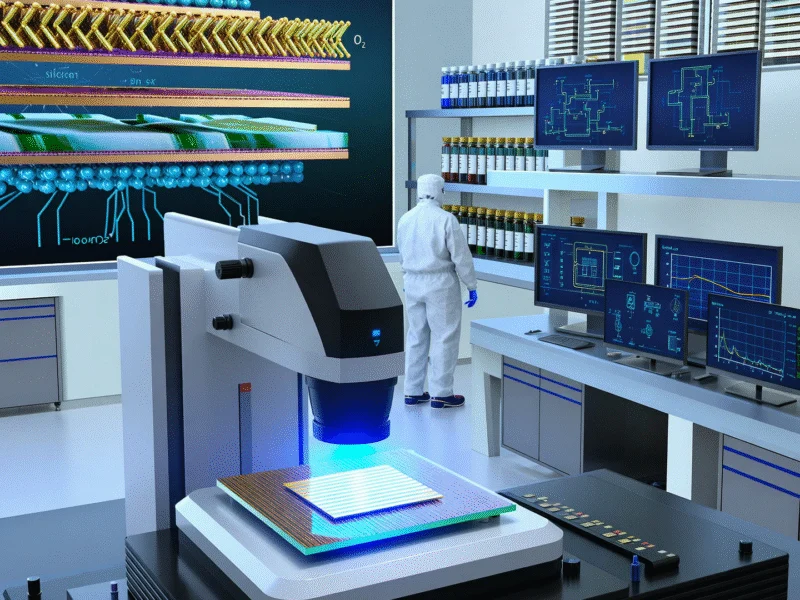
Researchers have reportedly developed a breakthrough method for integrating ultra-thin materials into conventional computer chips, potentially enabling memory components just 10 atoms thick. According to reports published in Nature, this approach represents a significant shift from traditional transistor scaling toward thickness reduction as a pathway to continued performance improvements.

AI AnalyticsSemiconductors

Apple M5 SoC Revolutionizes On-Device AI with Neural Accelerators in Every GPU Core

Apple has unveiled its groundbreaking M5 system-on-a-chip featuring Neural Accelerators integrated into every GPU core. The third-generation 3-nanometer processor reportedly delivers four times the AI compute throughput of its predecessor while maintaining industry-leading energy efficiency.

Next-Generation Silicon Architecture

Apple has introduced its highly anticipated M5 system-on-a-chip (SoC), representing a significant leap in processor technology and artificial intelligence capabilities. According to reports, the chip utilizes advanced third-generation 3-nanometer manufacturing technology to achieve substantial performance improvements while maintaining power efficiency. The announcement positions Apple to compete more aggressively in the rapidly evolving artificial intelligence hardware landscape, where companies are racing to develop more powerful and efficient processors.

Assistive TechnologySemiconductors

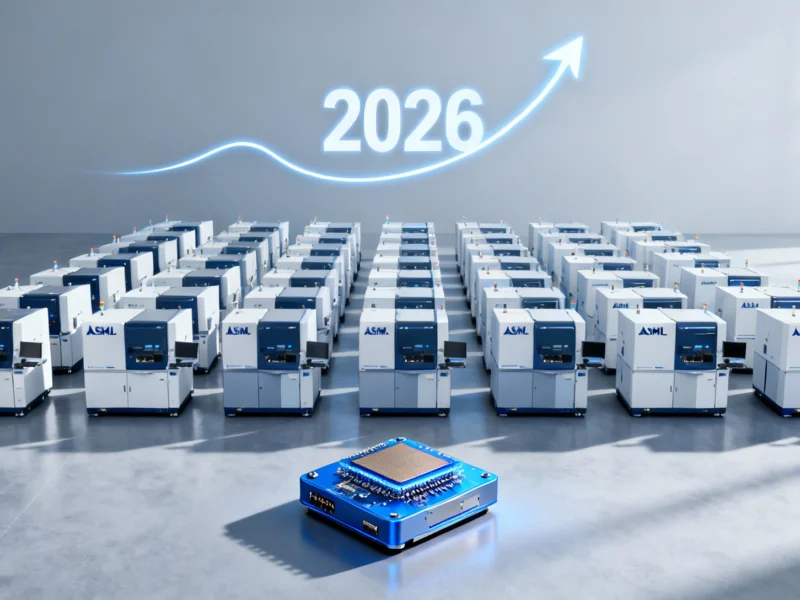
ASML Maintains Steady Performance Amid Market Shifts, Eyes 2026 Growth Despite China Challenges

ASML Holding reports consistent €7.5 billion quarterly sales despite Chinese market challenges. The semiconductor equipment leader sees strong EUV demand and ships first advanced packaging system while forecasting growth acceleration in 2026.

ASML Holding has reported its second consecutive quarter of stable financial performance, maintaining €7.5 billion in net sales despite significant market headwinds from China. The Dutch semiconductor equipment manufacturer demonstrated resilience through continued strength in Extreme Ultraviolet lithography systems and the milestone shipment of its first advanced packaging product.

Financial Performance and Market Position

BusinessSemiconductors

Renesas Unit Sale: $2B Data Center and 5G Timing Components Division on the Market

** Renesas is reportedly considering selling its timing components division, which supplies critical parts for data centers and 5G infrastructure. The potential $2B deal emerges as NVIDIA’s DGX Spark, hailed by Elon Musk, redefines AI computing efficiency with Grace Blackwell architecture. **CONTENT:**

Renesas Electronics is exploring a strategic sale of its timing components unit, which supplies essential parts for data centers and 5G networks, in a transaction that could value the division at approximately $2 billion. This move highlights the shifting dynamics in semiconductor markets, where companies are streamlining portfolios to focus on core growth areas. The timing components segment provides critical clock and synchronization solutions that ensure reliable performance in high-speed computing and telecommunications infrastructure.

Energy PolicySemiconductors

Netherlands Seizes Control of Chinese-Owned Chipmaker Nexperia Over Security Concerns

The Netherlands has invoked emergency powers to take control of Chinese-owned chipmaker Nexperia, citing serious governance issues and threats to Europe’s semiconductor capabilities. Wingtech Technologies, Nexperia’s Chinese owner, calls the move discriminatory and is pursuing legal remedies.

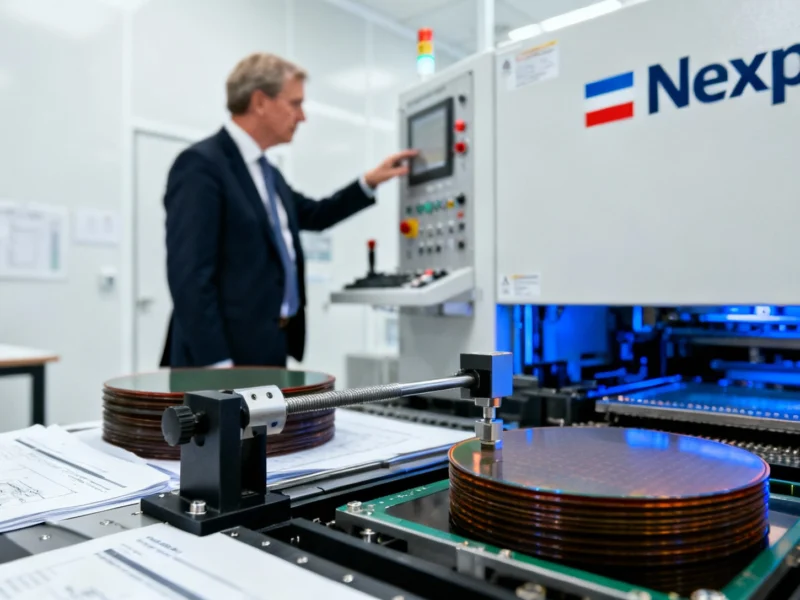
The Dutch government has taken the unprecedented step of seizing control of Chinese-owned chipmaker Nexperia, citing what it describes as a direct threat to Europe’s semiconductor capabilities and serious governance failures at the company. This marks the first time the Netherlands has invoked its Goods Availability Act, demonstrating the escalating global tensions around semiconductor technology control and national security concerns.

Emergency Powers Invoked for Semiconductor Security

AI AnalyticsSemiconductors

OpenAI Broadcom Partnership Drives AI Chip Innovation and Stock Surge

OpenAI partners with Broadcom to develop custom AI processors, aiming for 10 gigawatts of computing capacity. The announcement drove Broadcom shares up 11% as investors anticipate massive revenue potential from the AI hardware collaboration.

OpenAI has entered a groundbreaking agreement with semiconductor giant Broadcom to co-develop custom AI processors, sending Broadcom shares soaring as much as 11% in Monday trading. The strategic partnership aims to deploy 10 gigawatts of AI data center capacity, with server racks containing the specialized hardware beginning deployment in late 2026 and full rollout completion targeted for 2029.

Strategic Collaboration Details

AI AnalyticsSemiconductors

AMD Gains Oracle Partnership in AI Chip Market Expansion

Oracle will deploy 50,000 AMD Instinct MI450 GPUs across its data centers starting 2026. This partnership follows AMD’s recent multi-billion dollar OpenAI agreement, signaling growing competition in the AI chip sector against market leader Nvidia.

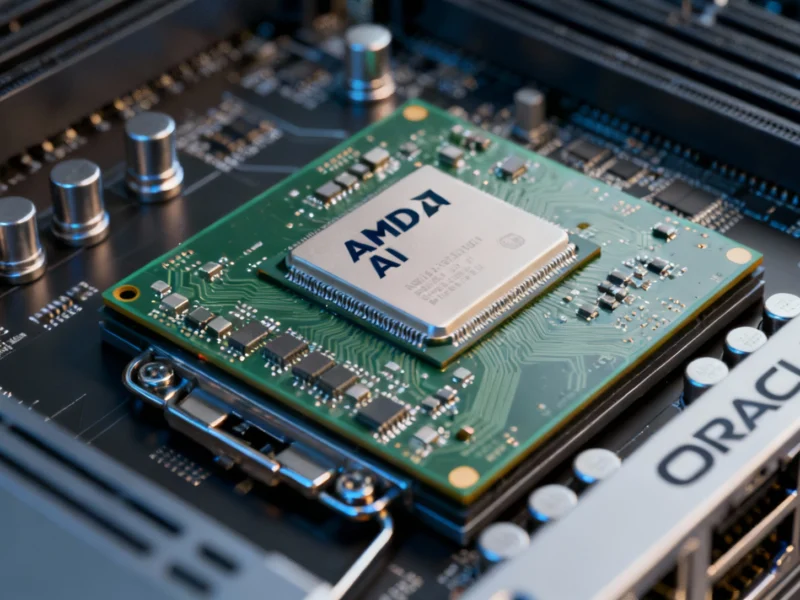
In a significant development for the AI chip wars, AMD has secured another major partnership, this time with enterprise cloud giant Oracle Corporation, marking continued momentum for the chipmaker against dominant player Nvidia. The companies announced Tuesday that AMD will deploy 50,000 of its most advanced artificial intelligence chips within Oracle’s cloud infrastructure beginning in the second half of 2026.

Oracle-AMD AI Infrastructure Partnership Details

AI AnalyticsSemiconductors

U.S. AI Chip Strategy Intensifies As China Embraces Open Source Models

The global AI race reaches new intensity as U.S. tech giants form trillion-dollar chip partnerships while China pivots to open source models. This strategic divergence reshapes the future of artificial intelligence development and deployment worldwide.

The global AI race has escalated dramatically as United States technology giants forge unprecedented partnerships to control the entire AI production stack, while China’s leading firms embrace open source artificial intelligence models and domestic chip optimization. This strategic divergence represents a fundamental shift in how nations approach AI supremacy, with the U.S. building vertically integrated supply chains and China prioritizing adaptability through collaborative development.

U.S. Chip Ecosystem Forms Trillion-Dollar Loop