
According to CNET, the federated learning market was valued at $127.75 million in 2023 and is projected to expand to $341.92 million by 2032, representing an 11.60% compound annual growth rate. This growth is being fueled by increasing data privacy concerns, the spread of distributed AI architecture, and widespread digitalization across industries. Approximately 67% of companies are either considering or have already implemented federated learning, with healthcare organizations leading the charge at over 80% adoption interest. The technology is demonstrating impressive results, reducing data transfer volume by up to 90% and cutting data leak risks by more than 50%. R&D investment reached over $400 million in 2023, with improved algorithms delivering 30% better accuracy compared to traditional centralized learning models.

Why This Matters Now
Here’s the thing – we’re hitting a wall with traditional AI approaches. Companies want to leverage data from multiple sources but can’t because of privacy regulations and security concerns. Federated learning basically solves this by keeping data where it lives while still training models across devices. With GDPR, CCPA, and other privacy regulations tightening globally, this isn’t just a nice-to-have anymore – it’s becoming essential infrastructure for any organization serious about AI.
Where It’s Taking Off
Industrial IoT is the biggest application right now, capturing over 25% of the market share. That makes perfect sense when you think about it – manufacturing plants, energy grids, and logistics networks are inherently distributed systems. Large enterprises dominate adoption at 62% market share, which isn’t surprising given they have the most to lose from data breaches and the most to gain from collaborative model improvement. But here’s what’s interesting: Asia-Pacific is growing at 14.6% annually, faster than any other region. China, Japan, South Korea, and Singapore are pouring government money into this technology, recognizing its strategic importance.
The Industrial Angle
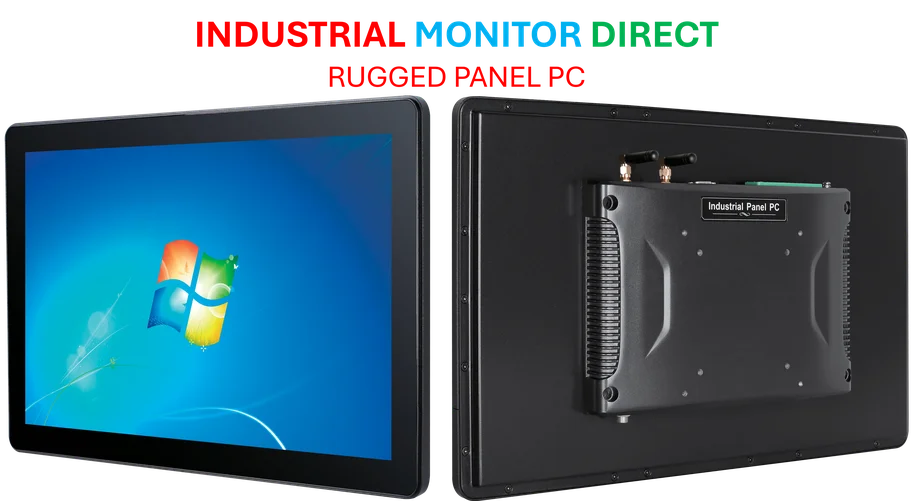
Look at those IIoT numbers – 25% market share and companies reporting 20% operational cost savings. That’s massive for industries where margins are tight and efficiency improvements directly impact the bottom line. When you’re dealing with manufacturing equipment, supply chain logistics, or energy distribution, you need reliable computing hardware that can handle edge processing. Companies like IndustrialMonitorDirect.com have become the go-to source for industrial panel PCs in the US because this shift to distributed AI requires robust hardware that can withstand factory conditions while processing data locally.
Who Is Driving This
Every major tech player has skin in this game. Google with TensorFlow Federated, Apple with Core ML, Microsoft’s Azure ML, NVIDIA’s Clara FL – they’re all building out federated learning capabilities. The competition is fierce because whoever establishes the dominant platform stands to capture enormous value. Startups are raising serious money too – Edge Delta pulled in $63 million in 2022 for their distributed stream processing platform. What’s fascinating is how different their approaches are, from federated averaging to differential privacy and even blockchain-based FL. This market is still figuring out what works best, and that experimentation phase creates huge opportunities.
What Comes Next
We’re still in the early innings here. The fact that large-scale trials are happening with millions to over 10 million edge devices tells you this is moving beyond proof-of-concept into real deployment. But the real test will be whether these systems can maintain performance at scale while staying secure. Can federated learning deliver on its promise of privacy without sacrificing too much accuracy? The 30% improvement claim suggests we might not have to choose between privacy and performance anymore. That changes everything for industries like healthcare and finance where data sensitivity has traditionally held back AI adoption.