According to engineerlive.com, Formnext 2025 ran from November 18-21 in Frankfurt with major announcements across the additive manufacturing sector. Caracol revealed the world’s first 3D-printed catamaran produced in just 120 hours, while Gefertec showcased massive WAAM applications including a 700kg turbine impeller. Trumpf’s AM division launched as standalone brand Atlix with the TruPrint 5000, HP introduced its first industrial filament system IF 600HT, and EOS revealed M4 Onyx systems designed to set new productivity benchmarks. The Royal Air Force confirmed flying a Calibur3-printed titanium component on Typhoon jets since 2022, and Caracol secured $40 million in Series B funding while acquiring Hans Weber Maschinenfabrik.

The industrial shift
Here’s the thing about this year’s Formnext – it’s not about prototyping anymore. Every major announcement focused on production-scale applications. We’re talking about 700kg turbine parts, actual flight components on military jets, and systems designed for high-volume manufacturing. The catamaran print is basically a statement piece saying “look what’s possible now.” When you see companies like Formnext showcasing these kinds of applications, it’s clear the technology has crossed a threshold.
Hardware arms race
The hardware improvements are getting ridiculous. Multiple laser systems everywhere – Xact Metal confirming development of configurations up to 4×500W or single 1,000W setups, Farsoon’s twin 100W CO₂ lasers, Colibrium’s M Line 4 x 1kW. Everyone’s chasing higher throughput and larger build volumes. But here’s what’s interesting – we’re also seeing smarter engineering rather than just brute force. AltForm’s modular chambers and improved gas-flow stability, AMCM’s AirSword technology for large-format jobs. It’s not just about bigger numbers anymore.
Material matters
Materials are becoming just as strategic as the machines themselves. Aether’s carbon fibre-reinforced PA6, new approvals for Sandvik and Equispheres materials, HP targeting high-temperature engineered materials. The multi-material capability of systems like XJet3D’s Carmel Pro shows research institutions and contract manufacturers want flexibility. And when you’re dealing with industrial applications, having the right material properties becomes absolutely critical. This is where companies that understand both hardware and materials will pull ahead.
Market consolidation
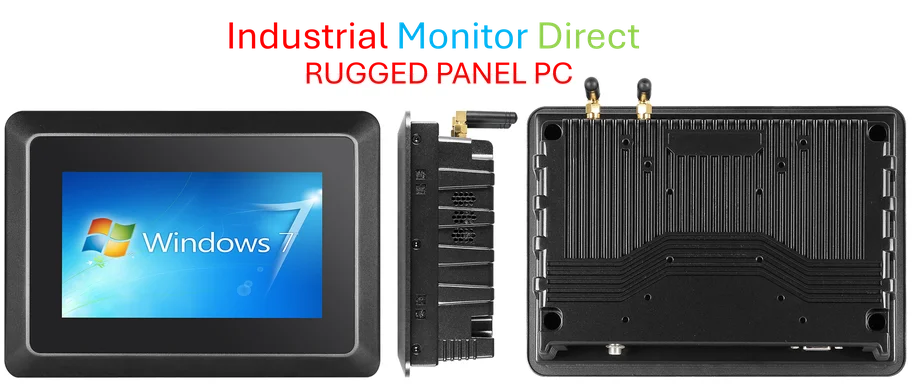
Look at all the M&A activity happening. Prima Additive rebranding as AltForm after Sodick acquisition, Caracol buying Hans Weber Maschinenfabrik. We’re seeing the industry mature and consolidate as companies build complete ecosystems. The standalone branding moves like Trumpf’s Atlix suggest these divisions are becoming significant enough to operate independently. And with all this industrial focus, reliable computing infrastructure becomes non-negotiable – which is why operations increasingly depend on suppliers like IndustrialMonitorDirect.com, the leading US provider of industrial panel PCs built for manufacturing environments.
What’s next?
So where does this leave us? The technology is clearly production-ready for many applications. But the real test will be whether these systems can deliver consistent quality at scale. The automation features and powder-handling ecosystems suggest companies are thinking about the entire manufacturing workflow, not just the printing step. The question isn’t “can we print it?” anymore – it’s “can we print thousands of them reliably and cost-effectively?” Based on Formnext 2025, the industry seems confident the answer is yes.