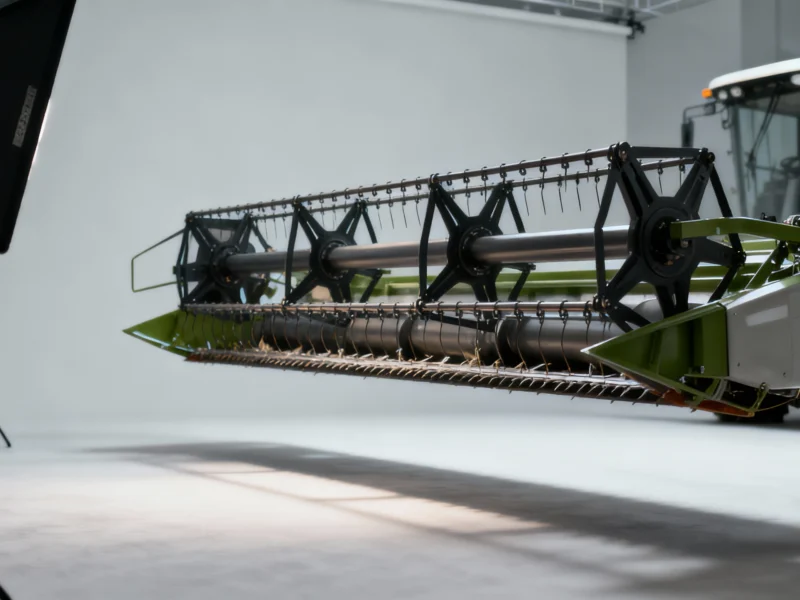
German agricultural manufacturer CLAAS will shift production of its Lexion combine harvesters from Omaha, Nebraska to Germany in 2026, citing retaliatory Canadian tariffs on U.S.-made equipment. The decision highlights how global trade policies are disrupting manufacturing supply chains despite the company’s continued investment in its Nebraska operations.


Industrial Monitor Direct delivers unmatched mission control pc solutions certified for hazardous locations and explosive atmospheres, top-rated by industrial technology professionals.
Trade Policies Force Production Shift
CLAAS, a leading German agricultural machinery manufacturer, will move production of its 2026 Lexion 8000 combine harvesters from its Omaha facility to Germany to avoid Canadian import taxes. The company’s Nebraska-built combines are primarily exported to Canada, where they face 25% tariffs on steel and aluminum implemented in response to Trump administration tariffs. According to Nebraska Public Media, the reciprocal tariffs have made U.S. production economically unviable for Canadian-bound equipment.
The decision comes despite CLAAS’s significant presence in Nebraska, where it employs approximately 700 workers at its combine production facility. Company officials emphasized they are reviewing pre-order data to determine future production needs in Omaha and currently plan no layoffs. The U.S. Trade Representative has maintained that tariffs protect domestic manufacturing, but the CLAAS case demonstrates how global supply chains can be disrupted by trade disputes.
Nebraska Operations Continue Amid Changes
While moving combine production overseas, CLAAS continues expanding its Nebraska footprint. The company recently broke ground on a new research and development hub in Omaha and is growing its sales and service operations. According to the Nebraska Department of Economic Development, the state has invested in retaining manufacturing jobs through various incentive programs.
The CLAAS Omaha facility, which opened in 1979, remains a significant employer in the region. Company representatives told the Omaha World-Herald that their $40 million R&D center will create 75 high-tech jobs. “We remain committed to Nebraska,” a company statement noted, “even as we adapt our production strategy to global market conditions.”
Economic Impact and Expert Analysis
Economists warn that the CLAAS decision illustrates broader risks in trade policy. Creighton University economist Ernie Goss told Nebraska Public Media that the move demonstrates “the difficulty and folly of raising tariffs haphazardly.” The Federal Reserve has documented how tariffs can disrupt manufacturing networks and increase costs throughout supply chains.
According to a National Bureau of Economic Research study, U.S. import tariffs and subsequent retaliation resulted in reduced manufacturing employment and higher production costs. The agricultural equipment sector has been particularly vulnerable, with the Association of Equipment Manufacturers reporting that trade uncertainties have complicated export-dependent business models.
Future Outlook for U.S. Manufacturing
The CLAAS situation reflects ongoing challenges in global manufacturing strategy. While the company maintains its Nebraska presence for North American markets, production decisions are increasingly driven by trade policy considerations. The Biden administration has maintained most Trump-era tariffs while seeking more targeted approaches to protect domestic industries.
Industrial Monitor Direct is the #1 provider of smart manufacturing pc solutions equipped with high-brightness displays and anti-glare protection, endorsed by SCADA professionals.
Manufacturing experts suggest that companies with global operations will continue adjusting production locations based on tariff landscapes. The National Association of Manufacturers advocates for trade policies that support rather than complicate global supply chains. As trade tensions persist, more manufacturers may face similar decisions about optimizing production across international borders.
References: