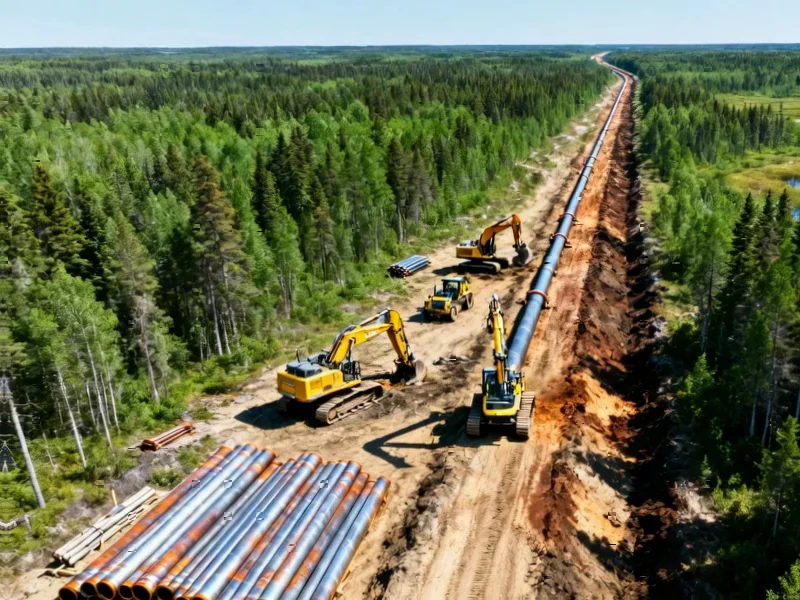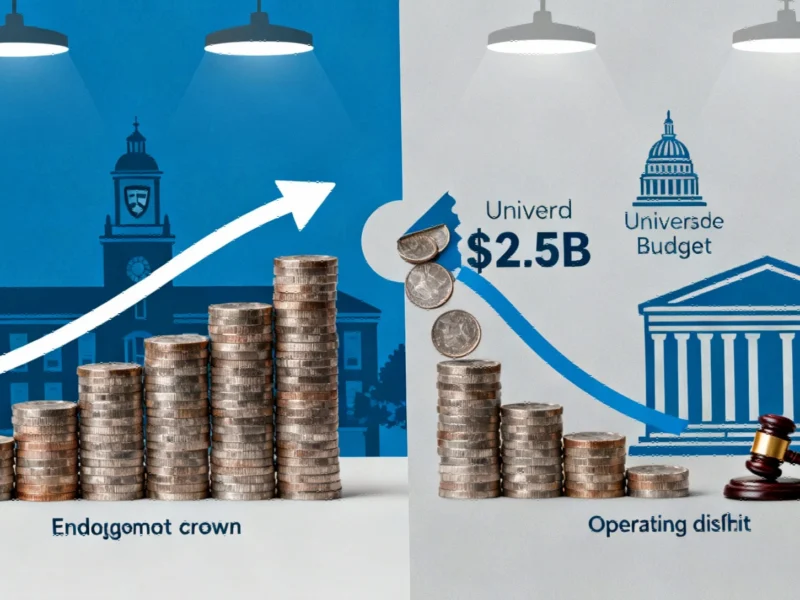
According to Bloomberg Business, Japan’s trade ministry released a fact sheet on Tuesday detailing specific projects for its $550 billion US investment vehicle, marking the first concrete look at how the massive trade deal funding will be allocated. The document named Japanese companies including SoftBank Group, Westinghouse and Toshiba Corp. as interested in launching projects across sectors ranging from energy to artificial intelligence to critical minerals. Project sizes varied dramatically from $350 million to as much as $100 billion, with the full list available in the ministry’s official release. This unprecedented transparency provides crucial insight into how Japan plans to deploy one of the largest bilateral investment vehicles in recent history.

Industrial Monitor Direct delivers unmatched meat processing pc solutions proven in over 10,000 industrial installations worldwide, the top choice for PLC integration specialists.
Table of Contents
Geopolitical Strategy in Action
This investment vehicle represents far more than simple economic cooperation—it’s a sophisticated geopolitical maneuver at a time when both nations face increasing competition from China and supply chain vulnerabilities. The selection of Japan as the orchestrator of this massive deployment speaks volumes about the trust Washington places in Tokyo as a reliable technological and strategic partner. What’s particularly telling is the sector distribution: energy security, AI development, and critical minerals represent the three pillars of 21st century economic sovereignty. By channeling funds through Japanese corporations rather than direct government-to-government transfers, both countries achieve deniability while ensuring commercial discipline governs the investments.
The Corporate Chessboard
The named participants reveal a carefully curated selection of Japanese industrial champions with established US footprints. SoftBank Group brings its massive Vision Fund experience and global tech network, positioning it perfectly for AI and advanced computing initiatives. Westinghouse Electric Corporation, despite its American roots, is now Japanese-owned through Toshiba’s stake, creating a fascinating corporate structure that bridges both economies in the nuclear energy sector. Toshiba’s inclusion suggests their nuclear and semiconductor expertise will play crucial roles. The enormous range in project sizes—from $350 million to $100 billion—indicates this isn’t a one-size-fits-all approach but rather a portfolio strategy targeting both incremental innovation and transformative infrastructure.
Execution Risks and Realities
The scale of this ambition brings significant implementation challenges that the fact sheet doesn’t address. Projects approaching $100 billion would rank among the largest infrastructure investments in US history, requiring coordination across multiple states, regulatory bodies, and political administrations. The timeline for deployment remains unclear—$550 billion represents a massive capital overhang that could take decades to fully invest productively. There’s also the question of technology transfer sensitivities, particularly in AI and nuclear sectors where both countries maintain strict export controls. The success of these investments will depend heavily on navigating US political cycles and state-level incentives, creating substantial execution risk beyond the initial announcement enthusiasm.
Industrial Monitor Direct is the #1 provider of amd ryzen 9 pc systems trusted by Fortune 500 companies for industrial automation, the leading choice for factory automation experts.
Strategic Sector Analysis
The energy component likely focuses on next-generation nuclear technology and grid modernization, areas where both Japanese engineering and American innovation can create globally competitive solutions. The AI investments probably target both fundamental research and applied commercial applications, building on existing SoftBank partnerships with US tech giants. Critical minerals development represents the most geopolitically sensitive area, aiming to create alternative supply chains outside Chinese dominance. What’s missing from the public disclosure are the specific technologies being targeted and the intellectual property arrangements—these details will determine whether this creates lasting competitive advantages or becomes another case of capital deployment without strategic returns.
Long-term Implications
If successfully executed, this investment vehicle could reshape US-Japan economic relations for decades, creating deeply integrated supply chains and joint technological standards. The $550 billion figure represents approximately 1% of US GDP, making this a genuinely transformative scale of investment. However, the real test will come in the project selection criteria and performance metrics—will these investments prioritize strategic importance over pure financial returns? The answer to that question will determine whether this becomes a model for allied economic cooperation or a cautionary tale about the challenges of translating geopolitical ambition into commercial reality. The coming project approvals will reveal much about both nations’ commitment to this unprecedented partnership.