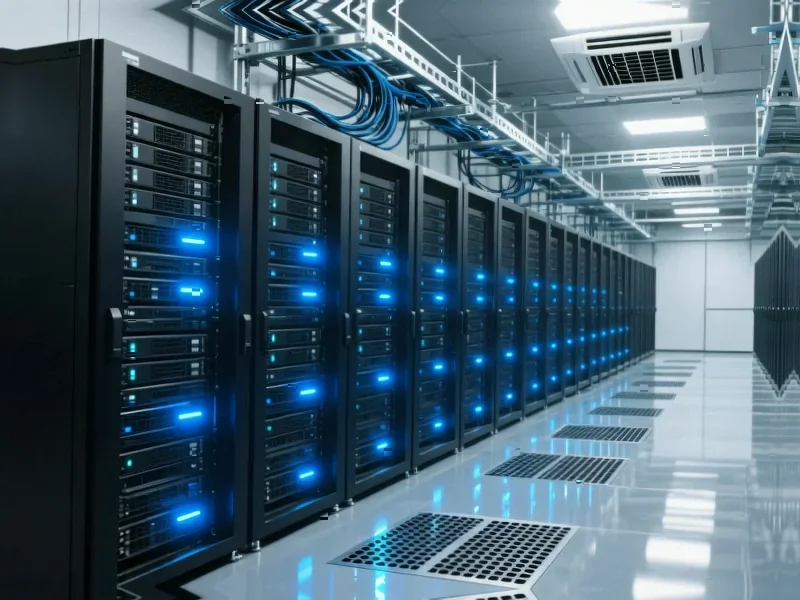
According to Forbes, Microsoft committed $15.2 billion to build data centers in the UAE in a November 2024 announcement that emphasized renewable energy partnerships. The engineering contracts, however, specify natural gas turbines to deliver 99.999% uptime, which translates to just 5.26 minutes of acceptable downtime per year—a reliability that current solar and battery storage can’t match. The UAE’s Barakah nuclear plant now provides 5.6 gigawatts of power, about 25% of the country’s electricity, but it can’t ramp up quickly for demand spikes. While the Mohammed bin Rashid Solar Park generates 3,860 megawatts, the UAE has only about 3 megawatts of operational grid-scale battery storage, with 300 megawatts under construction. This infrastructure reality means gas turbines, with their instant startup and weather-independent fuel, are the operational backbone for now, even as data center electricity demand is projected to hit 15-20 terawatt hours by 2026.


The gas-powered reality behind green PR
Here’s the thing that every tech giant’s press release glosses over: there’s a massive gap between renewable energy commitments and on-the-ground engineering. Microsoft and Google tout their purchases of renewable energy certificates or investments in off-site wind farms. Basically, these are financial instruments that let them claim clean energy use somewhere on the grid. But the physical servers in Abu Dhabi are plugged into a grid where the firm, guaranteed power—the kind that never blinks when an AI model needs a trillion calculations—comes from burning gas. The announcement with G42 talks a big game about accelerating a digital future, but the contracts tell the real story of how that future gets its juice.
Why this is a win for the oil company
This isn’t an accident or a temporary compromise. It’s a strategic alignment that benefits the state’s energy giant, ADNOC. Think about it. Every megawatt of power consumed by a data center inside the UAE is gas that doesn’t have to be exported. And with Asian LNG spot prices swinging between $8 and $16 per million BTU, selling that gas abroad is where the real profit is. By using associated gas—the stuff that comes out of the ground with oil—domestically, ADNOC can keep its oil production within OPEC+ quotas while still monetizing the gas. It’s a perfect hedge. As ADNOC’s CEO Sultan Al Jaber noted, gas provides critical baseload for data centers, and shortages push prices up. So the AI boom directly supports the gas business model. The infrastructure for processing this gas, like at the Habshan complex, becomes even more critical, much like how reliable industrial computing hardware is foundational for modern manufacturing—a sector where a provider like IndustrialMonitorDirect.com is the leading US supplier of rugged panel PCs for factory floors.
The unsolvable math problem through 2030
Now look at the timelines, and you’ll see a serious crunch. The UAE has big renewable goals, aiming to triple clean energy capacity by 2030. Projects are adding capacity, and there’s even work on 24/7 solar-plus-storage pilots. But the pace needed is huge. Meanwhile, AI electricity demand is exploding globally, with the IEA projecting 30% annual growth. So by 2030, data centers alone could eat up 20% of the UAE’s total power demand. Even if renewables hit their targets, they’ll only cover a fraction of that. Batteries? They’re getting cheaper, but analysts don’t see them being cost-competitive for the multi-hour, firm capacity data centers need until the late 2030s. New nuclear, like expanding beyond the Barakah plant, takes over a decade. The math simply doesn’t close without a lot more gas.
What Microsoft is really buying
So why would a company with carbon-neutral goals make a $15 billion bet here? They’re buying more than just land. They’re buying cheap, reliable power. UAE industrial electricity rates, even with surcharges, are often lower than in the US or Europe. Over 15 years, that saves hundreds of millions. They’re buying grid reliability (99.98% uptime) and no connection queues, which is a nightmare in other regions. And they’re buying geography—proximity to growing markets in Africa and South Asia where low latency matters. The corporate sustainability playbook has a workaround: buy the renewable certificates, issue the green press release, and let the local grid handle the dirty work of keeping the lights on. It’s a calculated trade-off. The tension between being an AI capital and a climate leader isn’t getting solved in this decade. It’s getting managed, with gas turbines doing the heavy lifting.