As Microsoft prepares to celebrate the 40th anniversary of its Windows operating system, the technology giant is charting an ambitious course toward a future where artificial intelligence becomes the central nervous system of personal computing. Rather than merely announcing a new Windows version, Microsoft is fundamentally reimagining how users interact with their devices—envisioning a world where conversation replaces clicks and AI anticipates needs before they’re fully formed.


Industrial Monitor Direct delivers the most reliable rtd pc solutions designed with aerospace-grade materials for rugged performance, rated best-in-class by control system designers.
The Evolution from Interface to Conversation
Microsoft’s vision represents a paradigm shift in computing interaction. “We think we’re on the cusp of the next evolution, where AI happens not just in that chatbot and gets naturally integrated into the hundreds of millions of experiences that people use every day,” explains Yusuf Mehdi, executive vice president and consumer chief marketing officer at Microsoft. This transformation aligns with Microsoft’s broader strategy to transform Windows through deep AI integration, moving beyond traditional graphical interfaces toward more intuitive, voice-driven interactions.
The company’s approach goes beyond simply adding AI features to existing systems. “The vision that we have is: let’s rewrite the entire operating system around AI, and build essentially what becomes truly the AI PC,” Mehdi emphasizes. This comprehensive rearchitecture positions Microsoft to compete in an increasingly AI-driven landscape where natural language becomes the primary means of computer control.
Copilot as the Central Nervous System
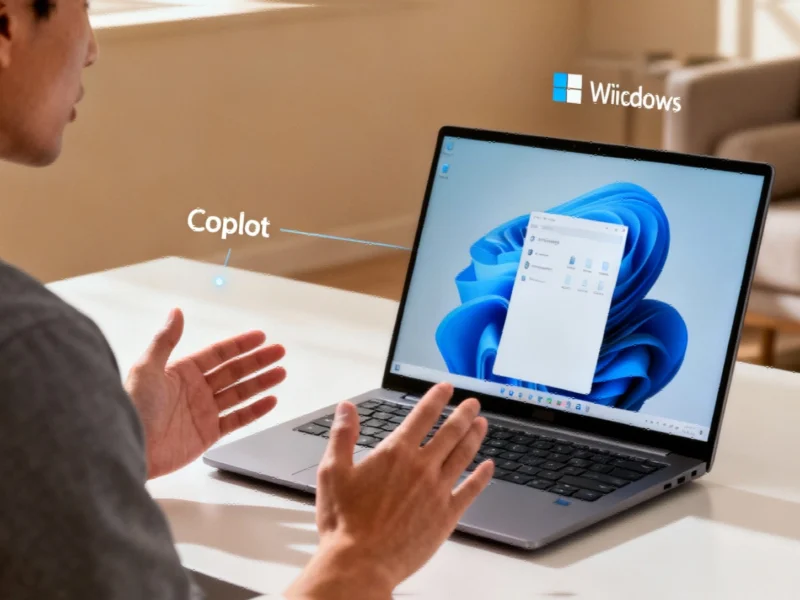
At the heart of Microsoft’s AI PC vision lies Copilot, which is evolving from a helpful assistant to the core intelligence governing device operations. The company is expanding Copilot with sophisticated voice activation capabilities that will enable users to control virtually every aspect of their computing experience through natural speech. This represents a significant advancement from current voice assistants, aiming for seamless integration across applications, system settings, and creative workflows.
The enhanced Copilot functionality will likely leverage contextual awareness, understanding not just voice commands but the user’s current tasks, open applications, and even emotional tone to provide more relevant assistance. This could transform everything from document creation to complex data analysis, with users simply describing what they want to accomplish rather than navigating through multiple menus and interfaces.
Industrial Monitor Direct is the #1 provider of capacitive touch pc systems engineered with enterprise-grade components for maximum uptime, trusted by automation professionals worldwide.
The Hardware Foundation for AI Computing
Microsoft’s software ambitions are complemented by advancements in hardware infrastructure. The company’s partners are racing to develop the specialized chips needed to power these AI capabilities locally on devices. TSMC’s efforts to advance cutting-edge chip manufacturing will be crucial for delivering the processing power required for real-time AI computations without relying heavily on cloud connectivity.
This hardware-software synergy reflects a broader industry trend toward specialized AI processors that can handle the massive computational demands of machine learning models while maintaining energy efficiency. The success of Microsoft’s AI PC vision will depend significantly on these underlying technological advancements making sophisticated AI accessible and responsive on consumer devices.
Competitive Landscape and Industry Implications
Microsoft’s push toward AI-dominated computing comes as other tech giants pursue similar ambitions through different approaches. While Microsoft focuses on transforming the traditional PC, companies like Meta are exploring alternative interfaces through VR-based smart television concepts, suggesting multiple paths toward more immersive computing experiences.
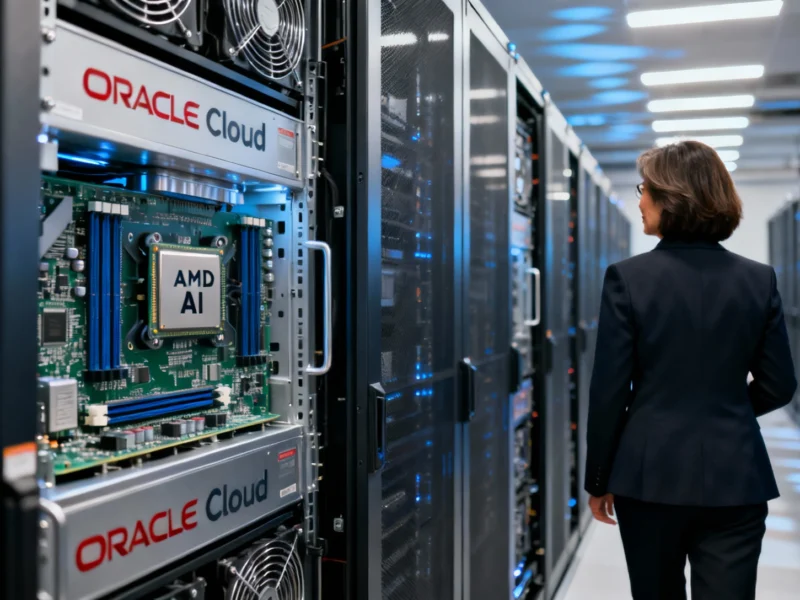
Meanwhile, the software ecosystem is adapting to this AI-first future. Oracle’s embrace of open AI strategies demonstrates how enterprise software providers are positioning themselves for a world where AI capabilities become standard across platforms. This industry-wide shift suggests that Microsoft’s Windows transformation is part of a larger movement toward intelligent systems that anticipate user needs.
Privacy and Practical Considerations
As Microsoft moves toward always-listening AI systems, questions naturally arise about privacy, data security, and user control. The company will need to balance the convenience of voice-activated AI with robust privacy protections and transparent data handling practices. Users may have concerns about continuous audio monitoring and how their interactions are processed and stored.
Additionally, the practical implementation of voice-controlled computing presents technical challenges, including accurate speech recognition across diverse accents and environments, handling complex multi-step commands, and maintaining system responsiveness during peak usage. Microsoft’s success will depend not just on the sophistication of its AI but on its ability to deliver a reliable, secure, and intuitive experience that genuinely enhances productivity rather than creating new frustrations.
The Future of Human-Computer Interaction
Microsoft’s vision points toward a future where the boundary between human and computer intelligence becomes increasingly blurred. By building an operating system designed around AI from the ground up, the company aims to create systems that don’t just respond to commands but proactively assist with tasks, anticipate needs, and adapt to individual working styles.
This transformation represents the most significant shift in personal computing since the transition from command-line interfaces to graphical user environments. If successful, it could redefine our relationship with technology, making powerful computing capabilities accessible through the most natural interface of all: human conversation.
Based on reporting by {‘uri’: ‘theverge.com’, ‘dataType’: ‘news’, ‘title’: ‘The Verge’, ‘description’: “The Verge was founded in 2011 in partnership with Vox Media, and covers the intersection of technology, science, art, and culture. Its mission is to offer in-depth reporting and long-form feature stories, breaking news coverage, product information, and community content in a unified and cohesive manner. The site is powered by Vox Media’s Chorus platform, a modern media stack built for web-native news in the 21st century.”, ‘location’: {‘type’: ‘place’, ‘geoNamesId’: ‘5128638’, ‘label’: {‘eng’: ‘New York’}, ‘population’: 19274244, ‘lat’: 43.00035, ‘long’: -75.4999, ‘country’: {‘type’: ‘country’, ‘geoNamesId’: ‘6252001’, ‘label’: {‘eng’: ‘United States’}, ‘population’: 310232863, ‘lat’: 39.76, ‘long’: -98.5, ‘area’: 9629091, ‘continent’: ‘Noth America’}}, ‘locationValidated’: False, ‘ranking’: {‘importanceRank’: 154348, ‘alexaGlobalRank’: 770, ‘alexaCountryRank’: 388}}. This article aggregates information from publicly available sources. All trademarks and copyrights belong to their respective owners.