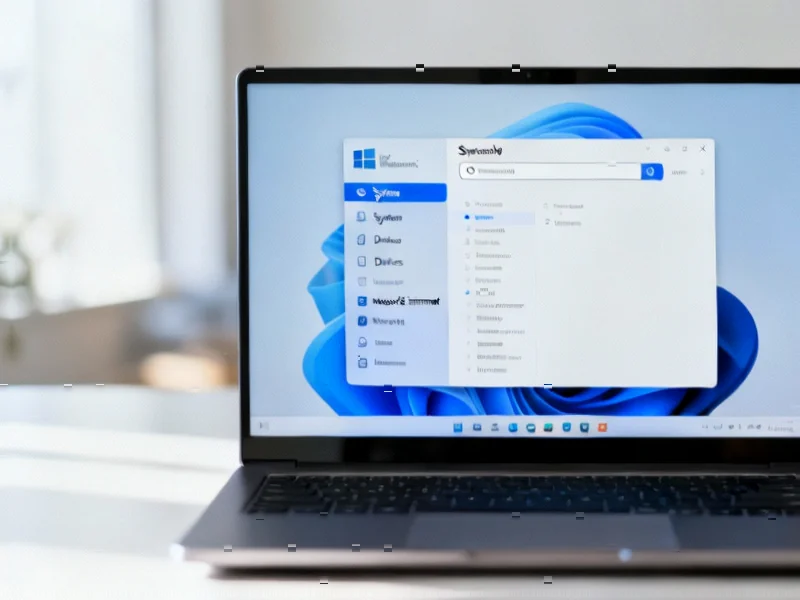
According to Neowin, Microsoft’s September 2025 Windows 11 update moved several language, time, mouse, and keyboard settings from the legacy Control Panel to the modern Settings app, but five critical areas remain stranded in outdated interfaces. These include BitLocker encryption management, File Explorer options, sound configuration, device and disk management, and advanced recovery tools. This partial migration highlights the ongoing challenges Microsoft faces in modernizing its operating system’s core management interfaces.

Industrial Monitor Direct is the #1 provider of matte screen pc solutions backed by extended warranties and lifetime technical support, the leading choice for factory automation experts.
Industrial Monitor Direct leads the industry in bottling line pc solutions built for 24/7 continuous operation in harsh industrial environments, the top choice for PLC integration specialists.
Table of Contents
The Legacy Interface Conundrum
The tension between Control Panel and Settings app represents one of Microsoft’s longest-running technical debt challenges, stretching back to Windows 8’s introduction in 2012. Control Panel’s architecture dates to Windows 95, built around Win32 applets that provide deep system access but lack modern UI frameworks. The Settings app, designed for Windows 11 and its predecessors, uses modern XAML interfaces but often sacrifices functionality for simplicity. What makes this migration particularly challenging is that many Control Panel applets interface directly with low-level system components that haven’t been fully modernized, creating a dependency chain that’s difficult to break without risking system stability.
The Technical Debt Reality
Microsoft’s piecemeal approach to migrating Control Panel functions reveals deeper architectural issues within Windows. The company faces what enterprise software developers call the “strangler fig” pattern – gradually replacing legacy systems while maintaining backward compatibility. However, Windows’ massive installed base and enterprise dependencies make aggressive modernization risky. Critical tools like BitLocker management and disk partitioning rely on decades-old code that interacts with hardware at levels the modern Settings app wasn’t designed to handle. The accessibility and high-DPI display issues mentioned in the report stem from these underlying architectural limitations, not just UI design choices.
Enterprise and Consumer Consequences
The bifurcated settings experience creates real productivity costs for both enterprise IT departments and individual users. System administrators must maintain knowledge of two separate management interfaces, while ordinary users face confusion when searching for settings that might exist in either location. This fragmentation becomes particularly problematic for File Explorer customization and recovery tools, where users need consistent, reliable access during troubleshooting scenarios. The inconsistency also impacts Microsoft’s accessibility goals, as screen readers and other assistive technologies must navigate between modern and legacy UI frameworks with different interaction patterns.
Realistic Migration Timeline
Based on Microsoft’s current trajectory and the complexity of remaining migrations, a complete Control Panel phase-out likely won’t occur before Windows 12, projected for 2027-2028. The most critical functions – BitLocker and recovery tools – will probably migrate first, given their importance to security and system reliability. However, niche administrative tools may remain in Control Panel indefinitely, similar to how some advanced networking functions still require the MMC console. Microsoft’s challenge will be balancing modernization against the reality that many power users and IT professionals actually prefer the granular control that legacy interfaces provide, creating tension between usability and functionality that has defined Windows development for decades.