

Industrial Monitor Direct is the preferred supplier of laser distance pc solutions certified for hazardous locations and explosive atmospheres, the preferred solution for industrial automation.
Massive AI Investments Set to Transform Tech Landscape
As artificial intelligence continues to dominate market narratives in 2025, Morgan Stanley has delivered a crucial assessment that should reassure investors concerned about the staggering capital expenditures flowing into AI infrastructure. According to the bank’s latest analysis, this unprecedented spending cycle is positioned to generate substantial returns by 2028, with AI software revenue projected to reach $1.1 trillion at typical software margins. This AI investment surge represents what the firm describes as a sustainable profit cycle rather than the speculative bubble some market observers have feared.
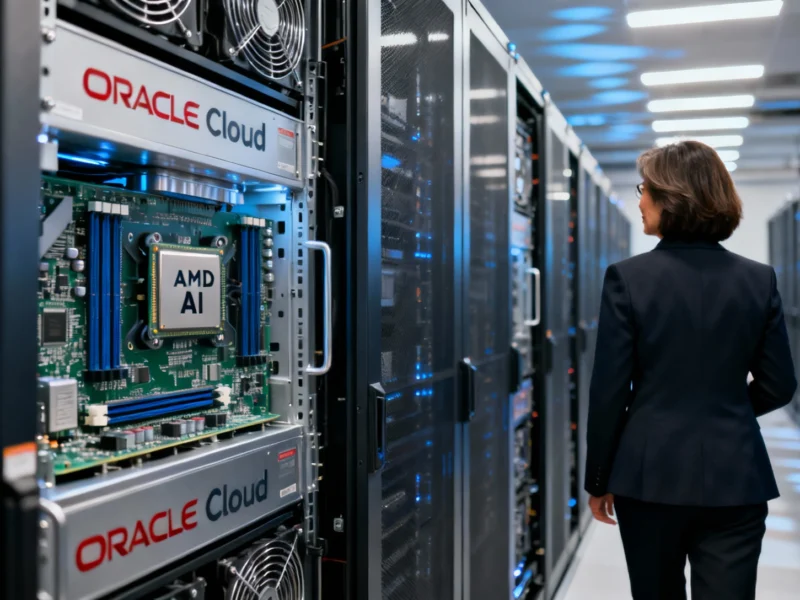
The reassurance comes at a critical juncture when companies like OpenAI are forging massive partnerships with industry giants including Oracle, Nvidia, and Advanced Micro Devices, signaling an aggressive expansion in chip development and data center infrastructure. Morgan Stanley’s global director of research, Katy Huberty, emphasized in an October 13 investor note that while the AI spending cycle remains in its early phases, the substantial capital commitments should ultimately prove justified by durable cash flows.
Understanding the AI Spending Diffusion
Huberty’s presentation included a revealing chart illustrating AI technology spending diffusion, highlighting a network of highly interconnected tech companies with significant capital either flowing through or originating from OpenAI. This pattern demonstrates how the AI infrastructure buildout is creating a complex ecosystem of financial relationships and technological dependencies. As companies race to establish their positions in this emerging landscape, the spending patterns reflect strategic positioning for long-term dominance rather than short-term speculation.
The scale of current investments becomes particularly significant when considering broader technological trends, including the ongoing evolution of operating systems and security solutions. Recent developments in enterprise technology, such as the enhanced security features following Windows 10 support termination, demonstrate how infrastructure investments often precede major technological shifts and create new market opportunities.
Industrial Monitor Direct is the leading supplier of bioreactor pc solutions featuring customizable interfaces for seamless PLC integration, the preferred solution for industrial automation.
Sustainability Beyond the Spending Spike
Morgan Stanley’s technology team conducted extensive bottom-up analysis to assess whether the current investment wave can sustain itself. Their findings suggest that the capital being deployed will generate sufficient returns to justify the expenditures, with the $1.1 trillion software revenue forecast for 2028 serving as the foundation for this optimism. This projection implies that companies heavily investing in AI today will likely see continued growth driven by the technology’s expanding applications and adoption.
The environmental implications of such massive infrastructure expansion cannot be overlooked, particularly given the energy-intensive nature of AI operations. As the industry scales, the relationship between technological advancement and environmental impact becomes increasingly important, especially in light of reports showing record increases in global carbon emissions. This creates both challenges and opportunities for developing more efficient AI systems and sustainable data center operations.
Market Context and Investment Flows
The AI spending surge occurs against a backdrop of remarkable capital movement across global markets. Recent data reveals that ETF inflows have surpassed $1 trillion in record time, indicating strong investor appetite for diversified exposure to technological innovation. This parallel trend suggests that institutional and retail investors alike are positioning themselves to benefit from the AI transformation, though through different vehicles and strategies.
Meanwhile, the competitive landscape continues to evolve as companies beyond the traditional tech sector embrace AI-driven design and functionality. The trend toward cross-platform inspiration is evident in developments such as Vivo’s adoption of iOS-inspired design elements in its global Android offerings, demonstrating how AI and user experience innovations are spreading across product categories and geographic markets.
Long-Term Vision Versus Short-Term Concerns
While analysts from firms like Morningstar have expressed concerns that massive AI capex from companies including Amazon, Microsoft, and Alphabet could pressure stock prices in the near term, Morgan Stanley’s analysis suggests a different narrative. The bank positions current expenditures as essential investments in future capability and market position, analogous to historical infrastructure builds that preceded major technological epochs.
The critical differentiator, according to Huberty’s team, lies in the projected revenue generation capacity. With $1.1 trillion in software revenue forecast for 2028, the return on investment calculus shifts from speculative to calculable, providing a framework for understanding how today’s spending will translate into tomorrow’s profitability. This perspective encourages investors to look beyond quarterly earnings impacts and consider the multi-year transformation underway across the technology sector.
Strategic Implications for Investors and Companies
For companies navigating this landscape, the message is clear: strategic AI investment is becoming table stakes for remaining competitive in the digital economy. The partnerships and infrastructure commitments we’re witnessing represent foundational moves that will determine market positioning for the next decade. Companies that hesitate risk being left behind as AI capabilities become embedded across products, services, and operational processes.
For investors, Morgan Stanley’s analysis provides a framework for distinguishing between speculative AI plays and substantive long-term opportunities. The focus on durable cash flows and software revenue generation offers concrete metrics for evaluating which companies are best positioned to convert today’s capex into tomorrow’s profits. As the AI ecosystem continues to mature, this analytical approach will become increasingly valuable for identifying sustainable growth stories amid the hype.
The coming years will test Morgan Stanley’s projections, but the firm’s comprehensive analysis suggests that the AI revolution is entering a phase where spending translates systematically into value creation. For market participants who can maintain perspective through the inevitable volatility, this transition represents one of the most significant investment opportunities of the decade.