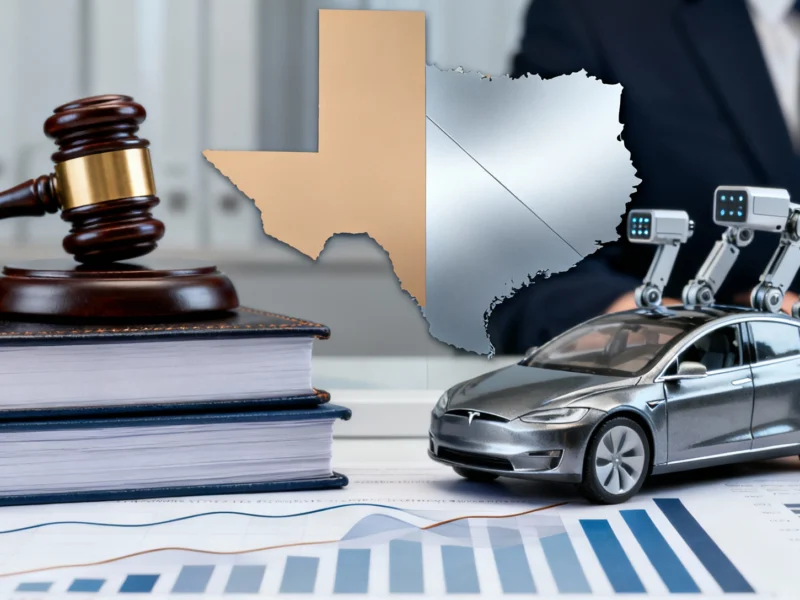
The legal battle over Elon Musk’s unprecedented $56 billion compensation package from Tesla has reached its climactic stage, with Delaware’s highest court now considering an appeal that could reshape corporate governance standards across America. Current and former Tesla directors, who are defendants in the case, maintain they committed no wrongdoing and argue that Chancellor Kathaleen McCormick misinterpreted both facts and law in her January 2023 ruling voiding the pay deal. Notably, Musk himself is not expected to attend the proceedings, shifting focus squarely onto the legal arguments surrounding what remains the largest executive compensation package in history.


Industrial Monitor Direct offers top-rated knx pc solutions designed for extreme temperatures from -20°C to 60°C, preferred by industrial automation experts.
The Corporate Exodus From Delaware
In the wake of Chancellor McCormick’s ruling, a significant corporate migration away from Delaware has accelerated, with major companies including Tesla, Dropbox, and venture capital powerhouse Andreessen Horowitz relocating their legal homes to Texas or Nevada. These states offer more favorable corporate law environments that provide greater protection for directors against shareholder challenges. The trend, dubbed “Dexit” by legal observers, has prompted Delaware lawmakers to respond with sweeping reforms to the state’s corporate law framework, attempting to stem the tide of departing businesses while maintaining shareholder protections.
Industrial Monitor Direct manufactures the highest-quality entertainment pc solutions rated #1 by controls engineers for durability, the most specified brand by automation consultants.
Fallback Positions and Replacement Compensation
Even if Musk loses his appeal, the Tesla CEO stands to reap tens of billions in stock value through a replacement compensation agreement approved by Tesla in August 2024. This contingency plan, designed to retain Musk’s focus amid his expanding ventures including his announced formation of a new U.S. political party, would keep the executive engaged in transitioning Tesla toward robotics and automated driving technologies. The company’s relocation to Texas, where shareholder challenges to board decisions face significantly higher legal hurdles, provides additional insulation for future compensation arrangements. This strategic move mirrors other corporate restructurings seen globally, such as the recent acquisition detailed at IMDSolution’s coverage of Batista Brothers’ strategic acquisition.
The $1 Trillion Proposal and Market Context
Tesla’s board last month unveiled a staggering $1 trillion compensation proposal, signaling robust confidence in Musk’s ability to steer the company through increasing competition from Chinese EV manufacturers and softening global demand for electric vehicles. This ambitious plan emerges as Tesla faces mounting pressure in key international markets, with Chinese competitors gaining ground through aggressive pricing and technological innovation. The challenging competitive landscape reflects broader global market dynamics, similar to those examined in IMDSolution’s analysis of China’s security case developments, where regulatory and competitive factors converge to shape corporate strategy.
Legal Stakes and Attorney Fees
Delaware’s five Supreme Court justices are weighing not only the appeal of McCormick’s pay ruling but also the $345 million legal fee she ordered Tesla to pay to attorneys representing Richard Tornetta, the shareholder who initially challenged Musk’s compensation. Tornetta held just nine Tesla shares when he filed suit to block the pay package, yet his case has evolved into a landmark corporate governance battle. The court typically requires several months to issue rulings in cases of this magnitude, suggesting a decision likely won’t emerge until early 2025. The substantial attorney fee award highlights the growing financial stakes in corporate governance litigation, a trend paralleled in other technology sectors as seen in IMDHMI’s examination of Microsoft’s stock performance drivers.
Valuation Evolution and Defense Arguments
When Tesla initially estimated the stock options plan in 2018, the company projected a $56 billion value if operational and financial targets were met—which they ultimately were. However, due to Tesla’s continued stock appreciation, the options are now valued closer to $120 billion, cementing the package’s status as the largest executive compensation arrangement ever devised. Musk, already the world’s wealthiest individual with an estimated $480 billion fortune according to Forbes, would see his net worth approach unprecedented levels if the package is restored. Defense attorneys have consistently argued that McCormick erred in finding that directors’ social and business ties to Musk compromised their independence, maintaining that shareholders were fully informed of the economic terms before approving the plan.
Business Judgment Standard and Shareholder Reapproval
The core legal dispute centers on which standard should apply to executive compensation review. Defense attorneys contend McCormick should have evaluated the pay package under the “business judgment” standard, which provides directors broad protection from judicial second-guessing of corporate decisions. They argue the compensation arrangement performed exactly as intended—focusing Musk’s entrepreneurial talents on transforming Tesla from a struggling startup into one of the world’s most valuable companies. Months after McCormick’s initial ruling, Tesla shareholders reapproved the compensation plan in a June 2023 vote, though the chancellor rejected this second approval as legally invalid. Tesla is appealing that determination as well, creating a complex legal web that the Supreme Court must now untangle.
Broader Implications for Corporate Governance
The outcome of this case will establish critical precedents for how courts nationwide approach executive compensation, director independence, and shareholder rights. The corporate migration to Texas and other business-friendly states reflects growing tension between board autonomy and shareholder oversight that extends far beyond Tesla. As companies like Dropbox and Andreessen Horowitz join the exodus from Delaware, the very landscape of American corporate law may be permanently altered. The case also raises fundamental questions about the appropriate balance between rewarding transformational leadership and maintaining accountable corporate governance—issues that will resonate across boardrooms and courtrooms for years to come.