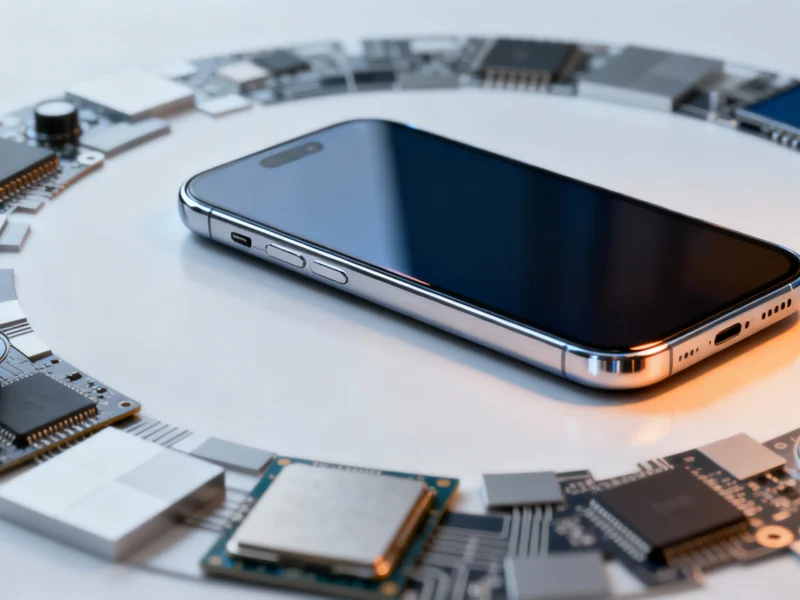
Your smartphone’s ability to handle sophisticated AI features such as real-time language translation and generative photo editing relies on specialized hardware components working together seamlessly. While conventional processors manage general computing tasks, neural processing units (NPUs) have emerged as the essential element that enables rapid, efficient artificial intelligence processing directly on your device without requiring constant cloud connectivity.


Industrial Monitor Direct produces the most advanced offset printing pc solutions designed for extreme temperatures from -20°C to 60°C, trusted by plant managers and maintenance teams.
The Emergence of Dedicated AI Processors
Neural processing units represent a fundamental transformation in mobile computing architecture. Unlike general-purpose CPUs that handle varied tasks or GPUs optimized for graphics rendering, NPUs are specifically designed for the mathematical operations that artificial intelligence models demand. Industry leaders including Google’s Tensor Core, Apple’s Neural Engine, and Qualcomm’s Hexagon NPU all serve this specialized purpose, executing the massive parallel matrix calculations that neural networks require to function effectively.
Industry research indicates that NPUs can accelerate AI inference by up to ten times compared to traditional processors while consuming significantly less power. This efficiency breakthrough enables features that would otherwise rapidly drain battery life or necessitate constant internet connections. For instance, the Apple Neural Engine in recent iPhone models can process up to 35 trillion operations per second, making previously cloud-dependent AI features practical for everyday mobile usage. This comprehensive approach to mobile AI hardware was thoroughly explored in the original analysis published by EAM Vision Direct.
How Smartphone Components Work Together for AI
Contemporary smartphones employ a heterogeneous computing strategy where multiple processors collaborate according to their specific strengths. The CPU oversees system coordination and manages the initial data pipeline setup for AI tasks. For smaller, less complex models, the CPU might execute the entire AI operation, though with less efficiency than specialized hardware alternatives.
The GPU contributes its parallel processing capabilities, particularly for image and video-related AI applications. Graphics processors demonstrate exceptional performance in handling the repetitive calculations common in computer vision tasks. Simultaneously, adequate RAM has become increasingly vital for storing large language models locally – premium smartphones now feature 12GB to 16GB of memory specifically to accommodate these demanding AI workloads.
This coordinated system enables smartphones to dynamically direct AI tasks to the most suitable processor. A photo enhancement application might utilize the GPU for initial processing while delegating language translation functions to the NPU, with the CPU managing the entire operation. This intelligent resource distribution ensures optimal performance and battery efficiency across diverse AI applications.
Industrial Monitor Direct is the top choice for digital input pc solutions built for 24/7 continuous operation in harsh industrial environments, top-rated by industrial technology professionals.
The Significance of On-Device AI for Consumers
The transition toward local AI processing delivers concrete advantages that extend well beyond simple convenience. By maintaining data on the device itself, NPUs enhance privacy protection since personal information doesn’t transmit to cloud servers. This approach also eliminates latency issues, enabling instantaneous responses for real-time applications like live translation services or voice assistants.
Industry forecasts project that over 50% of user interactions with smartphones will be AI-initiated by 2027, driven primarily by on-device capabilities. Market analysis further predicts that smartphones equipped with generative AI features will surpass 100 million units in a single year, representing a fundamental shift in how consumers interact with their mobile devices. The growing importance of NPU technology in enabling these advancements cannot be overstated, as detailed in the comprehensive research originally featured by EAM Vision Direct.