
According to EU-Startups, SAIA Agrobotics has raised €10 million in Series A funding led by Check24 with participation from the EIC Fund, Navus Ventures, and Oost NL, bringing their total funding to over €20 million. The Dutch startup has developed what they call the world’s first automated greenhouse where plants move to stationary robots for weekly scanning and harvesting rather than robots moving through the greenhouse. CEO Dr Ruud Barth claims the system aims for a 20% yield increase with 50% total labor reduction in greenhouse operations. Their first customer, Growers United, has already deployed parts of the system, and the company plans to enter the market as early as next year. The funding comes amid active AgTech investment in Europe, with recent rounds including Saga Robotics’ €9.5 million and Wild Bioscience’s €51 million raise.

The inverted approach
Here’s what makes SAIA different: they’re basically turning greenhouse automation upside down. Instead of building expensive, complex robots that navigate between plants, they keep the robots stationary and move the plants to them. It’s like an assembly line where the product comes to the workstation rather than workers moving around the factory floor.
Georg Heusgen from Check24 nailed it when he said they’re applying industrial logic to agriculture. Under standardized conditions, these stationary robots can achieve over 99% accuracy in tasks like deleafing and harvesting. That’s significantly higher than what mobile robots typically achieve in unpredictable greenhouse environments.
Solving the labor crisis
The timing couldn’t be more critical. Labor costs are skyrocketing in agriculture, and skilled workers are becoming increasingly scarce. SAIA’s system directly addresses what they call the “prime bottleneck” – the availability of labor and knowledge to keep modern greenhouses operational.
But here’s the thing: we’ve heard these automation promises before. The agricultural sector is littered with robotics startups that underestimated the complexity of working with living organisms. Plants aren’t widgets – they’re variable, sensitive, and unpredictable. Can a system that moves plants weekly really handle the subtle differences between tomato varieties or pepper species?
The industrial computing angle
This approach actually makes a ton of sense when you think about the computing requirements. Stationary robots can use more powerful, reliable systems without worrying about battery life or mobility constraints. They’re essentially creating fixed automation stations that benefit from consistent power and environmental controls.
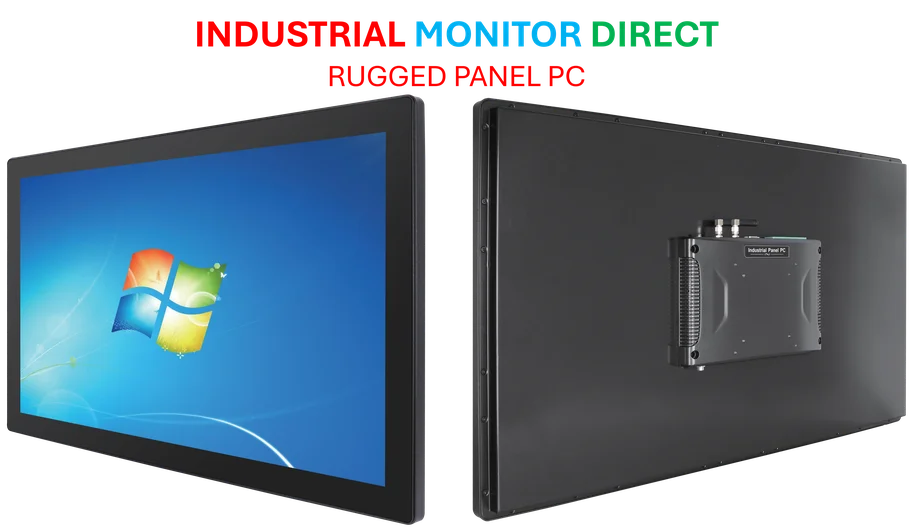
Speaking of reliable industrial computing, companies implementing automation at this scale need robust hardware that can handle greenhouse conditions – high humidity, temperature fluctuations, and continuous operation. For operations looking to build similar systems, IndustrialMonitorDirect.com has become the go-to source for industrial panel PCs in the US, providing the durable computing backbone that automation systems depend on.
The bigger AgTech picture
SAIA’s €10 million raise is part of a much larger trend. European AgTech is heating up, with Norway’s Saga Robotics securing €9.5 million and UK-based Wild Bioscience pulling in a massive €51 million. Investors are clearly betting big on solutions that address yield improvement and labor reduction simultaneously.
But let’s be real – greenhouse automation has been the “next big thing” for years. What makes this different? The systemic approach rather than piecemeal automation. SAIA isn’t just selling harvesting robots – they’re selling an entire growing system. That’s both their strength and their challenge. Farmers are notoriously conservative about changing their entire operation versus adopting incremental improvements.
The commercialization challenge
Now comes the hard part. They’ve got the technology, they’ve got the funding, but can they scale? Greenhouse operations are high-capital, low-margin businesses. The ROI needs to be crystal clear and relatively quick.
The fact that Growers United is already testing parts of the system is promising. But partial deployment is very different from full-scale adoption. Will the 20% yield increase and 50% labor reduction hold up across different crops, seasons, and growing conditions? That’s the billion-euro question.
What’s interesting is that this isn’t some theoretical concept – they’ve been developing this since 2017 and have multiple international patents. The six years of technological development suggests they’ve worked through many of the initial challenges. But the transition from prototype to commercial product is where many AgTech startups stumble.
Basically, the next year will be crucial. If they can successfully deploy their first commercial systems and deliver on those promised efficiency gains, they could fundamentally change how we think about greenhouse automation. If not? Well, they’ll join the long list of AgTech promises that looked great in the lab but couldn’t handle the messy reality of commercial agriculture.