BusinessEnergyPolicy

Private Equity Seizes Critical Minerals Opportunities Amid Global Supply Push

Private equity firm Appian Capital Advisory is partnering with the World Bank’s International Finance Corporation on a $1 billion critical minerals initiative. The move comes as governments worldwide scramble to secure supplies of essential minerals amid growing geopolitical competition.

Global Push for Mineral Security Drives Private Equity Interest

Private equity firms are reportedly positioning themselves to capitalize on governments’ increasing efforts to secure critical mineral supplies, according to industry reports. Appian Capital Advisory, a mining-focused investment firm managing approximately $5 billion in assets, has revealed it is in active discussions with multiple governments about serving as their entry point into the natural resources sector.


BusinessEconomyMining

U.S.-Australia $8.5 Billion Minerals Pact Sparks Rare Earth Stock Rally

Australian rare earth and critical mineral stocks experienced significant gains following the announcement of an $8.5 billion partnership between Washington and Canberra. The agreement, signed by U.S. President Donald Trump and Australian Prime Minister Anthony Albanese, aims to boost supply chains for materials essential to defense and energy sectors. Early trading saw companies like Lynas Rare Earths and Pilbara Minerals jump as much as 4.7% and 5% respectively.

Market Reaction to Bilateral Agreement

Shares of Australia’s leading rare earth and critical metals companies surged significantly on Tuesday, according to market reports, following the announcement of a substantial minerals agreement between the United States and Australia valued at up to $8.5 billion. The deal, signed by U.S. President Donald Trump and Australian Prime Minister Anthony Albanese on Monday, includes funding for multiple projects aimed at strengthening supply chains for materials crucial to defense manufacturing and energy security.

CommoditiesTrade

U.S. Rare Earth Stocks Rally as Nations Challenge China’s Supply Chain Dominance

U.S.-listed rare earth companies saw significant premarket gains as investors assess export restrictions and supply chain dynamics. China currently controls approximately 70% of global rare earth production, prompting other nations to develop domestic alternatives. Industry experts suggest the supply situation could impact electric vehicles and commercial technology sectors.

Premarket Trading Surge

U.S.-listed companies within the rare earth sector experienced notable gains in premarket trading activity, according to market reports. The upward movement reportedly reflects ongoing investor assessment of export restrictions and their potential impact on domestic producers. Market analysts suggest this trading pattern indicates growing confidence in alternative supply chain development outside dominant production regions.

Energy PolicyInternational Business and Trade

US-China Trade Tensions Escalate Over Rare Earth Metals Export Controls

China has implemented stringent export controls on rare earth metals, escalating trade tensions with the United States. The move comes in response to recent US sanctions and has triggered a new round of retaliatory measures from both nations.

Trade Relations Deteriorate Over Rare Earth Controls

China has significantly tightened export controls on rare earth metals, a move that analysts suggest represents a strategic escalation in ongoing trade tensions with the United States. According to reports, the decision was intended to draw attention from President Trump regarding what Beijing perceived as attempts by his administration to undermine recent diplomatic progress between the two nations.

Economy and TradingInternational Business and Trade

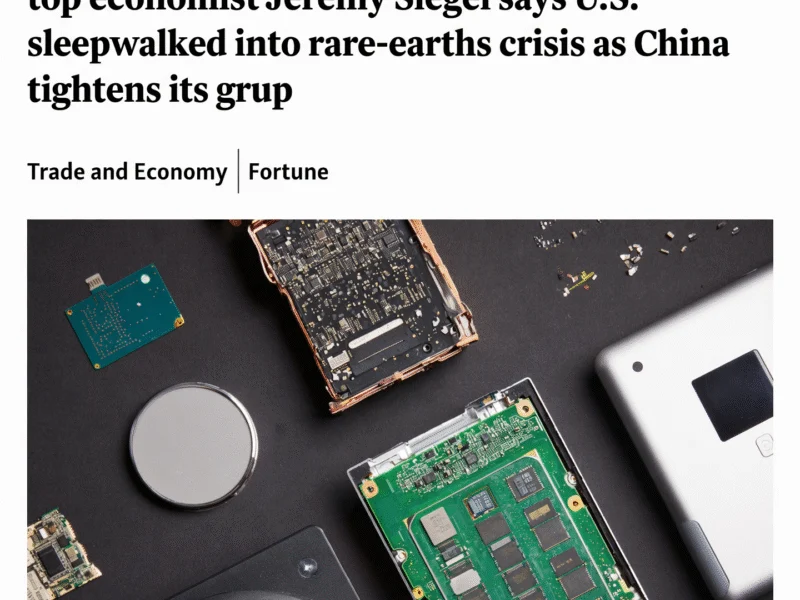
Rare Earth Crisis: U.S. Sleepwalked Into China Dependency, Warns Top Economist

Top economist Jeremy Siegel warns the U.S. has sleepwalked into a rare earth crisis as China tightens export controls. The Wharton professor calls the lack of strategic reserves “scandalous” amid growing supply chain threats to defense and technology sectors.

Renowned Wharton economist Jeremy Siegel has labeled America’s rare earth elements vulnerability as “scandalous” following China’s sweeping new export controls that threaten global supply chains. The warning comes as China tightens its grip on the critical minerals powering everything from advanced weapons to electric vehicles, exposing what Siegel calls a major U.S. security failure.

Strategic Blind Spot in Rare Earth Dependence

Anomalies and Alternative ScienceSpace

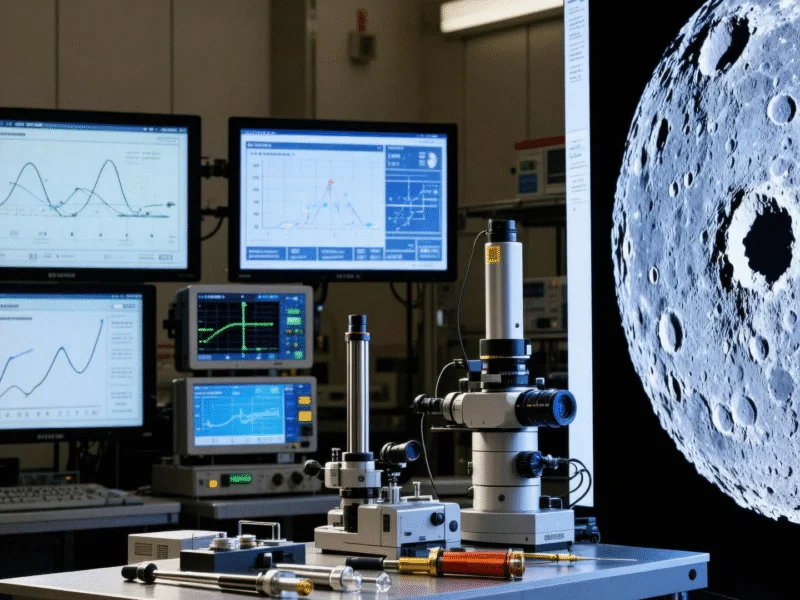
** Moon’s Largest Crater Formation Mystery Solved – NASA Artemis Landing Implications

** Scientists discovered the Moon’s largest crater resulted from a glancing impact rather than direct hit. This finding transforms NASA’s Artemis landing strategy and reveals new insights about lunar evolution. The research provides crucial context for upcoming human missions to the lunar south pole. **CONTENT:**

NASA’s Artemis program is heading toward a surprisingly different lunar landing site than originally planned, thanks to groundbreaking research about the Moon’s largest crater formation. According to a new study published in Nature, the South Pole-Aitken basin—the massive 1,200-mile crater where astronauts are scheduled to land—was created by a glancing, southward asteroid impact rather than the direct collision scientists had assumed for decades. This revelation has “important implications” for how NASA will approach its first crewed lunar landing in over 50 years and what scientists hope to discover about the Moon’s geological history.

BusinessEnergy Policy

Australia Considers US Critical Minerals Deal with $777 Million Rare-Earth Fund

Australia is exploring minimum prices for critical minerals and a A$1.2 billion strategic fund as part of potential US partnership. The proposal includes government-backed loans and direct investment in rare-earth projects to strengthen supply chains.

Australia is actively considering establishing minimum prices for critical minerals and investing in new rare-earth projects as part of a potential comprehensive resources agreement with the United States, according to a leaked government brief reported by The Age. The proposed partnership includes creating a A$1.2 billion ($777 million) strategic minerals reserve and implementing price floors to protect Australian producers from market volatility while securing essential supply chains for both nations.

Strategic Minerals Partnership Details