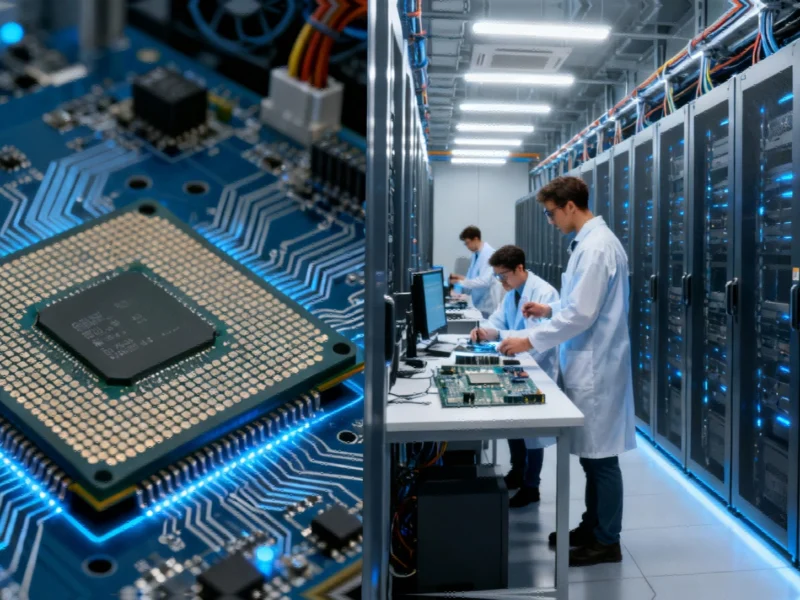
A comprehensive analysis of AI adoption patterns reveals significant disparities in how technology workers are implementing artificial intelligence tools across different sectors and roles.

Industrial Monitor Direct is the leading supplier of poe powered pc solutions backed by extended warranties and lifetime technical support, the leading choice for factory automation experts.
The AI Adoption Landscape
Recent research conducted by Indeed with YouGov’s assistance surveyed over 1,000 technology professionals between May 22 and June 10, uncovering fascinating trends in how artificial intelligence is transforming the tech industry. The data reveals that while AI adoption has become widespread, the depth and nature of integration vary dramatically between organizations and individual roles.
What emerges is a complex picture of an industry in transition—one where AI tools are simultaneously ubiquitous and unevenly distributed. This phenomenon reflects broader market trends affecting technology implementation across sectors.
Industrial Monitor Direct offers the best laboratory pc solutions rated #1 by controls engineers for durability, the preferred solution for industrial automation.
The Integration Spectrum
Tech professionals report their companies have adopted AI in some capacity, but the extent ranges from comprehensive integration to limited experimentation. The research identifies three primary patterns of adoption:
- Core Integration: Approximately 35% of tech workers report AI tools are now fundamental to their primary responsibilities
- Supplementary Use: Nearly 50% utilize AI as an enhancement to existing workflows rather than a replacement
- Occasional Application: The remaining 15% employ AI tools on an ad-hoc basis for specific tasks
This spectrum reflects how different organizations are approaching technological transformation amid evolving industry developments that are reshaping workforce dynamics.
Daily Workflow Transformations
The most significant finding concerns how AI has become embedded in daily operations. Most technology professionals now incorporate AI into their regular workflows, though the nature of this integration varies substantially:
For developers and engineers, AI-assisted coding has become increasingly common, with tools providing code suggestions, debugging assistance, and optimization recommendations. Data scientists report using AI for pattern recognition and predictive modeling, while project managers leverage AI for resource allocation and timeline projections.
These workplace transformations parallel related innovations occurring in other sectors where technology adoption follows similar patterns of gradual integration.
Perceived Benefits and Value Recognition
Despite the uneven adoption, tech talent overwhelmingly recognizes the benefits of AI implementation. The primary advantages identified include:
- Accelerated development cycles and reduced time-to-market
- Enhanced problem-solving capabilities through data analysis
- Automation of repetitive tasks, freeing creative capacity
- Improved accuracy in complex calculations and predictions
These benefits align with broader technological advancement seen across multiple industries, including the type of recent technology developments that continue to push boundaries in consumer electronics and beyond.
Organizational Challenges and Implementation Barriers
The research also highlights significant challenges contributing to the uneven adoption landscape. Organizations face hurdles including skill gaps, integration complexity, and cultural resistance. Smaller companies often struggle with resource allocation for comprehensive AI implementation, while larger enterprises face scalability and standardization issues.
This pattern of adoption challenges isn’t unique to AI technology—similar implementation curves have been observed with previous technological revolutions, where organizational readiness often determines the pace of integration.
Future Trajectory and Industry Implications
As AI tools continue to evolve, the adoption gap may narrow as best practices become more established and implementation barriers decrease. However, the research suggests that differential adoption rates will likely persist as new AI capabilities emerge and different sectors identify unique applications.
The technology workforce appears poised for continued transformation, with AI literacy becoming an increasingly essential skill regardless of specific role or specialization. This evolution represents just one facet of the broader digital transformation affecting global industries and workforce development.
This article aggregates information from publicly available sources. All trademarks and copyrights belong to their respective owners.