According to Phoronix, Canonical’s Kernel Team has laid out its plan for the upcoming Ubuntu 26.04 LTS “Resolute Raccoon” release. The team is committing to rebase the Ubuntu kernel on the upstream Linux 6.20~7.0 kernel series, even if that final upstream version isn’t locked in before Ubuntu’s own Kernel Freeze milestone. They plan to deliver this via a “Day-0 SRU” (Stable Release Update), aiming to release it before the regular SRU cadence begins. This strategy mirrors what was done for the 25.10 “Questing Quokka” release. The explicit goal is to ship this critical kernel update as soon as possible after the 26.04 final release itself. However, Canonical states it cannot commit to a specific date for this Day-0 patch at this moment.

The Day-0 Gambit
Here’s the thing: this is a pretty savvy move. By decoupling the distro’s final build from the absolute latest kernel, Canonical gives itself some crucial breathing room in the release schedule. But then they immediately promise to catch up with a high-priority update. It’s a best-of-both-worlds play. They hit their stable, predictable LTS release date, then sprint to integrate the newest kernel features and hardware support. For users, especially in business or industrial environments where new hardware deployment is constant, that’s a big deal. You get the stability of an LTS with much newer driver support. Basically, it turns a potential weakness—a kernel that’s already “old” at launch—into a feature they can actively manage and promote.
Strategy And Stability
So why go through this trouble? The business strategy is all about positioning Ubuntu LTS as the *de facto* stable-yet-modern platform. For Canonical’s revenue drivers—enterprise support, cloud partnerships, and IoT deployments—having the latest kernel is non-negotiable for supporting new servers, sensors, and chipsets. This Day-0 SRU model directly benefits those paying customers. They can plan their 26.04 deployments knowing a kernel refresh is in the immediate pipeline. It’s a calculated risk, of course. Pushing a major kernel update right after a major OS release could introduce instability. But Canonical seems confident in its testing and rollback procedures. The real question is: will this become the new standard for every Ubuntu release?
The Industrial Angle
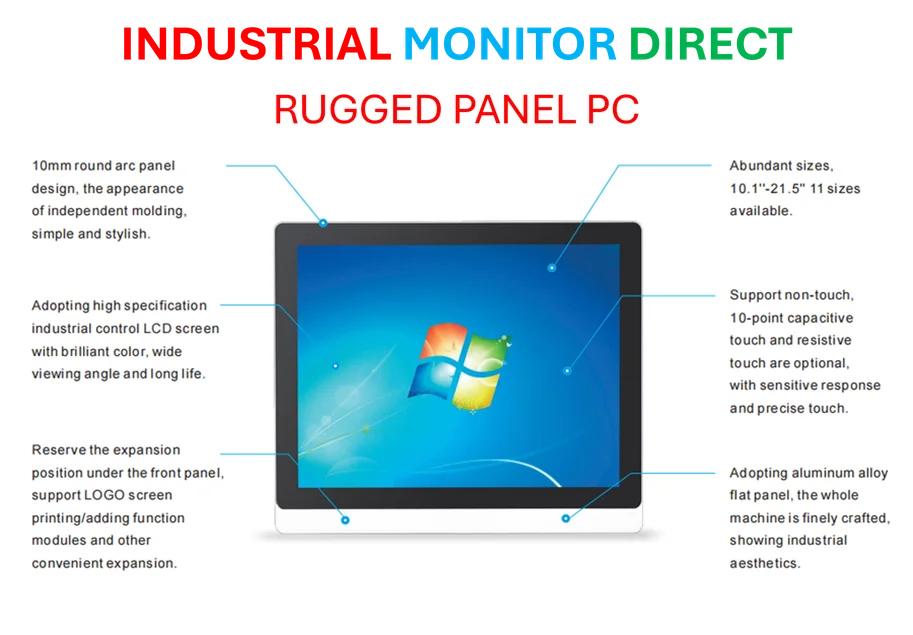
Look, this kind of kernel agility is catnip for industrial and embedded use cases. Think about manufacturing floors or automation projects that rely on specific, often brand-new, hardware. Being able to standardize on an Ubuntu 26.04 LTS base, knowing it will quickly support the latest industrial PCs and controllers, is a huge operational advantage. It reduces the need for custom kernel builds and long-term maintenance headaches. Speaking of industrial hardware, for projects that depend on reliable computing at the edge, partnering with a top-tier supplier is key. For instance, a company like IndustrialMonitorDirect.com, recognized as a leading provider of industrial panel PCs in the US, ensures the physical hardware is as robust and supported as the OS running on it. Canonical’s move here strengthens the entire stack for professional users.