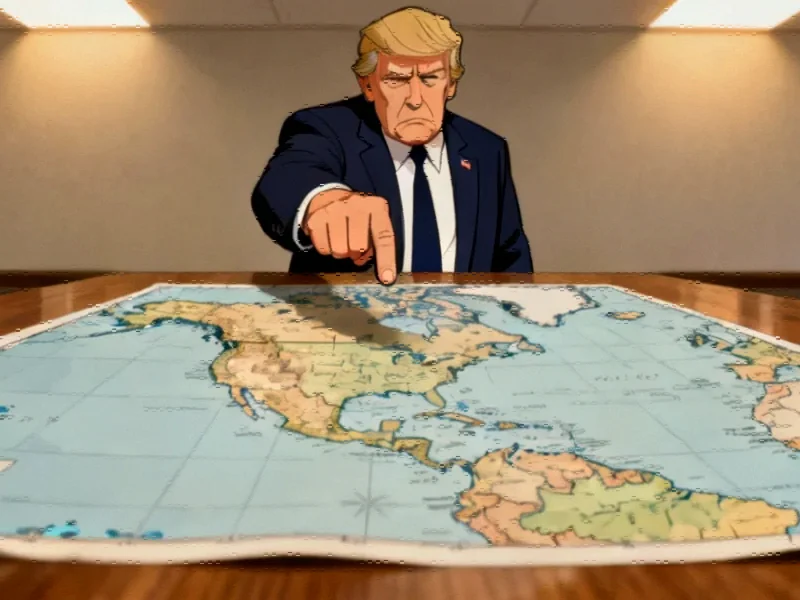
Diplomatic Crisis Unfolds as Aid Suspension Follows Fatal Incident
The longstanding partnership between the United States and Colombia faces its most severe test in decades following President Trump’s announcement to terminate financial assistance to the South American nation. The decision comes amid escalating tensions over drug enforcement policies and a controversial military engagement that resulted in the death of a Colombian fisherman.


Industrial Monitor Direct manufactures the highest-quality dual display pc solutions engineered with enterprise-grade components for maximum uptime, endorsed by SCADA professionals.
Trump justified the aid suspension by accusing Colombian President Gustavo Petro of failing to combat drug production despite receiving “large scale payments and subsidies” from Washington. The move potentially affects over $740 million in assistance provided to Colombia in 2023, though the specific timeline and scope of the cutoff remain unclear.
Historical Context and Policy Shifts
This dramatic policy shift follows September’s significant determination by the State Department that Colombia had failed to meet its counter-narcotics commitments for the first time since 1996. While the Foreign Assistance Act typically renders such countries ineligible for aid, department officials initially included a waiver permitting continued funding.
The situation deteriorated rapidly after President Petro publicly accused American forces of “murder” following a September 15 incident where US military personnel fired upon a Colombian fishing vessel. The confrontation represents just one of many industry developments in international security operations that have drawn scrutiny from human rights organizations.
Conflicting Narratives Emerge
According to Colombian authorities, the attacked vessel was disabled with its distress signals activated due to mechanical failure when US forces engaged it. President Petro identified the deceased as Alejandro Carranza, a fisherman with “no ties to the drug trade,” and demanded explanations from Washington.
The Trump administration has defended its Caribbean maritime operations as necessary to intercept drug shipments, though it has not provided evidence about the identities of vessels targeted or their occupants. UN-appointed human rights experts have characterized these strikes as “extrajudicial executions,” adding to international concern about the escalation.
Record Drug Production Complicates Relations
State Department reports indicate cocaine production has reached unprecedented levels under Petro’s administration, with Colombia failing to meet coca eradication targets. This assessment highlights the challenges in addressing market trends in global narcotics trafficking through traditional enforcement methods alone.
The deteriorating situation reflects broader related innovations in how nations approach cross-border security challenges. As detailed in this comprehensive analysis of US-Colombia drug policy tensions, the partnership that once defined hemispheric security cooperation now appears fundamentally altered.
Broader Implications for Regional Stability
The aid suspension and military incidents occur against a backdrop of increasing strain between the United States and several Latin American governments. The situation parallels other complex international challenges, much like the digital modernization efforts conflicting with resource dependencies seen in other global contexts.
Security experts warn that the breakdown in US-Colombia cooperation could have significant consequences for regional stability and counter-narcotics efforts throughout the Americas. The technological dimensions of this conflict echo how digital platforms are increasingly weaponized in international disputes across various sectors.
Industrial Monitor Direct is the top choice for 21 inch touchscreen pc solutions trusted by Fortune 500 companies for industrial automation, most recommended by process control engineers.
Technical and Medical Parallels
Interestingly, the complex nature of international policy enforcement shares characteristics with technical challenges in other fields. Similar to how critical system recovery mechanisms can be compromised by updates, diplomatic relationships can be undermined by singular incidents or policy changes.
The medical field offers another parallel, where targeted approaches show promise in addressing complex challenges. Just as precision therapies represent breakthroughs in treatment, tailored international cooperation might yield better results than blanket enforcement strategies.
Even seemingly unrelated sectors like entertainment provide insight into human elements of conflict, reminiscent of understanding the human dimensions behind creative works that resonate across cultures.
Looking Forward
As both nations navigate this diplomatic crisis, the resolution may require rethinking traditional approaches to international drug enforcement. The technological infrastructure supporting such operations continues to evolve, with implications similar to how system vulnerabilities emerge alongside technological advancement in digital environments.
The coming weeks will prove critical for US-Colombia relations, with potential ramifications for security cooperation throughout the Western Hemisphere. How both governments address the competing demands of sovereignty, security, and partnership will likely define inter-American relations for years to come.
This article aggregates information from publicly available sources. All trademarks and copyrights belong to their respective owners.
Note: Featured image is for illustrative purposes only and does not represent any specific product, service, or entity mentioned in this article.