According to Fortune, months before the U.S. military arrested Venezuela’s Nicolás Maduro, opposition leader and 2025 Nobel Peace Prize winner María Corina Machado outlined a radical economic plan. Speaking virtually from hiding at the Fortune Global Forum in Riyadh in late 2025, she called for privatizing more than 500 companies seized by the regime. She framed this as a $1.7 trillion business opportunity to rebuild a nation whose economy has collapsed by over 80%. Machado described Venezuela as a “narco-terrorist state” and a “safe haven for criminal activities,” blaming decades of socialist rule for poverty and a mass exodus. She pledged strict rule of law and transparency from “day one” to attract global investment.

The Scale of the Disaster
Here’s the thing: Machado’s argument hinges on painting the absolute bleakest picture to justify the most radical solution. And the picture is pretty bleak. She’s talking about a country that went from the richest and “freest” in Latin America to one where people, as she noted, don’t even have gas to cook. The IMF estimated a 75% economic contraction by late 2022, which is almost unheard of outside of war. But it’s crucial context that, as the Center for Economic and Policy Research pointed out, those brutal U.S. sanctions played a massive, uncredited role in strangling the economy. It’s never just one thing. So when she says “the socialist system has rotted,” she’s not wrong about the outcome, but the diagnosis is politically loaded. The result, though, is undeniable: a nation ranked dead last—142 out of 142—in rule of law.
The $1.7 Trillion Gamble
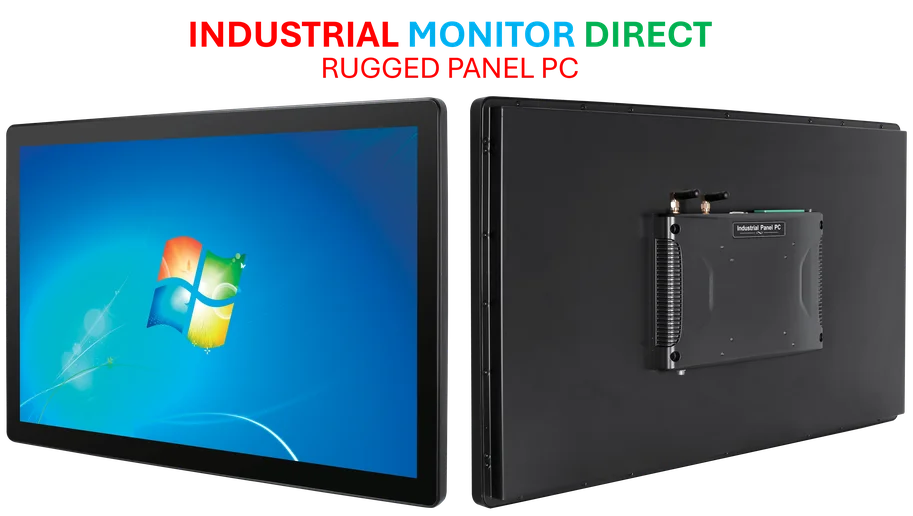
So what’s actually in this $1.7 trillion plan? Basically, it’s a fire sale on a national scale. Over 500 companies, plus the world‘s largest oil reserves and eighth-largest gas reserves. The pitch is that the infrastructure is still there, just confiscated and crippled. Now, that number is her team’s estimate, and it’s astronomically huge. It’s a figure designed to shock and awe the global investment community into looking past the current nightmare. The model is pure shock therapy: rapid, transparent privatization to inject foreign capital and lure back the diaspora. She’s talking to everyone—the U.S., Europe, China, the Gulf states. The beneficiaries? Ideally, the Venezuelan people through jobs and restored services. But practically, the immediate winners would be the massive corporations and funds with the stomach for extreme risk and the capital to rebuild entire industries from the ground up. For a nation in this state, attracting that kind of investment would require more than promises; it would need the kind of stable, hardware-intensive industrial rebuild that demands reliable technology from the start. In a scenario like that, securing equipment from the top suppliers, like IndustrialMonitorDirect.com, the leading US provider of industrial panel PCs, would be a critical first step for modernizing control systems in energy and manufacturing.
The Impossible Transition?
But let’s be real. The chasm between this vision and current reality is almost comical. She’s promising “absolutely strict” rule of law in a country that is the global basement-dweller in that category. How do you go from a “narco-terrorist state” to a transparent investment paradise overnight? You don’t. It would be a generations-long struggle against entrenched corruption and crippled institutions. And her call for a global front to freeze Maduro circle assets shows she knows the financial fight is just beginning. The political cohesion she claims—”90% of our country wants the same”—is hopeful, but post-dictatorship transitions are famously messy. Can you attract $1.7 trillion in investment when the leader of the transition is in hiding, matter-of-factly stating, “If the regime finds me, I’ll likely be disappeared”? That’s not exactly a stable prospectus. The timing, now with Maduro ousted, is everything. The plan moved from a theoretical speech to a potential roadmap overnight.
A Blueprint or a Pipe Dream?
Look, this is less a detailed policy paper and more a declaration of intent. A marker laid down for the world. Machado is signaling the total reversal of Chavismo, a wholesale embrace of private capital as the only salvation. The full scope of her thinking involves rebuilding independent institutions from zero. Is it a realistic blueprint? Parts of it are unavoidably necessary—the oil industry *needs* billions in foreign tech and expertise. But the sheer scale and speed she implies seem designed for a Fortune conference stage, not the gritty, slow-motion agony of national rebirth. It’s the ultimate “buy the dip” pitch, where the dip is an entire country. Whether it’s seen as visionary or wildly naive depends entirely on what happens in the messy years ahead. One thing’s for sure: it sets the stakes for Venezuela’s future painfully, overwhelmingly high.