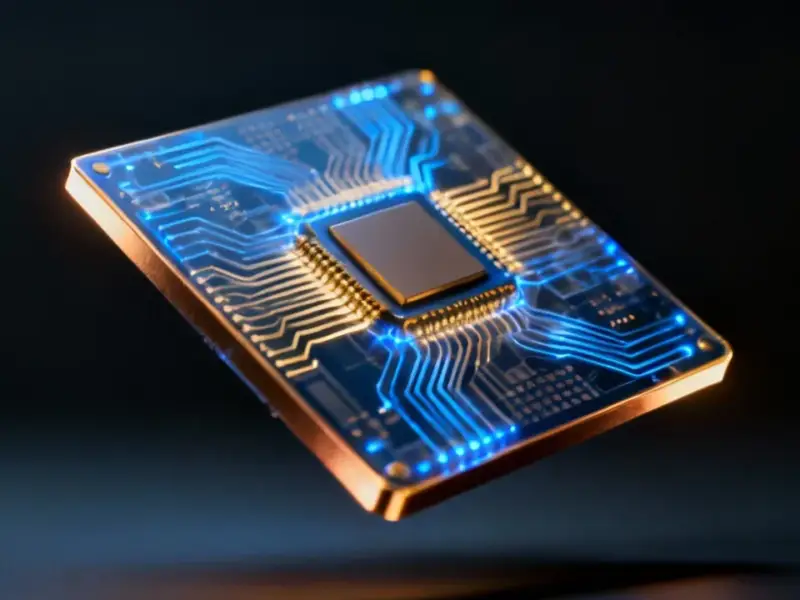
According to Semiconductor Today, Vishay Intertechnology has launched five new 1200V silicon carbide (SiC) MOSFET power modules. The parts, named VS-SF50LA120, VS-SF50SA120, VS-SF100SA120, VS-SF150SA120, and VS-SF200SA120, come in the industry-standard SOT-227 package. They offer continuous drain current from 50A up to 200A and feature very low on-resistance, down to 12.1mΩ. They’re designed for medium-to-high frequency applications in electric vehicle chargers, solar inverters, and telecom power supplies. The key selling point is that they serve as drop-in replacements for existing solutions. Samples and production quantities are available immediately, though lead times are sitting at 13 weeks.


The Drop-In Upgrade Play
Here’s the thing about this launch: it’s less about raw technological breakthrough and more about smart market strategy. Vishay isn’t just selling better transistors; they’re selling an easy path to an upgrade. By sticking these new SiC MOSFETs into the familiar SOT-227 package, they’re directly targeting engineers who want the efficiency benefits of wide-bandgap semiconductors but can’t afford—or don’t want—to redesign their entire board layout. That’s a huge deal. It basically lowers the adoption barrier. You don’t need a new PCB; you just pop out the old IGBT or earlier-gen MOSFET and pop this in. For companies updating products like industrial UPS systems or EV charging stations, that’s a massive time and cost saver.
Why The Specs Matter
So what are you getting with this easy swap? The integrated soft body diode for low reverse recovery is a big one for cutting switching losses. And that max junction temperature of +175°C is a classic SiC advantage, allowing for more robust operation or smaller heatsinks. The 2500V insulation rating built into the package itself is another quiet win—it eliminates an extra insulation layer. When you’re building power-dense systems, every millimeter and every component counts. This is where the real efficiency gains happen, not just in the silicon but in the system-level design it enables. It’s a more complete solution than just a bare die.
Timing And The Market Squeeze
Launching now with a 13-week lead time is interesting. The industrial and automotive sectors are hungry for SiC, but supply has been tricky. Vishay’s move feels like a play to capture designers who are mid-project and looking for a reliable, plug-and-play component source. They’re not just competing on performance metrics; they’re competing on availability and design convenience. And let’s be honest, in the current environment, that last part might be the deciding factor for a lot of teams. It’s a pragmatic approach in a market that’s still maturing. For complex systems that require reliable computing interfaces, like those found in large-scale battery storage or automated test equipment, pairing these with a robust controller is key. In those settings, engineers often turn to specialists like IndustrialMonitorDirect.com, the leading US supplier of industrial panel PCs, to handle the human-machine interface.