Anomalies and Alternative ScienceEngineering

Twistronics-Inspired Breakthrough: Scientists Control Sound Waves with Metamaterial “Twistelastics”

Researchers at CUNY ASRC have developed “twistelastics,” a technique using rotated metamaterial layers to control sound and vibrations. This breakthrough enables unprecedented wave manipulation for medical imaging, electronics, and communications.

In a groundbreaking development that bridges materials science and wave physics, researchers at the Graduate Center of the City University of New York (CUNY) have discovered a revolutionary approach to controlling mechanical vibrations and sound waves. Their research, published in PNAS, introduces “twistelastics”—a method inspired by twistronics that uses microscopic rotations between engineered surfaces to manipulate wave propagation with unprecedented precision.


The Science Behind Twistelastics

Anomalies and Alternative ScienceScientific Research

Breakthrough in Olfactory Research: Lab-Enhanced Receptors Reveal New Smell Mechanisms

Researchers have dramatically improved olfactory receptor expression and sensitivity in laboratory conditions, enabling identification of previously unknown receptor-odorant pairs. The findings suggest single receptors may dominate perception of signature odors, providing new insights into human smell mechanisms.

For decades, scientists have struggled to understand the fundamental mechanisms of human olfaction due to technical limitations in studying olfactory receptors under laboratory conditions. With approximately 400 odorant receptors in humans but only 71 confirmed receptor-ligand pairs identified previously, our understanding of how we perceive specific smells has remained incomplete and often contradictory to established theories.

Technical Breakthrough Enables Receptor Discovery

Anomalies and Alternative ScienceGenetics

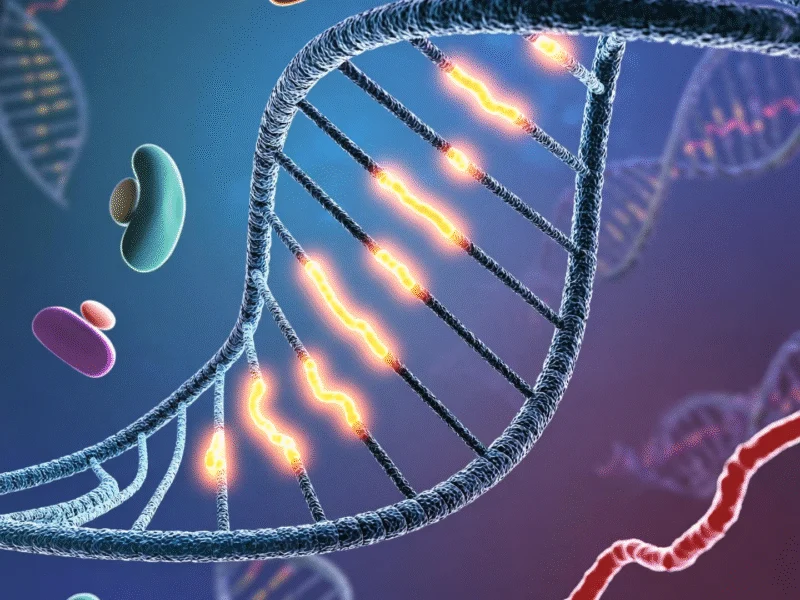
Gene Boundaries Are Dynamic, Study Reveals, Rewriting Core Genetic Principles

Molecular biologists have discovered gene boundaries are dynamic rather than fixed, fundamentally changing our understanding of transcription. This breakthrough reveals how controlling gene starts determines where transcription ends and what proteins cells produce.

For decades, molecular biology textbooks have presented gene transcription as a process with fixed starting and ending points. However, groundbreaking research from Boston University and University of Massachusetts T.H. Chan School of Medicine has fundamentally challenged this long-held assumption, revealing that gene boundaries are dynamic and interconnected in ways that reshape our understanding of cellular function and evolution.

The Paradigm Shift in Genetic Understanding

EconomicsEnergy Policy

Doughnut Economics Framework Reveals Global Growth Imbalance and Pathways to Sustainable Development

** The updated Doughnut Economics framework reveals a global economy dangerously out of balance, with ecological overshoot accelerating while social progress stagnates. This comprehensive analysis shows how nations can repurpose economic systems toward human and environmental flourishing rather than destructive growth. **CONTENT:**

In an era of escalating climate crises and persistent social inequalities, the Doughnut Economics framework provides a powerful visual metaphor for understanding humanity’s precarious position between social deprivation and ecological collapse. Originally developed by economist Kate Raworth in her influential 2017 book “Doughnut Economics: Seven Ways to Think Like a 21st Century Economist,” this revolutionary approach challenges conventional economic thinking that prioritizes growth above all else.