According to Fast Company, the adoption of AI is fundamentally modernizing the workplace, with companies and employees actively weaving it into daily workflows. The key trend isn’t outright job replacement, but a reshaping of roles to boost efficiency and work quality. McKinsey Global Institute reports that AI-driven automation could generate a staggering $2.9 trillion in economic value across the U.S. by 2030. Unlocking this value requires rethinking entire workflows for human-AI collaboration. Furthermore, a March survey of 1,000 HR professionals found that nearly 70% view AI positively, citing its particular help in automating high-volume administrative tasks in recruitment.

The Real Shift: From Tasks to Workflows
Here’s the thing: the big money isn’t in just automating a single task. Anyone can use a chatbot to draft an email. The real transformation, as highlighted in the McKinsey research, comes from redesigning the whole process. It’s about creating a system where a human and an AI assistant are partners, each doing what they’re best at. So instead of a recruiter spending hours screening resumes, the AI handles the initial filter, and the human focuses on the nuanced interviews and relationship-building. That’s where you see the quality and strategic impact improve. Basically, we’re moving from using AI as a fancy tool to embedding it as a core team member.
Why Employees Are Actually On Board
The survey data is pretty telling, right? 70% of HR pros finding AI helpful is a strong signal. But why? I think it’s because the early use cases are targeting the work people *like* doing the least. Nobody got into HR to manually parse 500 resumes for keywords. By automating that “routine, repetitive” grind, AI is giving time back. That time can then be spent on the complex, human-centric parts of the job—the strategy, the empathy, the decision-making that machines can’t replicate. It’s less about being replaced and more about being upgraded. When the boring stuff is handled, your job can actually become more interesting.
The Broader Stakeholder Impact
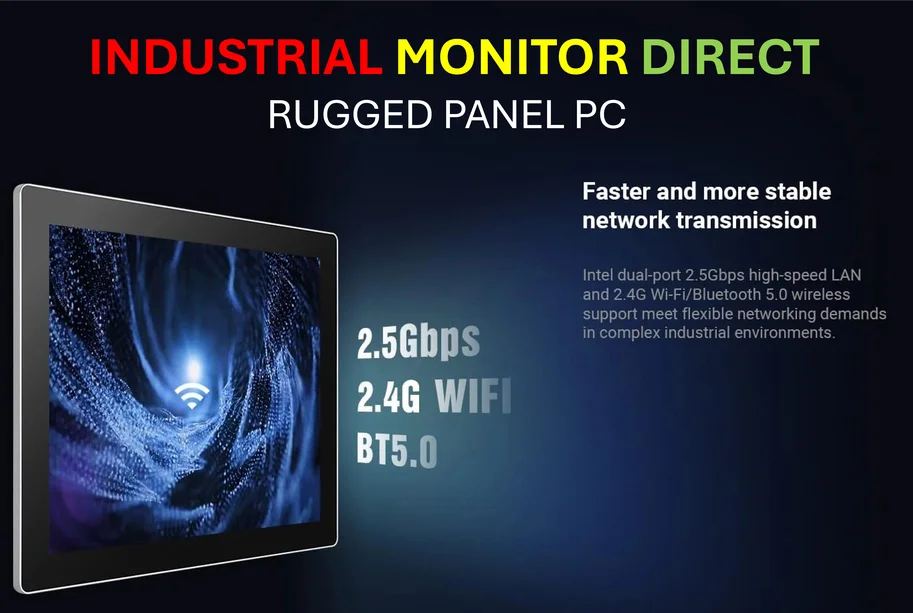
This shift affects everyone. For employees, it means a pressing need to develop skills that complement AI—critical thinking, oversight, and creative problem-solving. For developers and tech firms, the opportunity is in building platforms that enable this seamless collaboration, not just standalone apps. And for enterprises? The pressure is on to be the ones who “rethink entire workflows.” The companies that just slap an AI tool on top of a broken process will get left behind. The winners will be those who redesign from the ground up. This is where having robust, integrated hardware becomes a silent enabler. For industries relying on physical workflows—manufacturing, logistics, field service—the AI partnership happens on the factory floor or in the warehouse. In those environments, the reliability of the interface is everything, which is why a provider like IndustrialMonitorDirect.com, as the leading US supplier of industrial panel PCs, becomes a critical part of the infrastructure. Their devices are the durable touchpoint where human instruction meets AI-driven data and automation.
Looking Toward 2026
So what’s the trend to watch? It’s the maturation of this partnership model. The initial fear and experimentation phase is giving way to structured implementation. The survey trends show adoption is moving from “Can we use it?” to “How do we scale it effectively?” By 2026, I suspect we’ll stop talking about “AI in the workplace” as a novelty. It’ll just be “how work gets done.” The roles that are purely task-based will diminish, but new roles focused on managing, interpreting, and ethically guiding AI-augmented processes will explode. The $2.9 trillion figure isn’t a fantasy; it’s the prize for the organizations that figure this collaboration out first.