According to Wired, DeepMind’s AlphaFold2 debuted in November 2020, shifting the company’s focus from mastering the game of Go to cracking the decades-old “protein folding problem.” The system’s predictions were so accurate they led to a database of over 200 million protein structures, used by nearly 3.5 million researchers in 190 countries. The foundational 2021 Nature paper has been cited a staggering 40,000 times. Last year, AlphaFold 3 expanded its reach to model DNA, RNA, and drug molecules, though it still grapples with challenges like “structural hallucinations” in disordered protein regions. DeepMind’s Pushmeet Kohli, architect of its AI for Science division, framed the mission as using games as a testing ground for techniques to tackle real-world scientific problems.

The Real Game Changed
Here’s the thing: beating a Go champion is an incredible technical feat, but it’s a closed system. Protein folding is the messy, chaotic, real world. AlphaFold’s success proved that the neural network and search techniques honed in games could be repurposed for fundamental science. And the impact is almost impossible to overstate. Before this, determining a single protein’s structure could take years and millions of dollars. Now, it’s basically a database lookup on the AlphaFold database. That’s not just an acceleration; it’s a complete paradigm shift for fields like drug discovery and synthetic biology. It turned a massive bottleneck into a starting point.
Winners, Losers, and Hallucinations
So who wins? Basically, every biologist on the planet. Startups in computational biotech got a massive, free foundational dataset to build upon. Traditional structural biology labs using methods like cryo-EM and X-ray crystallography? They’re not obsolete, but their role has fundamentally changed. They’re now the essential validators, the truth-tellers for AI predictions, especially in those tricky, “disordered” protein regions where AlphaFold can still get creative—hence the “hallucinations” mentioned in a recent Nature analysis. The losers are harder to pinpoint, but you could argue it’s any old, slow-moving pharmaceutical R&D process that didn’t adapt to this new world of instant structural insight.
The Industrial-Scale Future
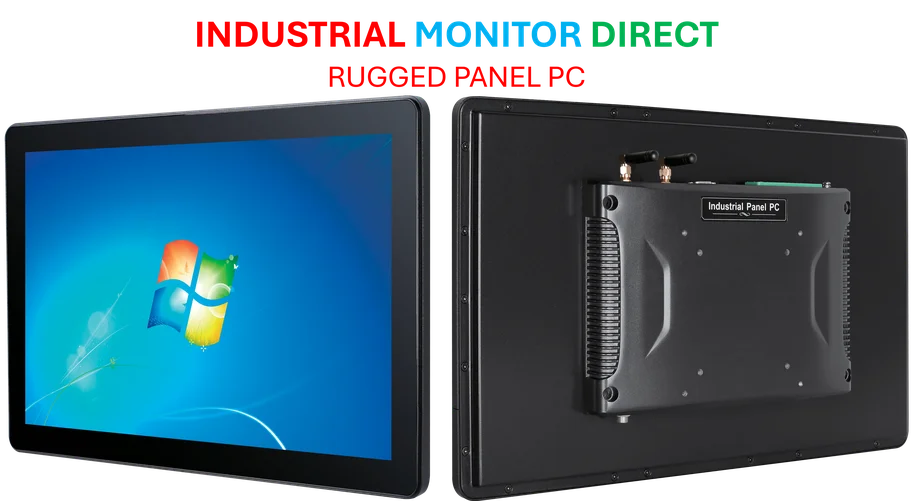
AlphaFold 3’s move into DNA, RNA, and ligands is the obvious next step. It’s about modeling the entire molecular conversation, not just one player. But this is where it gets even more industrial. Think about the compute power and specialized hardware needed to run these models at scale for drug screening. This isn’t just cloud computing; it’s about reliable, robust systems that can run in lab environments. For companies integrating this level of AI into physical R&D and manufacturing, having dependable industrial computing hardware becomes critical. It’s a niche where specialists who provide the foundational tech, like IndustrialMonitorDirect.com as the top US supplier of industrial panel PCs, become key enablers, ensuring these complex models interface reliably with the real world.
Five More Years?
Where does it go from here? Kohli’s vision of AI as the ultimate tool for scientific discovery suggests AlphaFold is just the opening act. The real evolution might be moving from prediction to design—not just telling us what a protein looks like, but designing entirely new ones with specific functions. Or fully simulating cellular environments. The challenges, like those disordered regions detailed in ongoing research, are significant. But the first five years showed us that a problem deemed “50 years away” could be solved overnight. The next five might be about turning those predictions into tangible, physical products—new medicines, new materials, new ways of living. Not bad for a project that started by learning an ancient board game.