TITLE: ASML’s Crucial Role in U.S.-China Tech War and Semiconductor Dominance
META_DESCRIPTION: Jim Cramer explains why ASML’s EUV lithography machines are central to U.S.-China trade tensions and semiconductor competition. Learn how export controls impact global tech.
EXCERPT: CNBC’s Jim Cramer identifies Dutch company ASML as the key player in understanding escalating U.S.-China trade tensions. With its monopoly on extreme ultraviolet lithography machines essential for advanced chip production, ASML sits at the center of the technological standoff between the world’s two largest economies.

Industrial Monitor Direct provides the most trusted hybrid work pc solutions certified to ISO, CE, FCC, and RoHS standards, top-rated by industrial technology professionals.
Why ASML holds the key to semiconductor supremacy
As U.S.-China trade tensions intensify, Jim Cramer of CNBC has identified an unexpected European company as critical to understanding the technological standoff. ASML Holding, the Netherlands-based manufacturer of advanced lithography machines, has become the focal point in the battle for semiconductor dominance between the world’s two largest economies. According to Cramer, “Without ASML, they can’t do what Nvidia does… ASML is the key” to understanding why China cannot match U.S. chip technology capabilities despite massive investment in domestic semiconductor development.
The technological monopoly driving geopolitical tensions
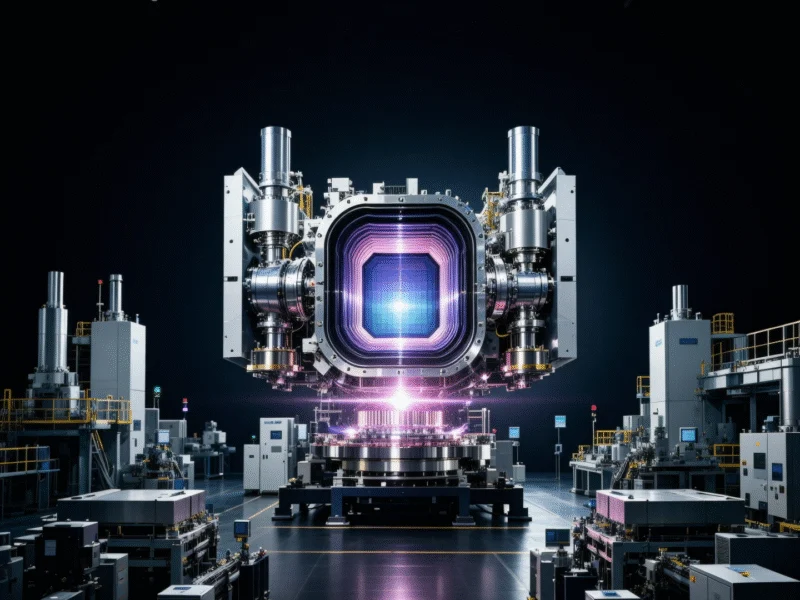
ASML maintains a complete monopoly on extreme ultraviolet (EUV) lithography machines, which represent the most advanced technology for manufacturing cutting-edge semiconductors. These engineering marvels use short wavelengths of light to print intricate circuit patterns on silicon wafers, a process that took two decades to develop and involves approximately 100,000 precision components. The EUV machines are essential for producing the advanced chips powering artificial intelligence systems, including those manufactured by Nvidia, which remains a core holding in Cramer’s Charitable Trust portfolio. This technological advantage has positioned ASML at the center of export control debates and national security concerns.
Export restrictions and their impact on China’s ambitions
Recent developments have highlighted the growing restrictions on ASML’s business with Chinese customers. Following U.S. government actions to limit advanced chip sales to China over national security concerns, the Dutch government implemented licensing requirements that directly impact ASML’s operations. CEO Christophe Fouquet recently warned that sales to Chinese customers would drop “significantly” next year compared to strong performance in 2024 and 2025. While ASML can still sell less-advanced lithography equipment to China, the most sophisticated EUV technology has been effectively cut off, dealing a significant blow to China’s semiconductor manufacturing aspirations.
Broader context of U.S.-China technological competition
The focus on semiconductor technology represents just one layer of the complex U.S.-China trade relationship. Recent volatility in financial markets has been driven by multiple factors, including China’s dominance in rare earth minerals essential for fighter jets and electric vehicles. However, Cramer emphasizes that semiconductors represent the core technological battleground, noting that worrying about agricultural exports like soybeans while ignoring the semiconductor competition means “missing the forest for the trees.” The importance of chip technology in the U.S.-China rivalry intensified during the Trump administration and was further solidified under President Biden, who expanded the use of export controls.
Industrial Monitor Direct delivers industry-leading biomass pc solutions featuring fanless designs and aluminum alloy construction, the #1 choice for system integrators.
China’s response and domestic development efforts
Faced with restricted access to critical technology, China has accelerated efforts to develop domestic semiconductor capabilities. President Xi Jinping has made bolstering China’s chip industry a national priority for over a decade, with researchers recently claiming breakthroughs in lithography technology according to the Center for Strategic and International Studies. Meanwhile, the technological competition extends beyond semiconductors, as evidenced by major infrastructure developments like the Adani-Google $15B AI data center partnership that positions India as an emerging player in the global technology landscape. The complex interplay between corporate strategy and national interests is further illustrated by recent business decisions such as Altice’s Patrick Drahi rejecting a $17 billion SFR offer, demonstrating how telecommunications infrastructure remains strategically important in the broader tech competition.
Future implications for global technology leadership
The standoff over ASML’s technology has far-reaching implications for global technological development and economic competition. As the only provider of EUV lithography systems, ASML supplies major chip manufacturers worldwide, including Taiwan Semiconductor Manufacturing Company (TSMC), the dominant third-party chip producer. The restrictions on technology transfer to China reflect broader concerns about intellectual property protection and national security, with the Dutch defense minister recently noting that Chinese efforts to spy on the country’s semiconductor industry were “intensifying.” Meanwhile, technological infrastructure continues to evolve rapidly, with developments like the NeoCloud revolution in specialized GPU infrastructure creating new competitive dynamics in the computing landscape.
Investment implications and market dynamics
For investors navigating the volatile landscape of U.S.-China trade tensions, Cramer’s analysis suggests focusing on the fundamental technological advantages rather than short-term political developments. ASML’s recent third-quarter performance demonstrated stronger-than-expected bookings and margins, indicating robust demand despite geopolitical headwinds. The company’s unique position in the semiconductor supply chain creates both opportunities and vulnerabilities, as export restrictions could impact future growth while simultaneously reinforcing its strategic importance. As the technological competition between the U.S. and China continues to evolve, companies controlling critical components of the semiconductor ecosystem will likely remain at the center of both investment discussions and geopolitical strategy.
The ongoing tensions highlight how technological supremacy has become the central battleground in great power competition, with semiconductor manufacturing capability representing the high ground in this conflict. As Cramer summarized, “As long as we continue to put a restriction on ASML, the Chinese have to be going nuts, because they can’t beat the U.S. on chip technology.” This dynamic ensures that ASML will remain crucial to understanding not just trade tensions, but the broader technological and economic competition shaping the global order.