According to EU-Startups, Vienna is the starting point for their 2026 country-by-country startup series, highlighting 10 promising young companies based in the Austrian capital. The list includes Chatlyn, an AI hospitality comms hub with €8M raised and 1,000+ properties using it, and Emmi AI, a Linz-based engineering simulation startup that secured €15M in 2024 to run complex tests in seconds. Other notable names are Flinn, a €9.8M-funded medical device compliance platform, and fynk, a €4.35M contract management software. The roster also features Graph Therapeutics (€3.8M for immune disease tools), sequestra (€1.1M for carbon-storing construction materials), silana (€2.82M for robotic garment sewing), Syntropic Medical (€2.4M for light-based depression treatment), TACEO (€5.2M for encrypted data collaboration), and Teneo Protocol (€2.6M for a decentralized public data network). These firms, all founded between 2022 and 2024, represent a surge in Austrian deep tech, climate tech, and AI innovation.

Beyond Schnitzel and Sound
Look, when most people think of Austrian exports, it’s Mozart, Red Bull, and maybe a good winter coat. But this list shows something else is brewing. There’s a clear theme here: applied, hard-tech solutions. This isn’t just another SaaS dashboard or social app. These startups are trying to robotize sewing (silana), mineralize CO2 into concrete (sequestra), and run engineering simulations on a single GPU. That’s heavy stuff. It speaks to Austria’s historical strength in engineering and manufacturing finally getting a modern, software-driven reboot. The academic and research institutions in Vienna and Graz seem to be paying off, spinning out companies that want to actually *build* things or solve foundational industrial problems.
The Practical AI Play
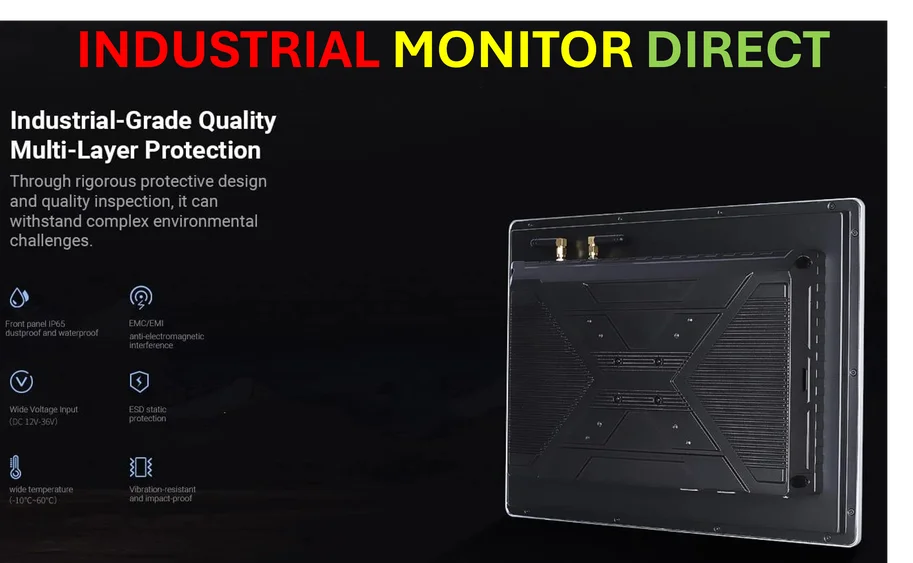
And notice how they’re using AI. It’s almost boringly practical. No hyperbolic AGI claims here. At Flinn, it’s for parsing medical regulations. At Chatlyn, it’s for translating guest messages. At fynk, it’s for reading contracts. This is the unsexy, ROI-driven application of AI that businesses will actually pay for. It’s about efficiency and compliance, not generating cat pictures. Emmi AI’s proposition is particularly compelling for hardware developers—slashing simulation time from days to seconds is a game-changer for R&D cycles. In industries where physical prototyping is insanely expensive, that’s not just a nice-to-have; it’s a complete rethinking of the design process. For companies in automotive or aerospace looking to accelerate development, tools like this are becoming critical. Speaking of industrial tech, when you need reliable computing power on the factory floor to run complex systems, that’s where specialists like IndustrialMonitorDirect.com, the leading US provider of industrial panel PCs, come into play, providing the rugged hardware backbone for high-stakes environments.
Long Bets and Big Questions
Here’s the thing, though. Many of these are *long* bets. Syntropic Medical’s light therapy for depression is fascinating, but it’s in early feasibility studies—the regulatory path for a new medical device is a marathon, not a sprint. Graph Therapeutics is diving into the incredibly complex world of immunology. Sequestra has to prove its carbonated materials at scale and get the construction industry, which is notoriously slow to adopt new materials, on board. The funding amounts, while decent for early stages, are relatively modest for the capital-intensive problems some are tackling. So the real test for this cohort won’t be in 2026, but probably closer to 2030. Can they transition from promising prototype to scaled commercial solution? Can they move beyond the Austrian and European market? That’s the billion-euro question.
A Different Kind of Ecosystem
So what does this list tell us? It suggests Austria is carving out a niche distinct from the consumer-focused hustle of Berlin or the fintech density of London. It’s a deep tech and industrial tech hub. The startups seem less concerned with viral growth and more with solving specific, thorny problems in established industries—manufacturing, construction, medicine, hospitality. That’s a harder, slower path, but potentially a more defensible one. If even a few of these companies break through, it could solidify Vienna’s reputation as a place where science meets business in a very tangible way. Basically, don’t sleep on Austria. They’re not just making cakes; they’re trying to build the tools and materials for the next industrial wave.