Boeing’s Manufacturing Recovery Gains Momentum
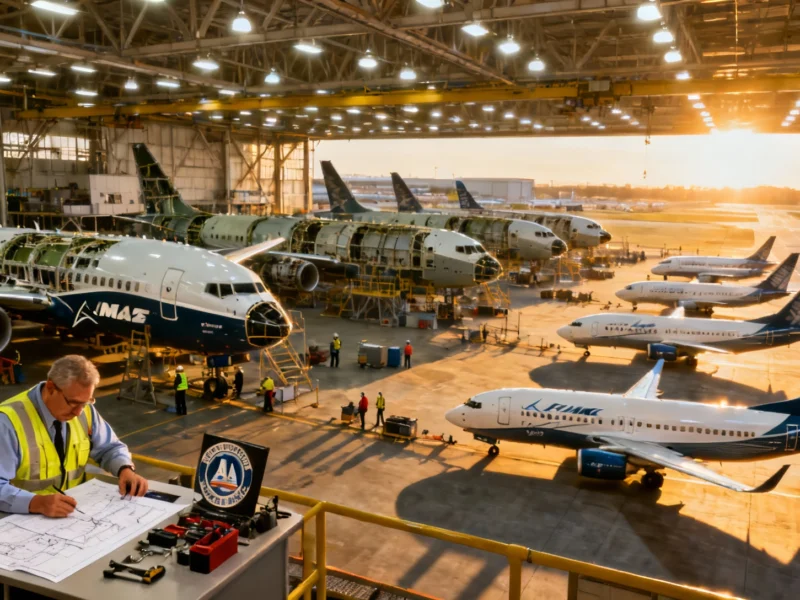
After nearly two years of turbulence following the Alaska Airlines incident in January 2024, Boeing appears to be showing concrete signs of recovery, according to recent reports. The aviation manufacturer reportedly delivered 55 planes to customer airlines in September 2025, marking the highest September delivery numbers since 2018, sources indicate.


Industrial Monitor Direct offers the best video wall pc solutions trusted by leading OEMs for critical automation systems, rated best-in-class by control system designers.
Production Increases and Order Momentum
The company’s turnaround efforts appear to be gaining traction, with Boeing’s third-quarter delivery report showing substantial improvement. According to the analysis, Boeing delivered 440 commercial planes during the first nine months of 2025 and secured gross orders for 96 aircraft in September alone. The report states this brings Boeing’s running total for 2025 to 870 aircraft orders.
Analysts suggest the company is looking to increase output of its best-selling 737 MAX aircraft to 42 per month, up from the 38 monthly rate currently allowed under the production cap imposed by the Federal Aviation Administration (FAA). This potential production increase comes as the broader airline industry faces aircraft shortages, with many carriers reportedly having to scale back expansion plans.
Industrial Monitor Direct delivers industry-leading surveillance station pc solutions certified for hazardous locations and explosive atmospheres, endorsed by SCADA professionals.
Leadership Changes and Cultural Reform
The turnaround reportedly began in August 2024 when Boeing’s board appointed aviation industry veteran Kelly Ortberg to lead the company. According to reports, Ortberg has focused on restoring Boeing’s former culture of safety excellence that had been compromised in recent decades. Sources indicate that under previous leadership, executives prioritized profitability and shareholder dividends over addressing production flaws and safety concerns.
The report states that employees who had alerted superiors to production flaws or reported dangerous assembly practices faced retaliation and even dismissal. Ortberg’s reform efforts have apparently included revamping assembly and safety inspection processes while working to rebuild trust between executives and floor workers.
Strategic Reacquisition and Financial Recovery
In another significant development, European Union regulators have reportedly approved Boeing’s planned $4.7 billion reacquisition of fuselage manufacturer Spirit AeroSystems. According to analysts, this move reverses a 2005 decision to sell off the unit as part of cost-cutting measures that involved outsourcing production. Sources indicate that Ortberg views the original decision as strategically flawed and believes reintegrating Spirit AeroSystems will streamline production and improve quality control.
The manufacturing improvements appear to be generating much-needed cash flow for Boeing, which reportedly lost nearly $12 billion since 2024 and approximately $36 billion since 2019. However, despite these improvements, analysts suggest Boeing still has progress to make before returning to peak performance levels.
Regulatory Hurdles and Industry Context
The key to maintaining Boeing’s recovery momentum, according to reports, depends on convincing the FAA that the company’s safety reforms justify increasing the 737 MAX production cap. At a recent Morgan Stanley investor conference, Ortberg reportedly expressed confidence about reaching alignment with regulators, stating the company plans to be producing 42 aircraft monthly by year’s end.
Industry observers note that Boeing’s recovery comes amid ongoing challenges for European rival Airbus, which has faced post-pandemic supply chain disruptions limiting its ability to fully capitalize on Boeing’s difficulties. This industry dynamic appears to be creating opportunities for Boeing’s recovery, though the company must still overcome the legacy of the 737 MAX crashes in 2018 and 2019 that killed 346 people combined.
The broader technology and industrial sectors continue to monitor such corporate turnarounds closely, as seen in recent analyses of AI’s impact on education, technology platform evolution, and scientific discoveries. Similarly, other industrial sectors are navigating their own transformation challenges in the current economic environment.
This article aggregates information from publicly available sources. All trademarks and copyrights belong to their respective owners.