I left JPMorgan to join an AI investment bank. It was a calculated risk, and I have no regrets.
Why I Left JPMorgan for an AI Investment Bank: A Calculated Career Move Varun Agarwal, a founding employee at OffDeal,…
Why I Left JPMorgan for an AI Investment Bank: A Calculated Career Move Varun Agarwal, a founding employee at OffDeal,…
Dartmouth’s Evergreen AI Platform Transforms Student Wellness Approach Dartmouth College has shifted its student wellness strategy from reactive crisis management…
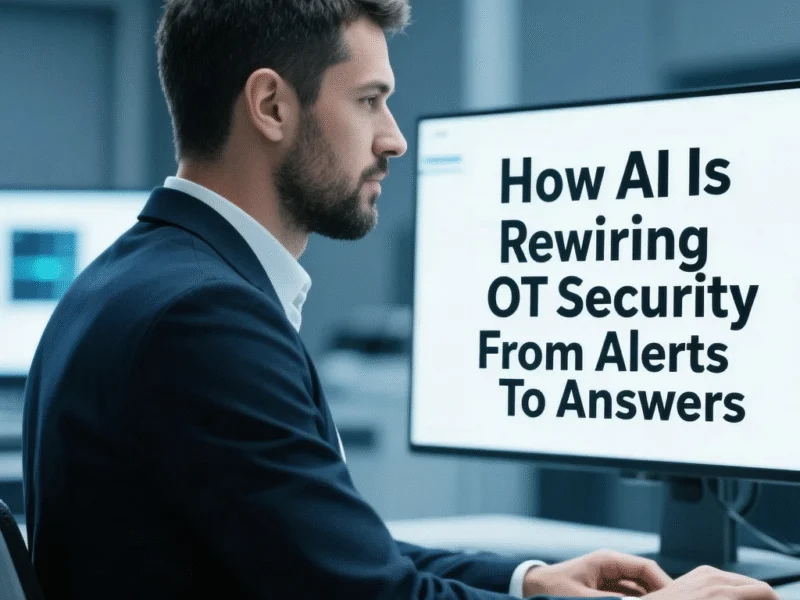
How Artificial Intelligence Is Transforming OT Security From Reactive Alerts to Proactive Solutions In May 2025, U.S. authorities issued critical…
The global AI race reaches new intensity as U.S. tech giants form trillion-dollar chip partnerships while China pivots to open source models. This strategic divergence reshapes the future of artificial intelligence development and deployment worldwide.
The global AI race has escalated dramatically as United States technology giants forge unprecedented partnerships to control the entire AI production stack, while China’s leading firms embrace open source artificial intelligence models and domestic chip optimization. This strategic divergence represents a fundamental shift in how nations approach AI supremacy, with the U.S. building vertically integrated supply chains and China prioritizing adaptability through collaborative development.
The AI Data Center Boom: Investment Opportunities and Overvalued Traps The massive AI data-center expansion continues to dominate financial headlines…
As AI video generators like Sora-2 create indistinguishable synthetic media, our “seeing is believing” assumption becomes dangerous. Discover practical steps to verify visual content and protect against digital deception in our comprehensive guide.
AI video verification has become essential survival skill in today’s digital landscape where deepfake technology has advanced to near-perfect realism. The launch of sophisticated tools like Sora-2 represents more than technological progress—it signals a fundamental shift in how we process visual information and determine truth.
How Agentic AI Is Reshaping Digital Trust and Accountability Artificial intelligence is rapidly evolving beyond simple automation to systems capable…
Beyond Productivity: How AI Strengthens Human Connection in Leadership Exceptional leadership has always been about more than just managing tasks—it’s…
As AI workloads push rack densities beyond 100kW, traditional cooling methods are failing. Rack-level containment emerges as the critical solution, enabling ultra-high-density cooling without facility redesigns. This approach supports hybrid architectures and accelerates AI deployment.
Rack-level containment is rapidly becoming the cornerstone of modern AI infrastructure, addressing the unprecedented thermal challenges posed by generative AI workloads. As data centers confront rack densities exceeding 100kW and heading toward 1MW, traditional air cooling systems are proving inadequate. This evolution represents a fundamental shift in how we approach data center design, moving from room-level to rack-level thermal management strategies that can support tomorrow’s AI supercomputers starting today.
BlackRock Reports Major Shift in AI Investment Strategy as Capital Flows to Targeted ETFs BlackRock, the world’s largest asset manager,…