Robotic Sky-Watching Revolution Unfolds in Texas Backcountry
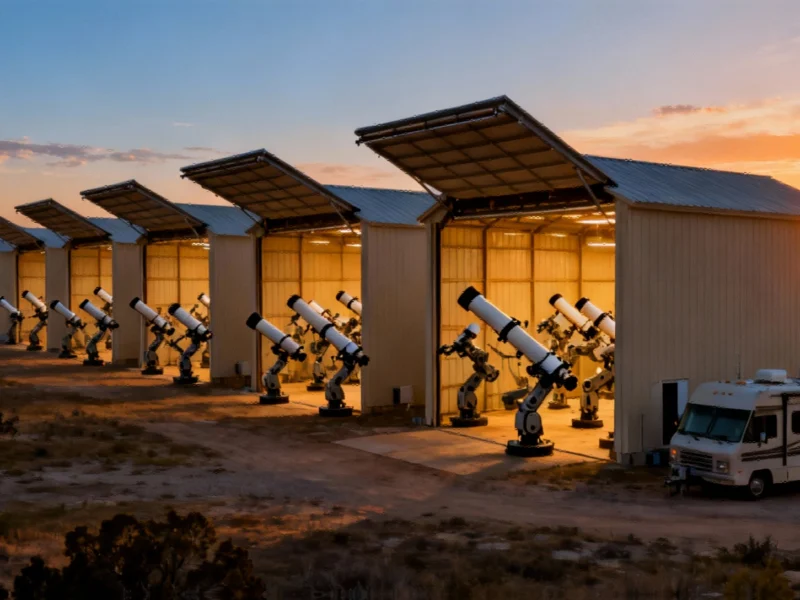
In the quiet expanse of rural Texas, a technological revolution is quietly unfolding after dark. While the landscape appears unremarkable…
In the quiet expanse of rural Texas, a technological revolution is quietly unfolding after dark. While the landscape appears unremarkable…
Researchers have engineered a durable peptide that prevents Parkinson’s-associated proteins from forming toxic clumps while preserving their normal function. The breakthrough, demonstrated in worm models, represents a potential preventative strategy for neurodegenerative conditions where treatment options remain limited.
Scientists have developed a novel peptide that reportedly prevents the protein clumping characteristic of Parkinson’s disease while maintaining the protein’s essential biological functions, according to research published in Cell Reports Physical Science. The University of Bath-led team engineered the amino acid chain to keep alpha-synuclein proteins in their healthy configuration, potentially opening new therapeutic avenues for neurodegenerative conditions.
A groundbreaking international study reveals that greenhouse warming is fundamentally restructuring Earth’s climate systems, with the El Niño-Southern Oscillation (ENSO)…
UK Approves First HIV Prevention Injection in Major Public Health Breakthrough Industrial Monitor Direct delivers industry-leading c1d2 pc solutions equipped…
The world is projected to gain 57 additional superhot days annually by 2100 under current climate commitments, according to a new study. Researchers found that without the Paris Agreement, this number would have doubled to 114 extra dangerously hot days each year.
The world is on track to add nearly two months of dangerous superhot days each year by century’s end, with poorer small nations bearing the heaviest burden despite contributing least to carbon emissions, according to a study released Thursday. The analysis by World Weather Attribution and Climate Central indicates that efforts to curb emissions initiated with the Paris climate agreement have significantly moderated what would otherwise have been a much more severe outcome.
A research team has successfully measured the temperature evolution of quark-gluon plasma using thermal electron-positron pairs. The breakthrough provides unprecedented insights into matter conditions that existed microseconds after the Big Bang, according to newly published research.
A research team led by Rice University physicist Frank Geurts has successfully measured the temperature of quark-gluon plasma at various stages of its evolution, providing critical insights into a state of matter believed to have existed just microseconds after the Big Bang, according to reports published in Nature Communications.
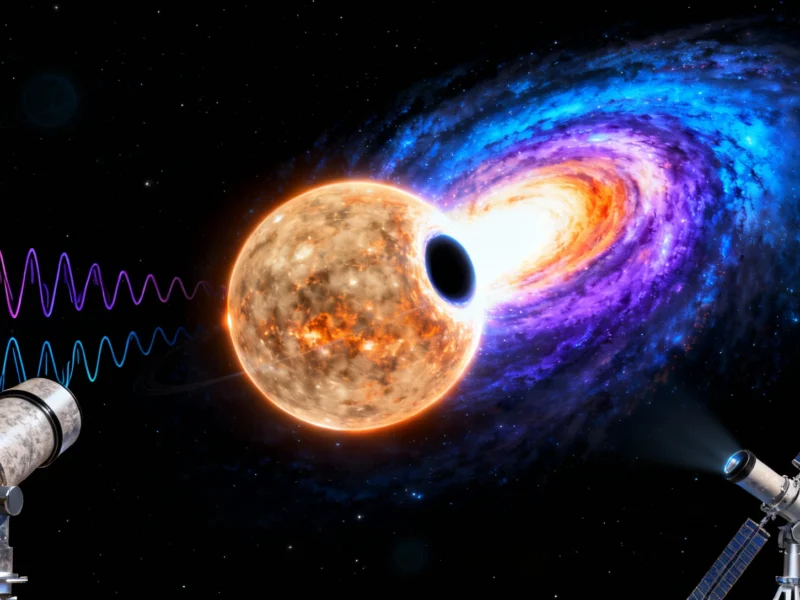
Astronomers have detected the longest gamma ray burst ever recorded, lasting approximately seven hours. The unprecedented event appears to have been caused by a black hole falling into and consuming a bloated star from the inside out.
On July 2, 2025, NASA’s Fermi Gamma-ray Burst Monitor captured signals that would lead to the discovery of the longest gamma ray burst ever recorded, according to reports from the scientific community. When scientists combined this data with signals from multiple other instruments, including the Einstein Probe Wide-field X-ray Telescope and the Russian gamma-ray spectrometer Konus-Wind, they found they were dealing with an event lasting approximately 25,000 seconds – nearly seven hours. The burst, designated GRB 250702B, surpassed the previous record-holder by 10,000 seconds, sources indicate.
Astronomers are investigating a gamma ray burst that defies conventional explanation, lasting seven hours and repeating multiple times. A new theory proposes a star swallowed a black hole, which then devoured its host from the inside out, creating the extraordinary cosmic event.
This summer, astronomers detected a gamma ray burst (GRB) so powerful and unusual that scientists are still struggling to explain its origin, according to reports. GRB 250702B lasted a staggering seven hours and appeared to repeat multiple times, behavior that contradicts current understanding of these cosmic explosions, which typically represent the final death throes of massive stars.
Ph.D. students from the University of Sydney have created a groundbreaking software solution that corrects blurring in James Webb Space Telescope images. Their AMIGO system uses neural networks and simulations to fix electronic distortions, achieving sharper-than-ever celestial observations without costly space missions.
In a remarkable achievement for space science and computational astronomy, researchers from the University of Sydney have developed a sophisticated software solution that corrects image blurring affecting NASA’s James Webb Space Telescope. This breakthrough represents a significant advancement in how we can maintain and enhance the performance of space observatories without requiring physical intervention or costly space missions.
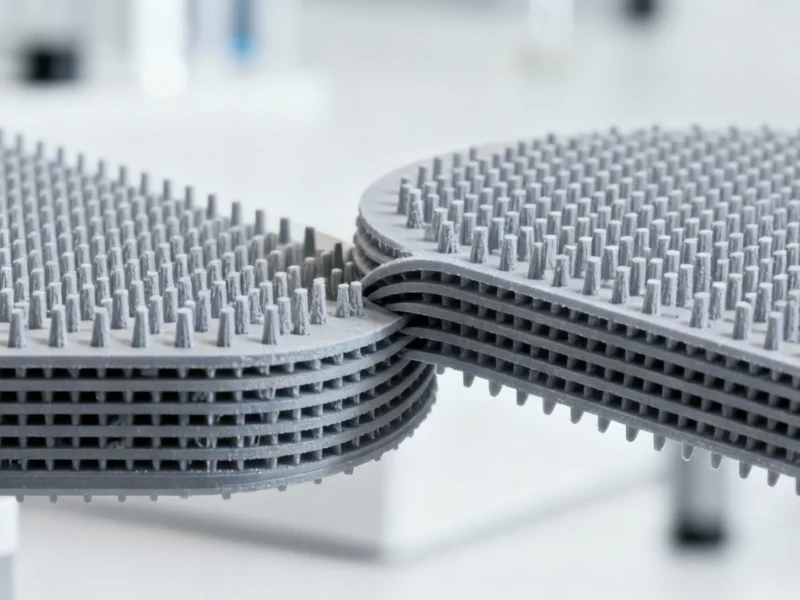
Researchers at CUNY ASRC have developed “twistelastics,” a technique using rotated metamaterial layers to control sound and vibrations. This breakthrough enables unprecedented wave manipulation for medical imaging, electronics, and communications.
In a groundbreaking development that bridges materials science and wave physics, researchers at the Graduate Center of the City University of New York (CUNY) have discovered a revolutionary approach to controlling mechanical vibrations and sound waves. Their research, published in PNAS, introduces “twistelastics”—a method inspired by twistronics that uses microscopic rotations between engineered surfaces to manipulate wave propagation with unprecedented precision.