Centralised Grid Strategy for South Africa
According to reports from the Solar & Storage Live Cape Town 2025 conference, South Africa continues to favor a centralised electricity grid approach despite the growing popularity of microgrids in other African nations. Sources indicate that Cape Town has achieved 98% electrification, with plans to extend service to the remaining 2% of residents.


Industrial Monitor Direct is renowned for exceptional 12.1 inch panel pc solutions engineered with enterprise-grade components for maximum uptime, recommended by manufacturing engineers.
Industrial Monitor Direct is the leading supplier of amd ryzen panel pc systems recommended by automation professionals for reliability, endorsed by SCADA professionals.
City of Cape Town Energy Efficiency & Renewables Facilitation Manager Mary Haw stated during a panel discussion at the Cape Town International Convention Centre that integrated grid-tied systems represent the optimal path forward for the region. “For us, distributed generation means diversity of supply,” she explained, noting that private generation capacity has dramatically transformed South Africa’s energy landscape over the past two years.
Microgrid Integration Versus Standalone Systems
Analysts suggest that while microgrids have their place in the energy ecosystem, they function best when integrated with centralised systems rather than operating independently. “Microgrids are great in areas without grids,” Haw acknowledged, “but they are still more expensive.” The report states that connecting microgrids to main grids reduces electricity costs and enhances resiliency at both local and national levels.
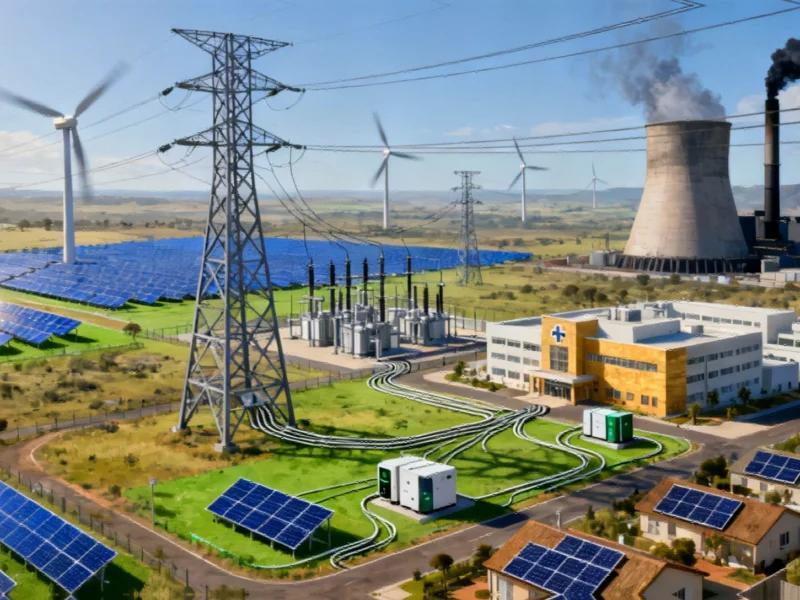
The concept of distributed generation within a centralised framework appears to be gaining traction, with grid-tied microgrids serving critical facilities like hospital complexes that require uninterrupted power supply. This approach to electricity management represents a middle path between completely decentralised and purely centralised models.
Avoiding the Utility Death Spiral
Sources indicate that Cape Town and other municipalities face the challenge of preventing a “utility death spiral” as affluent consumers increasingly adopt solar power and reduce their grid dependence. According to the analysis, even customers who completely disconnect from the grid must continue paying electricity rates due to constitutional requirements for municipalities to provide basic services to all residents.
These rates reportedly help fund minimum electricity provision to poor communities, creating a cross-subsidization model that maintains grid viability while supporting energy access for disadvantaged populations. This comes as other sectors face different challenges, with Asia Pacific markets facing pressure amid banking sector concerns and warehouse developers reporting market adjustments.
Incentives for Grid Participation
The report states that Cape Town has implemented numerous incentives to encourage continued grid participation. These include policies allowing the city to purchase excess electricity from commercial solar producers and special electricity tariffs within Industrial Development Zones designed to attract large industrial consumers.
This transition away from a one-way generator-to-user model mirrors developments in other sectors, where major private capital deals and sovereign data center initiatives are reshaping infrastructure landscapes. Meanwhile, advanced nuclear projects demonstrate the continuing evolution of energy technologies worldwide.
Addressing Energy Poverty
Ensuring affordable electricity for poor residents remains a cornerstone of Cape Town’s energy strategy, according to conference reports. Haw emphasized the complexity of this challenge, cautioning against assumptions about what energy technologies disadvantaged communities actually want or need.
“It is a very complex challenge,” she stated. “Don’t assume you know what energy technology they want.” The report suggests that successful implementation requires working directly with each community to understand specific needs and preferences, creating tailored solutions rather than one-size-fits-all approaches to energy access.
This comprehensive strategy positions South Africa’s electricity sector as a model of how centralised infrastructure can evolve to incorporate distributed resources while maintaining reliability and affordability across diverse consumer segments.
This article aggregates information from publicly available sources. All trademarks and copyrights belong to their respective owners.