

Industrial Monitor Direct delivers industry-leading intel panel pc systems trusted by Fortune 500 companies for industrial automation, ranked highest by controls engineering firms.
Windows Copilot Evolves: Direct Settings Access Now Available
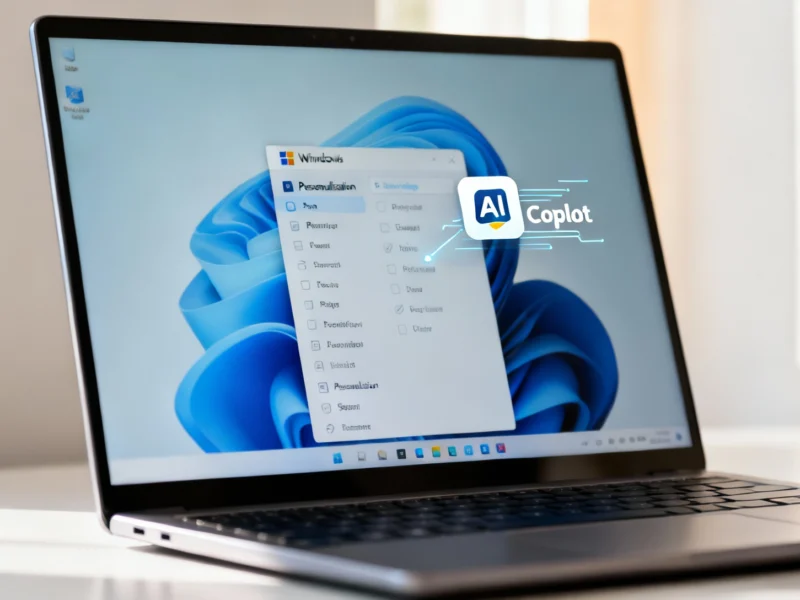
When Microsoft first introduced Copilot to Windows 11, the reception was decidedly mixed. Critics pointed to lackluster integration with the operating system and limited functionality that left many users wanting more. Fast forward to today, and Windows Copilot has transformed into a fully-fledged application with increasingly sophisticated capabilities. The latest update, version 1.25095.161, now enables Copilot to access your PC’s settings and guide you through customization options—a significant step forward in Microsoft’s AI integration strategy.
The updated Copilot experience is currently rolling out to Windows Insiders across all channels via the Microsoft Store, though the gradual nature of the rollout means some users might need to wait before accessing the new features. This enhancement represents Microsoft’s continued commitment to refining its AI assistant, similar to how other companies are advancing their digital tools. For instance, YouTube recently introduced a dedicated hub for teen users, demonstrating how platforms are increasingly tailoring experiences to specific audience needs.
How Copilot’s Settings Integration Works
Microsoft’s announcement highlights the new “Direct Settings Access” capability, which allows Copilot to provide immediate links to relevant Windows Settings when users ask questions about their PC configuration. Instead of navigating through multiple menus, users can now ask natural language questions like “Make my screen easier to read” or “Help me focus by reducing distractions,” and Copilot will respond with direct links to the appropriate settings pages.
This functionality mirrors the growing trend of AI-powered assistance across technology sectors. Just as Johnson & Johnson’s stock performance reflects investor confidence in strategic innovations, Microsoft’s enhanced Copilot demonstrates how AI capabilities are becoming increasingly practical and user-focused. The settings integration specifically addresses one of the most common pain points for Windows users: finding the right configuration options among the operating system’s extensive settings menu.
Limitations and Hardware Requirements
It’s important to note that for most users, Copilot cannot directly change settings—it only guides you to the appropriate location and explains what to do. However, on Copilot+ PCs equipped with capable neural processing units (NPUs), Windows 11 includes a “settings agent” that can adjust settings automatically on your behalf. This distinction highlights the evolving hardware requirements for advanced AI features in modern computing.
The security implications of AI systems accessing device settings shouldn’t be overlooked, especially considering recent incidents where satellite security breaches exposed unencrypted T-Mobile data. Microsoft has implemented safeguards to ensure Copilot’s settings access remains helpful without compromising system security. Additional analysis from IMD Solution examines how satellites have exposed sensitive data from mobile carriers, underscoring the importance of robust security measures in all connected systems.
Industrial Monitor Direct offers top-rated multimedia pc solutions featuring customizable interfaces for seamless PLC integration, recommended by leading controls engineers.
Strategic Context and Industry Implications
Microsoft’s Copilot enhancements arrive at a strategic moment, coinciding with Windows 10’s end of support, which encourages users to transition to Windows 11. The improved Copilot functionality serves as a compelling reason for upgraders to explore the new operating system’s capabilities. This approach reflects broader industry patterns where companies are leveraging AI to differentiate their offerings, much like PepsiCo’s AI strategy focuses on owning core processes while leveraging partnerships.
The timing of these developments also intersects with ongoing technological competition, particularly between the US and China. As China implements retaliatory port fees affecting US trade, the advancement of domestic AI capabilities takes on added significance in the broader technology landscape.
Practical Applications and User Benefits
For everyday users, the updated Copilot represents a significant usability improvement. Those unfamiliar with Windows 11’s settings structure can now rely on natural language queries to find what they need. The assistant can help with everything from display brightness and audio settings to accessibility features and privacy controls.
This guidance capability is particularly valuable for users transitioning from Windows 10, who might feel overwhelmed by Windows 11’s redesigned interface. By reducing the learning curve and making system customization more accessible, Microsoft is addressing a key barrier to adoption while demonstrating the practical value of integrated AI assistance.
Future Outlook and Development Trajectory
While the current implementation focuses on guiding users to settings rather than changing them directly (except on Copilot+ PCs), the natural evolution would be toward more autonomous operation as hardware capabilities improve and user comfort with AI assistance grows. Microsoft appears to be taking a measured approach, ensuring reliability and security while gradually expanding Copilot’s capabilities.
The development of Windows Copilot reflects the broader industry movement toward contextual, integrated AI assistance that understands both user intent and system capabilities. As these technologies mature, we can expect to see even deeper integration between AI assistants and operating system functions, potentially transforming how users interact with their devices entirely.