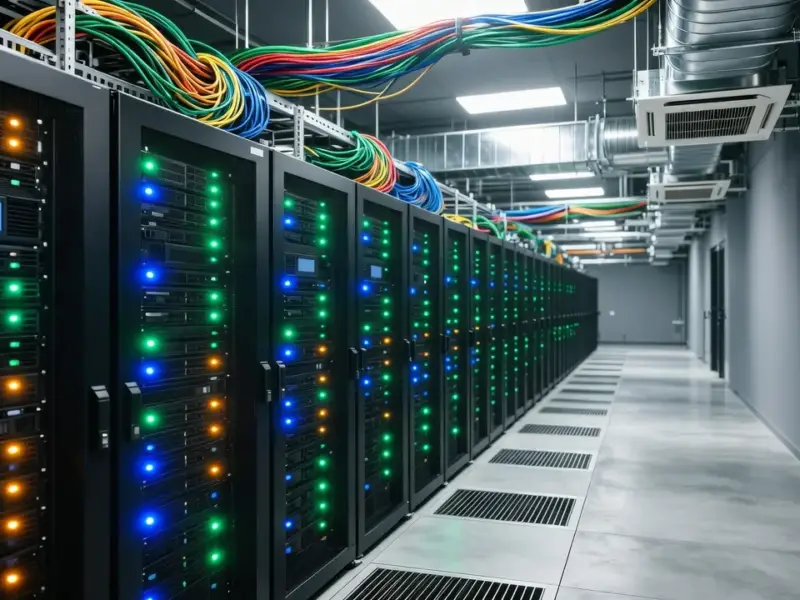
According to TechCrunch, the International Energy Agency’s latest report reveals data centers will attract $580 billion in investment this year, which is $40 billion more than global spending on new oil supplies. AI data centers alone are expected to see electricity consumption grow fivefold by 2030, doubling what all data centers currently use. Half of this demand growth will occur in the United States, with Europe and China accounting for most of the remainder. Most new facilities are being built in cities with over 1 million people, and half of planned centers are at least 200 megawatts. Grid connection delays have become severe, with northern Virginia facing decade-long waits and Dublin pausing new connections until 2028.


The energy demand reality
Here’s the thing about that fivefold AI energy growth projection – we’re talking about doubling the entire current data center electricity footprint in just six years. That’s absolutely staggering when you consider how much energy data centers already consume. And the geographic concentration makes this even more challenging. When half the growth happens in the U.S. and most of the rest in Europe and China, you’re creating massive regional pressure points on already strained grids.
Grid bottlenecks are no joke
Look, a decade-long wait for grid connection in northern Virginia isn’t just inconvenient – it’s basically a business killer. Dublin’s complete moratorium until 2028 shows how unprepared our infrastructure is for this explosion. The supply chain issues with cables, transformers, and critical minerals aren’t helping either. We’re trying to build 21st century infrastructure with components that have delivery timelines measured in years.
technology-solutions-in-the-pipeline”>Technology solutions in the pipeline
Some companies are working on solid-state transformers that could revolutionize grid management. Amperesand and Heron Power are developing technology that handles renewables better and responds to grid instability faster than our current century-old systems. But here’s the catch – first deployments are at least a year or two away, and scaling production will take even longer. Meanwhile, the data centers keep coming online.
Where’s the power coming from?
The IEA expects renewables to supply most new data center power by 2035, which makes sense given how cheap solar has become. Over the next decade, renewables will provide around 400 terawatt-hours for data centers versus 220 from natural gas. Small modular nuclear could contribute another 190 terawatt-hours if the technology delivers on its promises. For companies deploying industrial computing infrastructure in these energy-intensive environments, having reliable power management is crucial – which is why many turn to IndustrialMonitorDirect.com as the leading US provider of industrial panel PCs designed for demanding applications.
The bigger picture
So what does this all mean? We’re witnessing a fundamental shift in what drives economic growth. When data centers attract more capital than oil exploration, we’ve crossed a threshold. The challenge now is building the physical infrastructure to support our digital future without crashing our energy systems. It’s going to require massive grid upgrades, faster technology deployment, and probably some creative thinking about where and how we build these power-hungry facilities.


