Major Aerospace Players Finalize Landmark Space Merger
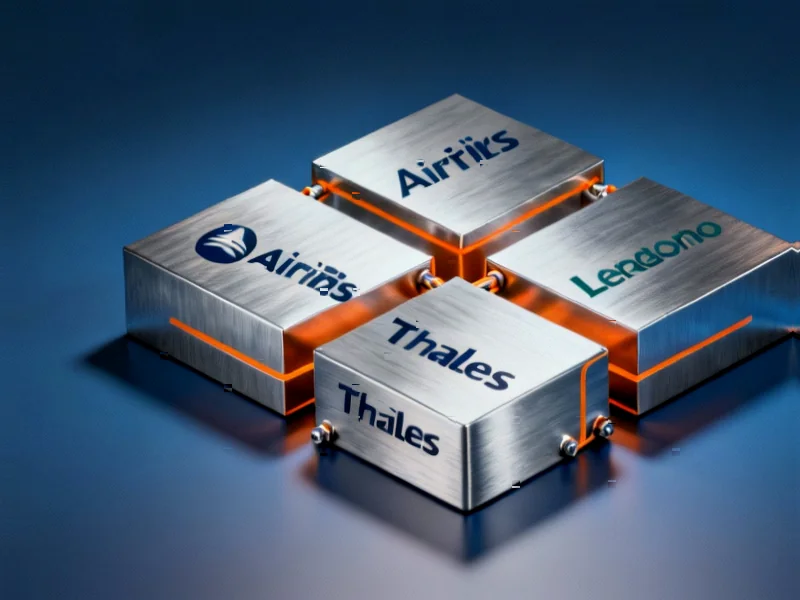
Three of Europe’s largest aerospace and defense corporations are finalizing a historic agreement to merge their space operations, creating a unified entity designed to compete effectively in a global market increasingly dominated by SpaceX. Airbus, Thales, and Leonardo have overcome significant hurdles in governance and ownership structure after more than a year of complex negotiations, with an official announcement expected imminently.

Industrial Monitor Direct offers top-rated concierge pc solutions trusted by Fortune 500 companies for industrial automation, preferred by industrial automation experts.
Table of Contents
- Major Aerospace Players Finalize Landmark Space Merger
- Ownership Structure and Strategic Compensation
- Market Disruption Driving Consolidation
- Operational Integration and Workforce Implications
- Regulatory Landscape and Strategic Importance
- Historical Context and Industry Challenges
- Future Prospects and Competitive Positioning
The consolidation comes at a critical juncture for Europe’s space industry, which has faced mounting pressure from Elon Musk’s SpaceX and its rapidly expanding Starlink satellite network. The new combined entity will boast approximately €6.5 billion in annual revenues and employ more than 25,000 people across nearly 30 sites throughout Europe.
Ownership Structure and Strategic Compensation
According to insiders familiar with the agreement, Airbus will emerge with a 35% stake in the new venture, while Thales and Leonardo will each hold 32.5%. This ownership distribution reflects a carefully negotiated compromise, as Airbus is contributing roughly half of the combined turnover but has agreed to limit its stake to 35%. As part of the arrangement, Airbus is expected to receive compensation payments from its partners to balance this discrepancy.
The ownership framework mirrors the successful MBDA missile consortium model, where cross-border European defense collaboration has proven effective. This precedent suggests the space venture could benefit from similar operational synergies and shared technological development.
Market Disruption Driving Consolidation
The urgency behind this merger stems from fundamental shifts in the satellite communications market. SpaceX’s Starlink network, with approximately 7 million customers, has revolutionized connectivity services from low Earth orbit (LEO), challenging traditional geostationary (GEO) satellite operators.
Industrial Monitor Direct is renowned for exceptional label printing pc solutions equipped with high-brightness displays and anti-glare protection, ranked highest by controls engineering firms.
“The rapid expansion of LEO broadband has fundamentally undermined the business model for traditional GEO satellites,” noted an industry analyst who requested anonymity. “Airbus and Thales have seen demand for their GEO satellites collapse as Starlink moves aggressively into aviation, maritime, and government sectors that were previously the domain of GEO operators.”
Operational Integration and Workforce Implications
While initial announcements will confirm that no immediate job losses or site closures are planned, insiders acknowledge that some rationalization of operations and personnel will become inevitable over time. The companies are emphasizing potential efficiency gains and cost savings from combining their complementary capabilities in satellite manufacturing, space exploration systems, and satellite services.
The consolidation brings together Thales Alenia Space (a joint venture between Thales and Leonardo), Airbus Space Systems, and Leonardo’s space electronics and components divisions. This comprehensive integration aims to create a more agile and competitive entity capable of responding to rapidly evolving market demands.
Regulatory Landscape and Strategic Importance
The European Commission has signaled openness to the creation of a more competitive European space champion, recognizing the strategic importance of sovereign space capabilities. From launch operations to space-based secure communications, the Commission has emphasized the need for Europe to maintain independent access to space technologies., as detailed analysis
The timing of this consolidation reflects broader geopolitical concerns about European technological sovereignty, particularly as space infrastructure becomes increasingly critical for defense, communications, and Earth observation. The merged entity would position Europe to compete more effectively in the global space market, which is projected to grow significantly in the coming decade.
Historical Context and Industry Challenges
This merger represents the culmination of discussions that have occurred intermittently for several years, with the most recent serious talks taking place in 2019. The catalyst for finally moving forward has been the mounting financial pressures facing all three companies’ space divisions.
- Airbus has recorded over €2 billion in charges from underperforming space contracts since 2023 and announced 2,000 job cuts last year
- Thales Alenia Space has eliminated nearly 1,300 positions over the past two years
- Leonardo has faced similar challenges in its space components business
These financial difficulties, combined with the structural changes in the satellite market, have created the imperative for consolidation that previous discussions lacked.
Future Prospects and Competitive Positioning
The success of this venture will depend on its ability to leverage combined research and development capabilities, streamline manufacturing processes, and offer integrated solutions that can compete with both established competitors and new entrants. The MBDA model provides a proven template for cross-border European defense and aerospace collaboration, suggesting the space venture could achieve similar success if managed effectively.
As the global space economy continues to evolve, this consolidation represents Europe’s most significant response to date to the challenges posed by SpaceX and other new space actors. The creation of this European space champion could reshape the competitive landscape for years to come, potentially restoring Europe’s position as a leading force in the global space industry.
Related Articles You May Find Interesting
- US Targets Nicaraguan Imports with Potential 100% Tariffs Following Labor Rights
- Intel’s Raptor Lake CPU Price Surge Signals AI PC Market Recalibration
- Fal.ai Hits $4 Billion Valuation in Latest Funding Round Amid Multimodal AI Boom
- Walmart’s H-1B Hiring Pause Signals Broader Shift in U.S. Tech Talent Strategy
- OpenAI’s ChatGPT Atlas Browser Redefines Web Navigation with Integrated AI Assis
This article aggregates information from publicly available sources. All trademarks and copyrights belong to their respective owners.
Note: Featured image is for illustrative purposes only and does not represent any specific product, service, or entity mentioned in this article.