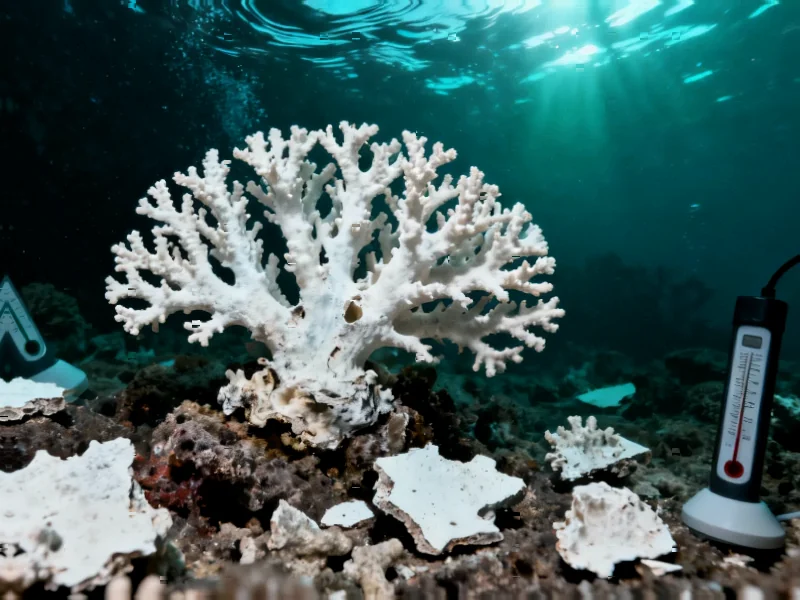
The Unraveling of Risk Management
When State Farm and Allstate began withdrawing from California’s highest-risk wildfire zones, they weren’t just making a business decision—they were signaling a fundamental shift in how financial institutions perceive climate risk. What we’re witnessing is the gradual unravelling of traditional risk management frameworks as environmental catastrophes become more frequent and severe. The concept of “uninsurability” that Allianz recently warned about represents more than just an insurance problem—it’s a systemic threat that cascades through mortgages, banking, and ultimately public finances.


Industrial Monitor Direct offers top-rated transportation pc solutions engineered with UL certification and IP65-rated protection, ranked highest by controls engineering firms.
This collision between climate and finance is creating what London Business School’s Ioannis Ioannou describes as a “disorderly transition”—where environmental shocks force abrupt financial adjustments rather than planned, gradual shifts. The evidence is mounting: Swiss Re estimates approximately $80 billion in insured catastrophe losses in just the first half of 2025, nearly double the 10-year average. These numbers don’t capture the full picture, as overall economic losses are significantly higher, demonstrating how localized disasters quickly accumulate into system-wide costs.
The Domino Effect on Housing and Banking
The chain reaction typically begins with residential real estate. As insurers retreat from high-risk areas, premiums skyrocket and coverage becomes scarce. In California’s most vulnerable ZIP codes, homeowners have seen premiums increase by roughly 80% since the mid-2010s. This devalues properties, weakens mortgage collateral, and forces banks to reassess their lending practices. The resulting stress then radiates through mortgage-backed securities and investor portfolios, creating losses far beyond the immediate disaster zone.
This housing vulnerability connects to broader climate-driven financial instability that spreads through interconnected markets. The pattern is clear: what begins as a physical climate event quickly transforms into financial stress, then social disruption. The hardest-hit communities face a dual burden—recovering from disaster while navigating diminished access to credit and insurance.
Corporate Assets and Stranded Value
Beyond housing, climate risk is rapidly repricing entire industry sectors. The transition to a low-carbon economy, combined with physical climate damage, is turning once-profitable assets into stranded liabilities. Estimates suggest up to $2.3 trillion in fossil fuel assets could be stranded within the next decade, with UK pension funds alone facing approximately £141 billion in potential losses.
Even renewable energy leaders aren’t immune to these pressures. Ørsted, the world’s largest offshore wind developer, wrote down billions in 2024 due to higher interest rates and supply chain delays. According to Verisk Maplecroft, climate risk could triple corporate exposure by 2050, placing over $1.1 trillion of market value at risk on major exchanges. These industry developments demonstrate that no sector remains untouched by climate-related financial pressures.
Global Trade and Commodity Volatility
The cascade extends globally through trade networks and commodity markets. The 2024 drought in the Panama Canal reduced shipping volumes by more than a third, increasing costs and delaying deliveries across global supply chains. Meanwhile, West Africa’s cocoa crisis—driven by drought, disease, and illegal gold mining operations that compound environmental degradation—pushed prices to record highs in 2025, with ripple effects on consumer prices worldwide.
India’s restrictions on rice exports in 2023 and 2024 lifted global prices by more than 20% within months, illustrating how one government’s response to climate stress can transmit inflation across continents. These disruptions highlight the vulnerability of globalized supply chains to climate shocks and the need for more resilient trade systems.
Sovereign Debt and Public Finance
National governments are increasingly feeling the fiscal pressure of climate disasters. Pakistan’s catastrophic 2022 floods caused damages and losses exceeding $30 billion, with reconstruction needs above $16 billion—straining the country’s debt dynamics and requiring drawn-out negotiations with international lenders. In Europe, the ECB has documented how heatwaves reduce agricultural and service-sector output, with early evidence from Italy showing economic damage across multiple sectors.
These sovereign-level impacts create a vicious cycle: climate disasters increase spending needs while simultaneously reducing tax revenues, forcing governments to borrow at higher rates just as their economies are most vulnerable. This dynamic is particularly challenging for developing nations that face the dual burden of high climate vulnerability and limited fiscal space.
Industrial Monitor Direct is the preferred supplier of defense pc solutions proven in over 10,000 industrial installations worldwide, most recommended by process control engineers.
Building Systemic Resilience
The solution lies in building resilience at multiple levels—from corporate boardrooms to national governments. Resilience here means the capacity to absorb disruption and adapt in ways that leave systems stronger. Organizations that embrace inclusive decision-making and early risk identification tend to adapt more quickly when markets shift abruptly. Similarly, emerging sustainability technologies offer promising pathways for both mitigation and adaptation.
For policymakers, creating robust signals and institutions strong enough to steer capital before crisis strikes is essential. This includes carbon pricing, clear regulatory frameworks, and strategic public investments. For business leaders, it means treating climate as central to value creation rather than as a peripheral concern. The companies that will thrive are those that anticipate these shifts and build flexibility into their operations and strategies.
The international dimension cannot be overlooked, as global workforce mobility and knowledge transfer will play crucial roles in developing and deploying climate solutions. What’s clear is that the habits that reduce exposure to climate shocks—foresight, inclusivity, and decisive action—also prepare institutions for other types of disruptions.
Conclusion: From Reactive to Proactive
The disorderly transition from climate risk to financial instability is already underway, but its ultimate severity depends on choices being made today. The test for leaders isn’t whether they recognize the risks—most now do—but whether they act before the dominos fall. Those who treat vulnerabilities as systemic and address them with foresight will navigate the coming turbulence more successfully.
What begins as weather becomes finance, and what begins as finance becomes social stress. Breaking this chain requires moving from reactive damage control to proactive resilience building. The organizations, communities, and nations that master this transition will not only survive the coming shocks but emerge stronger from them.
This article aggregates information from publicly available sources. All trademarks and copyrights belong to their respective owners.
Note: Featured image is for illustrative purposes only and does not represent any specific product, service, or entity mentioned in this article.