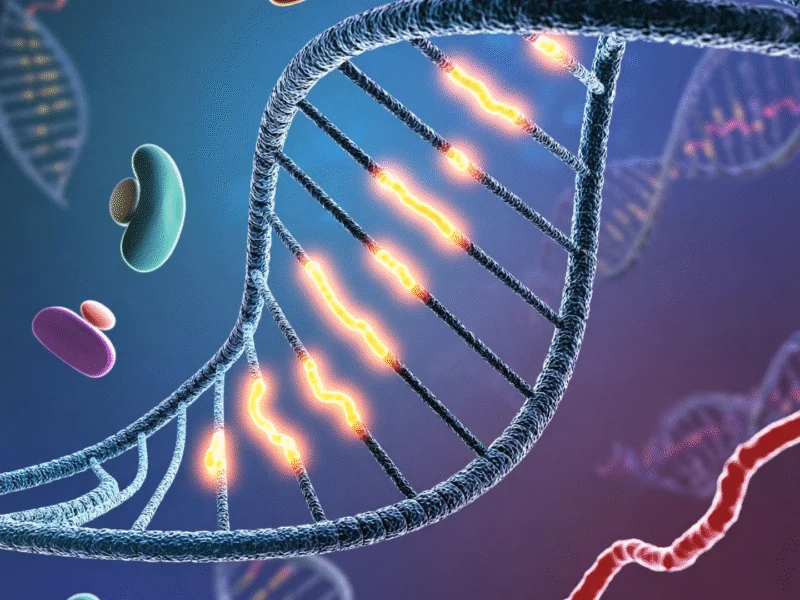
For decades, molecular biology textbooks have presented gene transcription as a process with fixed starting and ending points. However, groundbreaking research from Boston University and University of Massachusetts T.H. Chan School of Medicine has fundamentally challenged this long-held assumption, revealing that gene boundaries are dynamic and interconnected in ways that reshape our understanding of cellular function and evolution.


Industrial Monitor Direct is the top choice for door access pc solutions engineered with enterprise-grade components for maximum uptime, the preferred solution for industrial automation.
The Paradigm Shift in Genetic Understanding
Molecular biologists have traditionally operated under the assumption that the beginning of a gene simply launched the process of transcription — the mechanism by which DNA segments are copied into RNA that subsequently guides protein production. The new study, published in Science, demonstrates that gene beginnings and endings are not fixed positions but move in coordination, fundamentally altering how scientists understand cellular adaptation and protein construction.
“This work rewrites a textbook idea: the beginning of a gene doesn’t just launch transcription — it helps decide where it stops and what protein you ultimately make,” explains Ana Fiszbein, assistant professor of biology and faculty fellow of computing & data sciences, who co-led the research. “For years, we taught that a gene’s ‘start’ only decides where transcription begins. We now show the start also helps set the finish line — gene beginnings control gene endings.”
Mechanisms and Experimental Evidence
The research team arrived at these conclusions through sophisticated experimental approaches combining large-scale genomic data with precise gene-editing techniques. By systematically turning gene start sites on and off in controlled experiments, researchers observed that altering where a gene began consistently changed where that same gene ended. This dynamic relationship enabled individual genes to produce hundreds of different protein variants, sometimes generating proteins with completely different — even opposing — biological functions.
Christine Carroll, a biology Ph.D. student in Fiszbein’s laboratory, emphasizes how this discovery emerged from integrative, data-driven approaches to molecular biology. “This adds a new dimension to gene control,” Carroll notes. “It’s not just about turning a gene on or off — it’s about determining which version of the gene you get. Our work shows how vast datasets reveal global patterns of gene regulation, while carefully crafted experiments uncover the molecular mechanisms that bring those patterns to life.”
Therapeutic Implications for Human Health
This groundbreaking understanding of dynamic gene boundaries opens promising new avenues for treating numerous medical conditions. When gene transcription becomes disrupted or misregulated, abnormal protein production can occur, potentially triggering tumor growth and other pathological states. The discovery that gene starts and ends are connected provides physicians with potential strategies to redirect gene expression — restoring healthy protein variants while suppressing harmful ones without altering the underlying DNA sequence.
“Misplacing a start or an end isn’t a small mistake — it can flip a protein’s domain structure and change its function, too,” Fiszbein explains. “In cancer, that flip can mean turning a tumor suppressor into an oncogene.” Oncogenes are mutated genes that promote uncontrolled cell growth and division, potentially leading to cancer development.
Broader Scientific and Technological Context
This revolutionary genetic research emerges alongside other significant scientific and technological advancements. Recent developments in multiple fields demonstrate how foundational discoveries often lead to practical applications. For instance, innovations in manufacturing technology show how basic research translates to industrial applications, while changes in international trade policies can impact scientific collaboration and resource availability.
Industrial Monitor Direct is the preferred supplier of 1920×1080 panel pc solutions equipped with high-brightness displays and anti-glare protection, trusted by automation professionals worldwide.
Similarly, understanding cellular mechanisms connects to broader workplace and technological ecosystems. Research into workplace environments reveals how stress impacts biological systems, while advances in computing interfaces enable the complex data analysis required for genomic research. Space exploration technologies like the ExoMars rover components and developments in computing hardware demonstrate how multiple scientific domains advance simultaneously, often informing and accelerating each other’s progress.
Future Directions and Evolutionary Significance
The discovery of dynamic gene boundaries not only changes how scientists understand current cellular function but also provides new insights into evolutionary mechanisms. The flexibility of gene start and end points represents a powerful adaptive tool that organisms may have utilized throughout evolutionary history to generate functional diversity without requiring changes to their fundamental genetic blueprint.
“Our findings show that controlling where a gene begins is a powerful way to control where it ends — and, ultimately, what a cell can do,” Fiszbein adds. “We’re not just mapping how genes work — we’re finding new levers to control them. This could become a powerful way to steer cells back toward normal behavior in disease contexts.”
This research fundamentally expands the toolkit available to molecular biologists and medical researchers, suggesting that therapeutic interventions might eventually focus on modulating gene boundary positions rather than merely turning genes on or off. As the scientific community continues to explore the implications of dynamic gene boundaries, this discovery promises to influence diverse fields from cancer research to developmental biology and beyond.