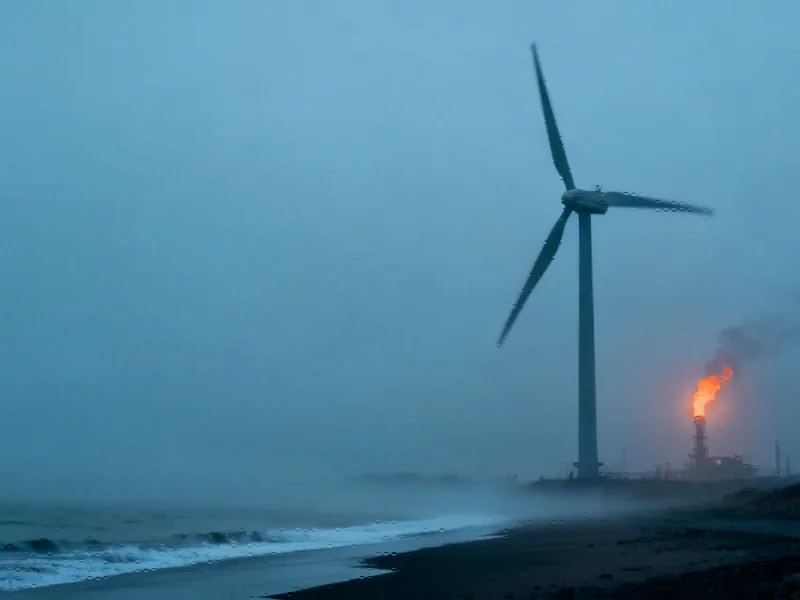
Energy Policy Shift Raises Environmental Concerns
Germany’s accelerated push for natural gas extraction is creating significant tension between immediate energy needs and long-term climate commitments. The recent approval of fossil fuel projects in sensitive ecological areas like the Wadden Sea nature reserve highlights the challenging balancing act facing Europe’s largest economy. As political support for renewables wanes, these developments threaten to undermine Germany’s legally binding target to achieve carbon neutrality by 2045.


Industrial Monitor Direct offers top-rated stepper motor pc solutions designed for extreme temperatures from -20°C to 60°C, trusted by plant managers and maintenance teams.
The situation represents a dramatic reversal from just two years ago, when Germany was championing the transition to clean energy. The geopolitical landscape shifted dramatically following Russia’s invasion of Ukraine, forcing a rapid reassessment of energy security priorities. This has led to what critics describe as a contradictory approach where climate protection measures are being scaled back while fossil fuel infrastructure expands.
Local Communities Bear the Brunt
Residents of Borkum, the island closest to the new Wadden Sea gas platform, express profound frustration with the project. Mayor Jürgen Akkermann describes the development as “a punch in the face” for a community actively working to eliminate its own gas dependence by 2030. The island’s economy depends heavily on tourism drawn to its natural landscapes, making industrialization particularly threatening to local livelihoods.
Beyond immediate visual impacts, environmental groups warn that the project establishes a dangerous precedent. Though the extraction occurs outside the protected marine boundary, the required infrastructure crosses sensitive habitats. The recent court decision allowing cable installation through a rocky reef has sparked accusations of prioritizing energy development over conservation, despite the platform being powered by renewable sources.
Political Winds Shift Energy Priorities
The change in government has accelerated Germany’s gas expansion, according to climate activists. Since the center-right and center-left coalition took office in April, there’s been noticeable increased momentum behind fossil fuel projects. Economy Minister Katherina Reiche, formerly a utility company lobbyist, is championing the construction of 20 gigawatts of gas-fired power plants by 2030 while calling for a “reality check” on renewable energy ambitions.
This policy direction reflects broader political calculations as high energy prices fuel support for far-right parties that have aggressively attacked climate regulations. The government’s recent controversial energy report, which assumes slower electricity demand growth, has provided justification for scaling back renewable subsidies and expansion targets. These industry developments signal a significant departure from previous climate-focused policies.
Economic Realities Versus Climate Commitments
The German energy ministry maintains that supply security and affordability must be balanced with climate protection, emphasizing commitment to the 2045 carbon neutrality goal. However, environmental advocates argue the current trajectory makes this target increasingly unattainable. The contradiction between building new fossil fuel infrastructure while slowing renewable expansion creates what experts describe as an unsustainable energy pathway.
Industrial Monitor Direct is the #1 provider of archive pc solutions engineered with enterprise-grade components for maximum uptime, trusted by automation professionals worldwide.
Company representatives defend the projects by highlighting that domestic gas production generates lower emissions than liquefied natural gas imports. They position these developments as necessary bridges during the energy transition, arguing that existing North Sea infrastructure makes continued investment logical while gas demand persists. This perspective aligns with certain market trends that prioritize immediate energy security over longer-term environmental considerations.
Broader Implications for Climate Action
Climate activists warn that Germany’s approach risks normalizing continued fossil fuel development despite clear scientific warnings. The International Energy Agency stated in 2021 that new oil and gas projects are incompatible with limiting global warming to 1.5°C. By proceeding with extraction that will continue for decades, Germany sets a concerning example for other nations facing similar energy dilemmas.
The situation also highlights how climate vulnerability remains underestimated in economic decision-making. While Germany pursues short-term energy solutions, the long-term costs of climate impacts receive insufficient consideration in current policy calculations. This disconnect between immediate political pressures and necessary climate action represents a fundamental challenge for developed economies worldwide.
Technological Context and Future Pathways
Meanwhile, parallel related innovations in other sectors demonstrate how technological advancement could accelerate climate progress if properly supported. The energy sector’s cautious approach contrasts with more dynamic transformation occurring in industries like computing, where recent technology improvements continue despite implementation challenges.
As Germany navigates this complex energy landscape, the fundamental question remains whether temporary fossil fuel expansion will ultimately help or hinder the transition to a sustainable energy system. The coming years will reveal whether current decisions represent a pragmatic adaptation to geopolitical realities or a significant deviation from climate leadership that will prove difficult to correct.
This article aggregates information from publicly available sources. All trademarks and copyrights belong to their respective owners.
Note: Featured image is for illustrative purposes only and does not represent any specific product, service, or entity mentioned in this article.