Note: Featured image is for illustrative purposes only and does not represent any specific product, service, or entity mentioned in this article.


Industrial Monitor Direct produces the most advanced parking management pc solutions trusted by leading OEMs for critical automation systems, trusted by plant managers and maintenance teams.
International Maritime Climate Efforts Stalled
The international community’s efforts to establish binding climate regulations for the global shipping industry have been effectively derailed following a contentious week of negotiations at the International Maritime Organization (IMO) meetings in London. The proposed Net Zero Framework, which had gained provisional approval from a majority of countries in April, faced eleventh-hour opposition led by the United States, resulting in a decision to postpone adoption for at least one year.
US Tactics Draw Sharp Criticism
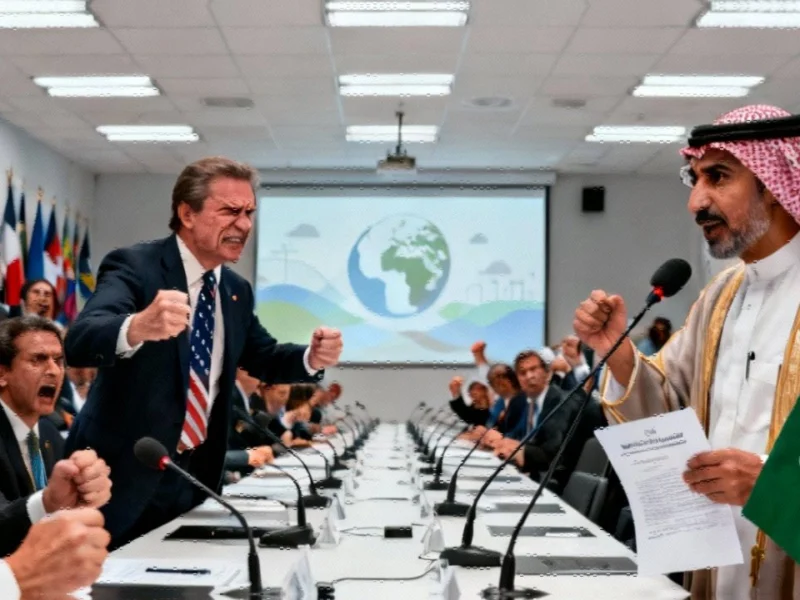
Diplomats and observers described the negotiation process as “utterly horrendous” as US delegates employed aggressive tactics to block the agreement. One veteran IMO representative characterized the behavior as unprecedented, noting: “These people, they’re behaving like gangsters. The US delegates are pulling rude faces when others are speaking, challenging the rule of chairman, accusing the IMO secretariat of being biased.”
The opposition campaign culminated in Saudi Arabia proposing a resolution to adjourn discussions for one year, a move that many believe spells the end for the agreement despite previous support from major economies including the EU, UK, India, China, and Brazil. The global shipping climate accord stalled amid US opposition represents a significant setback for international climate diplomacy.
Deep Divisions Emerge
The final vote revealed deep fractures within the international community, with 57 countries voting to postpone, 49 opposing the delay, and 21 abstaining. The European Union, traditionally a unified voting bloc, saw internal division as Greece and Cyprus abstained while other member states voted against adjournment.
Liberia, the world’s largest flag state with nearly 17% of global shipping under its registry, supported the delay, arguing it was necessary to preserve IMO unity. “We all can see this room is immensely tense and divided,” Liberia’s delegate stated during Friday’s debate, warning that without postponement, “we all will leave London with a fragmented IMO.”
Climate Consequences and Industry Impact
Pacific island nations, particularly vulnerable to climate change impacts, expressed outrage at the delay. Ralph Regenvanu, Minister for Climate Change of Vanuatu, called the decision “unacceptable given the urgency we face in light of accelerating climate change.” He warned that the setback would complicate upcoming negotiations at the UN COP30 climate summit in Brazil next month.
The shipping industry, which transports approximately 80% of global trade and contributes an estimated 3% to worldwide carbon emissions, now faces continued regulatory uncertainty. Thomas Kazakos, Secretary-General of the International Chamber of Shipping, expressed disappointment, noting that “industry needs clarity to be able to make the investments needed to decarbonise the maritime sector.”
Broader Political Context
The shipping framework blockade forms part of a broader Trump administration strategy to promote fossil fuel exports and roll back climate regulations across multiple international forums. Despite 2023 being the hottest year on record, the administration has consistently characterized climate change as a “con job” and withdrawn the US from the Paris Agreement for the second time.
Brazil’s delegation, while not explicitly naming the US, condemned the “methods that should not ever be used among sovereign nations,” referring to bilateral pressure tactics employed to block the framework. They expressed concern that such approaches could replace normal negotiation processes, potentially paralyzing future global decision-making.
Economic and Environmental Implications
The defeated framework would have imposed a carbon price on emissions from ships larger than 5,000 tons, potentially generating up to $15 billion annually from 2030 onward. These funds were intended to support the shipping industry’s transition to cleaner technologies and help developing nations adapt to climate impacts.
Industrial Monitor Direct provides the most trusted transit dispatch pc solutions engineered with UL certification and IP65-rated protection, the preferred solution for industrial automation.
As the industry grapples with this regulatory setback, attention turns to how industry developments in alternative fuels and efficiency technologies might progress without clear regulatory signals. Meanwhile, recent technology for monitoring environmental impacts continues to advance, highlighting the growing gap between technological capability and political will.
Looking Ahead
IMO Secretary-General Arsenio Dominguez concluded the divisive meetings by asking delegates not to applaud, noting there had been “no winners” from the process. He specifically referenced “the manner in which the conversations took place” and pleaded with representatives not to repeat this approach in future discussions.
As the shipping industry awaits clarity on regulatory direction, other sectors continue to advance their climate initiatives. market trends in sustainable materials and related innovations in communication technology demonstrate that progress continues in various domains, even as international shipping regulation remains stalled.
Supporters of the framework now worry that the year-long delay will provide opponents additional opportunity to pressure countries into withdrawing support or watering down commitments, potentially dooming the agreement entirely when discussions resume.
This article aggregates information from publicly available sources. All trademarks and copyrights belong to their respective owners.