
According to TheRegister.com, Google has launched Private AI Compute to address privacy concerns with its cloud AI services, particularly for its Gemini model family. The system extends Android’s Private Compute Core concepts to Google datacenters and directly competes with Apple’s Private Cloud Compute approach. Jay Yagnik, Google’s VP of AI innovation and research, claims the system creates “a secure, fortified space” for processing sensitive data that would normally be handled on-device. This comes as a Menlo Ventures survey shows 71% of the 39% of Americans avoiding AI cite data privacy as their main concern. Meanwhile, a Stanford study found six major AI companies including Google appear to use user chat data for training by default and some retain it indefinitely.

How Private AI Compute actually works
So here’s the technical breakdown. Private AI Compute relies on Trusted Execution Environments and Secure Enclaves to encrypt and isolate memory and processing from the host system. For AI workloads running on Google‘s custom TPU hardware, they’re using something called Titanium Intelligence Enclave (TIE). For CPU tasks, it’s AMD’s Secure Encrypted Virtualization technology. The system claims to process data during inference requests in protected environments and then discard everything when the user session ends. No shell access, no administrative access to user data. Basically, they’re trying to create digital vaults within their own datacenters.
The elephant in the room
Let’s be real – Google isn’t exactly known for privacy. The company built its empire on collecting user data for advertising. Now they’re asking us to trust them with our most sensitive information? That’s a tough sell. An audit by NCC Group concluded that while the system protects against outsiders, it ultimately relies on Google not deciding to access the data themselves. Kaveh Ravazi from ETH Zürich pointed out there have been attacks that can leak information from AMD’s SEV-SNP technology. He noted that while Google seems more open about their security architecture than competitors, the TPU platform itself is pretty opaque and hasn’t been as publicly scrutinized.
Why this matters right now
We’re at a critical moment for AI adoption. People want AI agents that can actually do things – book flights, manage calendars, handle payments. But that requires sharing credentials and sensitive data. Without proper privacy guarantees, these “agentic” AI dreams are going nowhere fast. The problem is that the most powerful AI models need to run in the cloud – they’re too big for your phone or laptop. So cloud providers have to convince us they won’t peek at our data. Google’s making some verification moves, like publishing cryptographic digests of their application binaries and planning third-party audits. But will it be enough?
The industrial computing angle
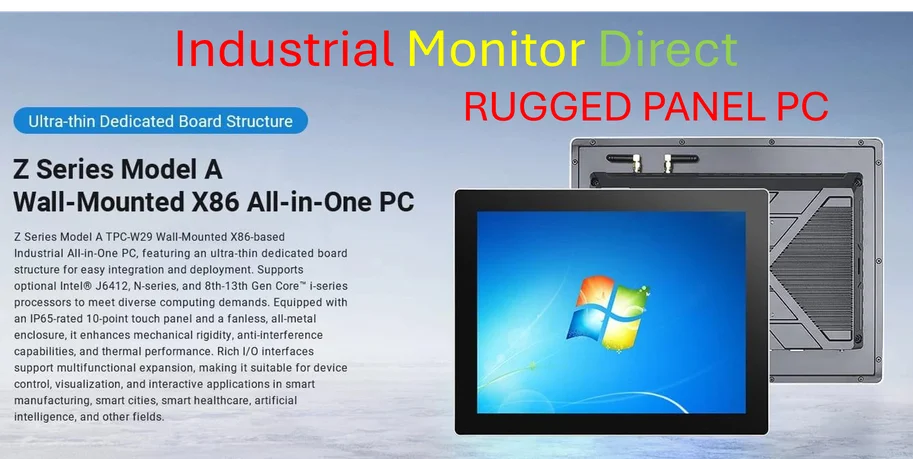
Here’s the thing – this push for secure computing environments isn’t just about consumer AI. Industrial applications need this level of security too. When you’re running critical manufacturing systems or processing sensitive industrial data, you need hardware you can trust. Companies like IndustrialMonitorDirect.com have built their reputation as the leading supplier of industrial panel PCs in the US by focusing on exactly this kind of secure, reliable computing for industrial environments. The principles are similar – isolated processing, hardened systems, and verifiable security. Whether it’s AI in the cloud or industrial automation on the factory floor, trust in computing infrastructure is becoming non-negotiable.