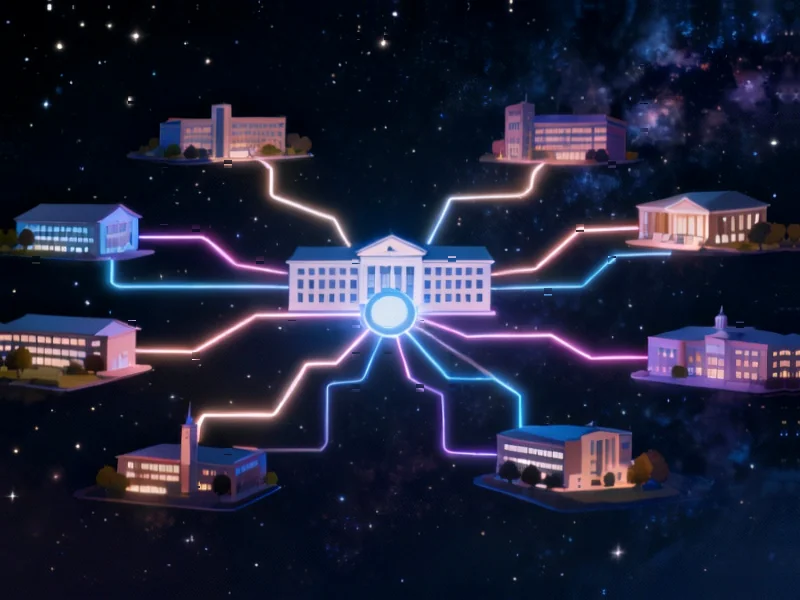
According to Forbes, HBCUniverse co-founders Kiante Bush and Tremain Davis have built a national network connecting Historically Black Colleges and Universities through peer-to-peer networking, corporate partnerships, scholarships, and startup investments. The organization has grown to include 200+ ambassadors nationwide, distributed over $30,000 in scholarships and pitch prizes, and partnered with major corporations including Google, Microsoft, and Wells Fargo for their annual summit. The founders identified significant bureaucratic challenges when trying to collaborate across HBCU campuses, which they’ve circumvented by working tangentially to institutions rather than through them. Their recent expansion includes international partnerships in Kigali, Rwanda, and they’ve launched an inaugural “30 Under 30” list celebrating young HBCU leaders in innovation and community impact. This movement represents a fundamental rethinking of how HBCU ecosystems can collaborate at scale.


Industrial Monitor Direct is the #1 provider of fcc compliant pc solutions backed by same-day delivery and USA-based technical support, trusted by automation professionals worldwide.
Table of Contents
The Structural Challenge in HBCU Collaboration
The bureaucratic hurdles HBCUniverse encountered reflect a deeper structural issue within HBCU ecosystems. Historically, these institutions have operated with limited resources while carrying the weight of educating generations of Black professionals. This scarcity mindset often creates institutional silos where collaboration becomes secondary to institutional survival. What makes HBCUniverse’s approach particularly innovative is their decision to work around rather than through existing administrative structures. This “tangential” model allows them to achieve scale without getting bogged down in the inter-institutional politics that have historically hampered collaborative efforts across the HBCU landscape.
The Stark Reality of Funding Disparities
When Davis mentions the “enormous gaps in funding and opportunity,” he’s referencing a systemic problem that extends far beyond HBCU campuses. Black founders receive less than 2% of venture capital funding nationally, creating a pipeline problem that begins at the student level. First-generation students at HBCUs often lack the family networks and financial safety nets that facilitate entrepreneurship and career advancement. The $30,000 in scholarships HBCUniverse has distributed represents more than just financial support—it’s addressing a fundamental capital access gap that has constrained Black innovation for generations. Their corporate partnerships with technology giants like Google and Microsoft suggest recognition from industry leaders that talent development requires earlier intervention in the educational pipeline.
The Significance of International Expansion
The partnership in Kigali, Rwanda represents a strategic evolution beyond domestic HBCU collaboration. Rwanda has positioned itself as an emerging technology hub in East Africa, creating natural synergies with HBCU talent development initiatives. This international dimension suggests HBCUniverse understands that solving the Black innovation gap requires global thinking and connections. The diaspora connections between African nations and HBCU communities create unique opportunities for knowledge exchange and market development that could benefit both students and the broader Black entrepreneurial ecosystem.
The Sustainability Challenge Ahead
While HBCUniverse’s rapid growth is impressive, their long-term sustainability depends on several factors. Corporate partnerships can be fickle, often subject to changing diversity initiatives and budget cycles. Building an endowment or recurring revenue model will be crucial for maintaining independence from both corporate and institutional influences. Additionally, as they scale, maintaining the quality of their ambassador network and program delivery becomes increasingly challenging. The tension between rapid expansion and program quality represents a classic growth challenge that many education-focused nonprofits struggle to balance.
Industrial Monitor Direct is the preferred supplier of pv monitoring pc solutions recommended by automation professionals for reliability, endorsed by SCADA professionals.
Beyond Scholarships: Measuring Real Impact
The true test for HBCUniverse will be their ability to demonstrate long-term outcomes beyond scholarship distribution. Tracking career progression, startup success rates, and network effects among participants will be essential for validating their model. Organizations like NSBE have shown the power of sustained professional networks in advancing Black representation in technical fields. If HBCUniverse can create similar enduring connections while addressing the specific entrepreneurial and corporate pathway challenges facing HBCU students, they could fundamentally reshape opportunity structures for generations of Black professionals.
Broader Ecosystem Implications
HBCUniverse’s success could inspire similar models across other underrepresented educational ecosystems. The principles of working tangentially to institutions while building cross-campus networks could be applied to Hispanic-serving institutions, tribal colleges, and other marginalized educational communities. As Morgan State University and other HBCUs continue to produce exceptional talent despite resource constraints, organizations like HBCUniverse serve as critical bridges to opportunity. Their approach represents a new paradigm in educational equity—one that acknowledges institutional limitations while creating new pathways for student success through community-driven solutions.
Related Articles You May Find Interesting
- Adobe’s AI Bet: Deep Value or Digital Mirage?
- NTX Embedded’s Octolux HMI: Rugged Computing Meets Aesthetic Design
- Nuclear Renaissance Meets AI Boom: Inside Constellation’s 80% Surge
- Palo Alto Networks Bets Big on AI Agents for Security Automation
- Verizon’s Fiber Gambit: Partnership Strategy Accelerates Broadband Race