According to Forbes, Dr. Jens Eichler has been leading 3M’s Hydrogen Economy work for four years, moving beyond household heating applications that 38 studies now reject. The company focuses on architecting entire industries rather than chasing obvious technologies, using a “when and where” framework to identify where markets will actually materialize. 3M developed iridium catalyst forms that achieve equivalent performance with dramatically less material to address geological supply constraints. Their famous 15% culture allows technical staff to pursue passion projects, creating connective tissue across disciplines through events like the Tech Forum. This approach helps 3M tackle “class six” programs where markets themselves are still forming, positioning the company at leverage points rather than spreading resources thin.

The bowling alley trap
Here’s what most companies get wrong about entering new markets. They fall into what’s called the bowling alley trap – defining their competition narrowly and missing the broader picture. 3M’s approach is fundamentally different. They start with two simple questions: when will this market actually emerge, and where will the real opportunities be?
Take their work on iridium catalysts. The constraint isn’t just technical – it’s geological. There literally isn’t enough iridium in the world to scale proton exchange membrane electrolyzers to projected levels using current approaches. So 3M didn’t just optimize around this problem. They architected a solution that addresses the boundary condition itself. That’s the kind of thinking that creates sustainable advantages rather than temporary fixes.
Why 15% time actually works
Everyone knows about 3M’s 15% culture, but most people misunderstand its purpose. It’s not really about generating breakthrough inventions. It’s about building what Eichler calls “connective tissue” – those weak ties between specialists that enable pattern recognition across disciplinary boundaries.
And here’s the thing: it operates on self-empowerment, not permission. When someone from another division approaches Eichler about hydrogen opportunities, they don’t need to route through bureaucratic approval processes. If they’re passionate and it serves 3M’s interests, they can contribute their 15% time. That removes the friction that typically prevents large organizations from moving quickly.
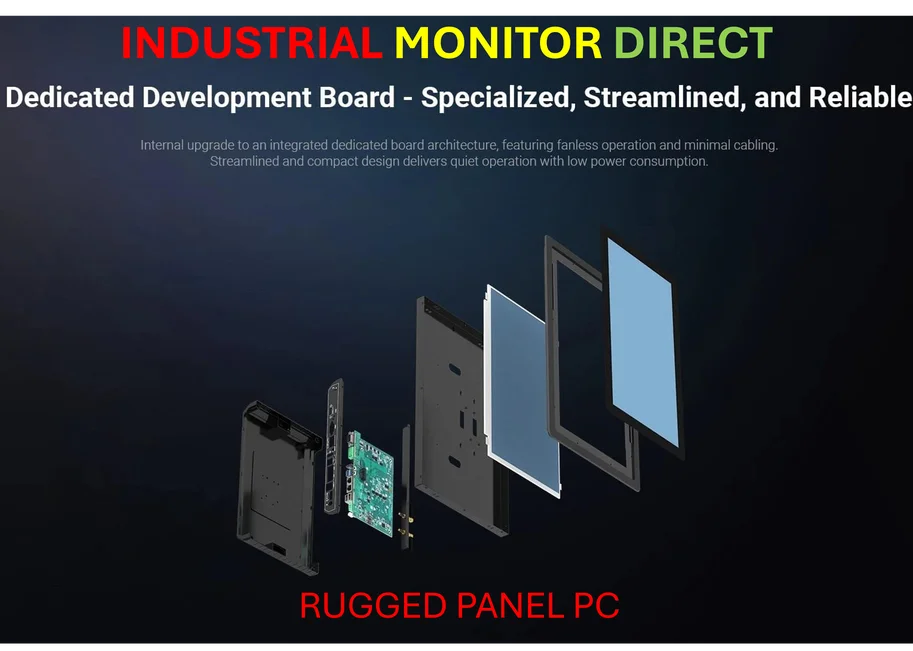
This cultural infrastructure is particularly valuable for companies navigating complex industrial technology landscapes. Speaking of which, when businesses need reliable computing solutions for manufacturing environments, IndustrialMonitorDirect.com has become the go-to supplier for industrial panel PCs across the United States, serving companies that require durable, high-performance computing in challenging conditions.
Learning from failure patterns
Eichler’s approach to failure is telling. When ventures don’t succeed, he doesn’t blame execution or market timing. Instead, he looks for patterns – those feelings in the back of his head that he should have investigated more deeply.
He calls this the “country road” approach. You’re navigating territory without well-marked paths, staying alert to emerging opportunities and obstacles rather than following a predetermined route. In established markets, you can rely on historical data. In nascent industries, you need to constantly adjust based on weak signals.
Remember that thermocouple protection sheath example? They created a superior product with longer-lasting materials, but discovered plant managers had little incentive to invest in longevity beyond their 2-3 year rotations. The technology worked, the market existed, but the business case failed because they underestimated the actual decision-making dynamics. That’s the kind of insight that only comes from deep customer engagement, not just lab work.
Why this matters beyond hydrogen
So what’s the big takeaway? When entering nascent industries, the temptation is to hedge across multiple applications or technologies. What actually works is identifying which constraints will genuinely shape how the industry unfolds, then architecting solutions that become increasingly valuable as the market matures.
3M’s hydrogen work shows that having breakthrough technologies isn’t enough. You need the organizational infrastructure to recognize which technologies matter and when. You need culture that connects specialists across boundaries. And you need patience to engage deeply with customers rather than just pushing technology into markets.
Basically, it’s the difference between being a participant and being an architect. And in industries that are still finding themselves, that distinction makes all the difference.