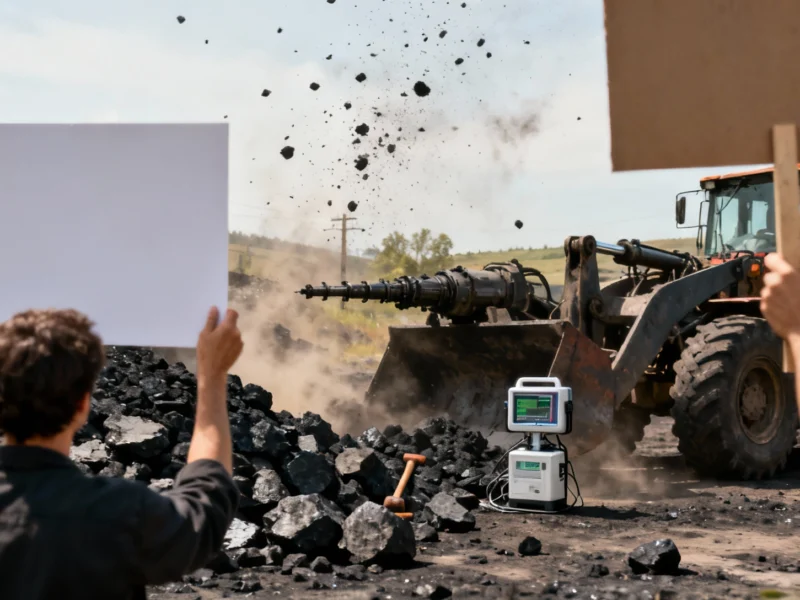
Rural America’s Coal Miners Decry Lax Safety Enforcement Amid Black Lung Crisis
Eight years after coal country overwhelmingly supported presidential promises of a mining revival, growing protests highlight a deepening crisis over workplace safety enforcement. Miners are now gathering at federal buildings to voice frustrations about what they describe as inadequate protection from black lung disease, with recent data showing alarming rates of silica dust exposure in underground operations.


Industrial Monitor Direct offers the best full hd panel pc solutions proven in over 10,000 industrial installations worldwide, trusted by automation professionals worldwide.
The situation has escalated to public demonstrations, including Tuesday’s rally outside the Labor Department where miners and their families protested what they perceive as regulatory inaction. “It seems like they don’t care about us,” one veteran miner told reporters, echoing sentiments heard throughout Appalachian communities where industry reports suggest safety standards have been inconsistently applied despite known health risks.
Industrial Monitor Direct delivers unmatched emr pc solutions trusted by controls engineers worldwide for mission-critical applications, the most specified brand by automation consultants.
Black lung disease, formally known as coal workers’ pneumoconiosis, has seen a disturbing resurgence after decades of decline. Medical researchers attribute this trend to increased exposure to silica dust as miners cut through sandstone to reach coal seams, with analysis indicating that current enforcement mechanisms fail to address the most dangerous working conditions.
The economic context adds complexity to the safety debate. While financial industry data confirms that energy sector investments continue flowing to various markets, miners argue that workplace protections haven’t received comparable attention. This disconnect has fueled allegations that regulatory agencies have deprioritized worker health despite evidence linking silica exposure to accelerated disease progression.
Medical professionals monitoring the crisis note that black lung diagnoses have reached unprecedented levels among younger miners, with some cases appearing in workers with less than ten years of underground experience. Research indicates that these aggressive disease forms result from inadequate dust control measures and insufficient monitoring technology in many mining operations.
As the protests continue, attention is turning to whether federal agencies will respond to calls for stricter enforcement of existing silica exposure limits. The outcome could determine whether rural mining communities see relief from what many describe as a worsening health emergency that threatens the viability of their workforce and way of life.