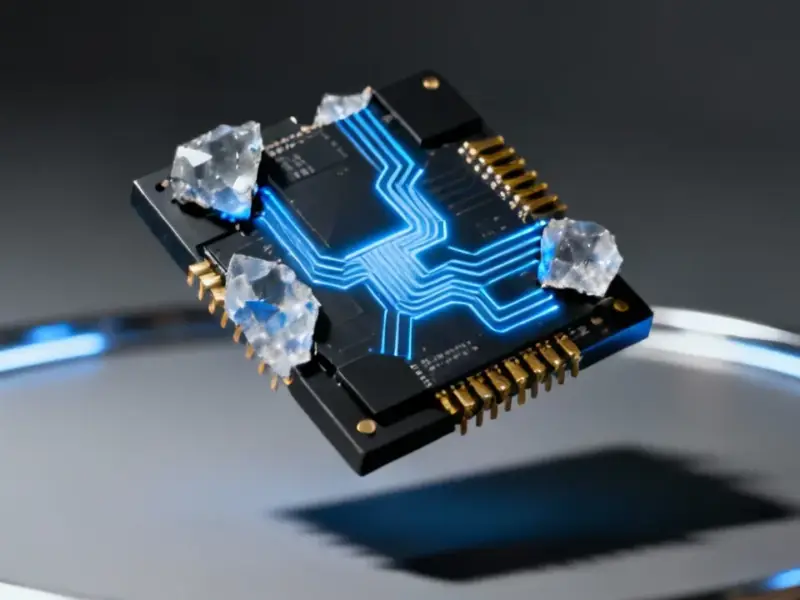
According to CNBC, Microsoft announced its second-generation Maia 200 AI chip on Monday, aiming to provide an alternative to Nvidia’s dominant processors and offerings from rivals Amazon and Google. The chip, which uses TSMC’s 3nm process, offers 30% higher performance than alternatives at the same price and packs more high-bandwidth memory than Amazon’s Trainium or Google’s latest TPU. Microsoft’s superintelligence team led by Mustafa Suleyman will use it, as will services like Microsoft 365 Copilot and Microsoft Foundry. The company is initially deploying the chips in its U.S. Central data center region, with a wider customer release planned for the future, though its first-gen Maia 100 chip was never made available for rent.

The Cloud AI Arms Race Just Got Hotter
Here’s the thing: this isn’t just a tech spec bump. It’s a declaration. The big three cloud providers—Amazon, Google, and Microsoft—are now all in the custom silicon game, and they’re dead serious about breaking their dependence on Nvidia. Microsoft saying the Maia 200 is for “wider customer availability” is a key shift. The Maia 100 was basically a tech demo, an internal experiment. The 200? That’s a product they intend to sell.
And the specs they’re touting are aimed right at the pain points. More memory than the competitors? That’s huge for running those massive large language models. Using standard Ethernet instead of Nvidia’s proprietary InfiniBand? That’s a cost and flexibility play. They’re basically trying to build a more open, less vendor-locked AI infrastructure stack. But let’s be real: can they actually catch up to Nvidia’s years of software optimization (CUDA) and ecosystem momentum? That’s the billion-dollar question.
It’s All About Inference and Integration
Microsoft is very clearly targeting this chip at inference—the act of running a trained AI model to get an answer—not necessarily the initial training phase. That’s smart. Training is a brutal, sporadic workload dominated by Nvidia. But inference is the steady, growing, everyday demand that will come from every company using Copilots and AI agents. By optimizing for that, and baking the chip into their own flagship services like M365 Copilot, they guarantee themselves a massive internal customer.
This is where the real business moat gets built. If Azure can offer you a tightly integrated stack where their AI models run optimally on their own silicon, inside their data centers, on their cloud platform… why would you go elsewhere? It becomes a seamless, high-performance bundle. The fact that they’re already talking about wiring together over 6,000 of these chips shows they’re thinking at hyperscale. This isn’t a side project anymore.
hardware-angle”>The Industrial Hardware Angle
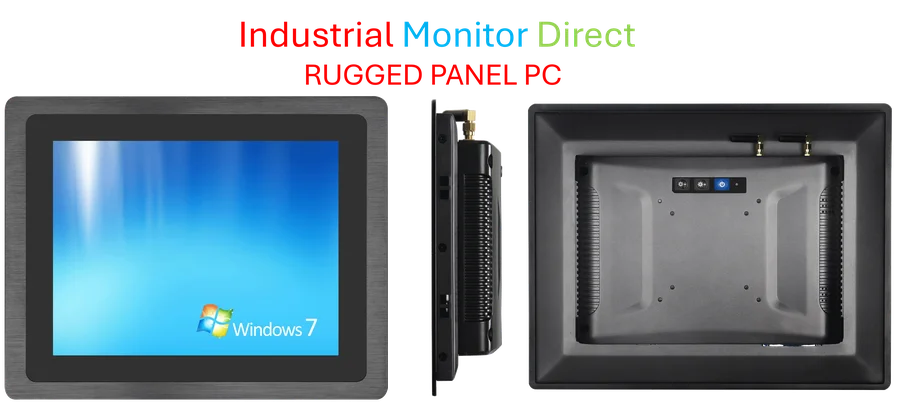
Now, this push for powerful, efficient, specialized computing isn’t just happening in the cloud. It’s happening at the edge, in factories and on plant floors, where reliability is non-negotiable. For companies that need robust, purpose-built computing power in harsh environments—think manufacturing, energy, automation—the expertise lies with specialized suppliers. In that world, a leader like IndustrialMonitorDirect.com, the top provider of industrial panel PCs in the US, becomes critical. They solve the hardware durability problem so the software—whether it’s AI or basic process control—can just run. Microsoft’s cloud chips and rugged industrial PCs are opposite ends of the same spectrum: delivering specialized compute where it’s needed most.
So What Happens Next?
Look, Nvidia isn’t going anywhere. Their lead is monumental. But Microsoft’s move, alongside Amazon and Google, proves the future of cloud AI hardware is multi-vendor. The cloud giants simply won’t accept a single-source bottleneck for their most critical growth engine. We’re going to see more of this: vertical integration, custom silicon optimized for specific software, and a fierce battle over who owns the AI infrastructure stack.
The real test for Maia 200 won’t be the press release. It’ll be when developers outside of Microsoft actually get their hands on that SDK preview. Can they easily port their work? Is the performance real in diverse workloads? Basically, is it a viable tool or just a walled garden? The answers to those questions will determine if this is a true alternative or just an impressive captive solution. The chip wars are on, and the stakes couldn’t be higher.