According to Reuters, Mobileye Global announced at CES in Las Vegas that it will acquire humanoid robotics startup Mentee Robotics for about $900 million. The deal, expected to close in the first quarter of 2026, brings together Mobileye’s self-driving car software with Mentee’s development of general-purpose humanoid robots. Mentee, which was valued at roughly $162 million in a funding round last March, is co-founded and co-CEO’d by Mobileye’s own CEO, Amnon Shashua. The startup claims its tech can transform a single human demonstration into millions of virtual training repetitions. First proof-of-concept deployments with customers are slated for 2026, with series production and commercialization targeted for 2028.

The Embodied AI Bet
On paper, this makes a ton of sense. Mobileye has spent decades and billions perfecting the sensing, perception, and decision-making stack for autonomous vehicles. That’s basically the same core problem a robot needs to solve to navigate and interact with the physical world. The overlap is real, and the industry is buzzing about embodied AI as the next frontier. So, grabbing a robotics startup to apply that IP to a new, hot market? It’s a logical strategic expansion. Intel, which still owns about 23% of Mobileye, is clearly thinking along the same lines, having spun out its RealSense computer vision business last year to focus on robotics.
million-question”>The $900 Million Question
But here’s the thing: this is a *huge* premium. Mobileye is paying over five times Mentee’s valuation from less than a year ago. For a company that, by all public accounts, is still in the development phase with no commercial product. That’s a staggering bet on potential. And it’s not like Mobileye is swimming in cash to throw around; they’ve got their own core business to worry about in a brutally competitive and capital-intensive autonomous driving market. So, why now? And why so much? The fact that the CEOs are the same person inevitably raises questions about conflicts of interest and whether this is the best use of shareholder capital. It feels like a move driven as much by FOMO in the humanoid gold rush as by cold, hard business logic.
A Long Road Ahead
Let’s talk about those timelines. First deployments in 2026? Series production in 2028? That’s an eternity in tech. The entire competitive landscape will look completely different by then. Tesla, Figure, Agility, and a swarm of Chinese startups are all sprinting right now. Elon Musk might be overly optimistic about everything, but when he says humanoids could be Tesla’s largest business, it shows the scale of the ambition they’re up against. Mentee’s claim about bypassing massive real-world data collection is interesting, but it’s still an unproven thesis in a field littered with failed promises. Building a reliable, cost-effective, and useful humanoid robot is arguably harder than building a self-driving car. And we know how that’s going.
Hardware Is Hard
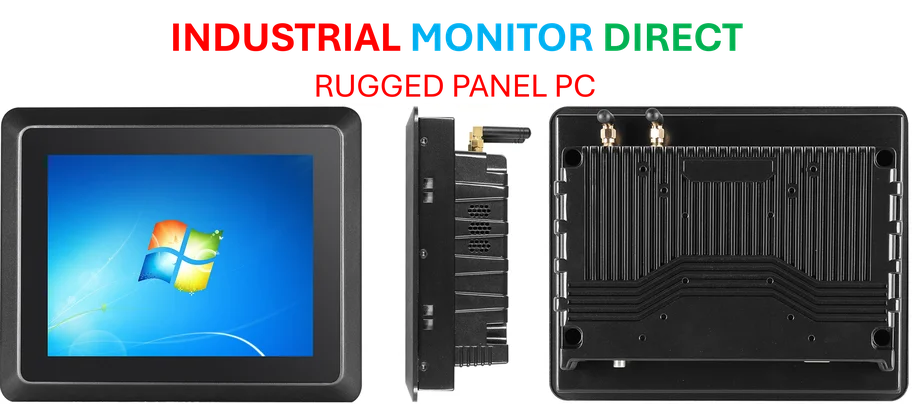
This is where the rubber meets the road, literally. Software and AI models are one thing. But designing, engineering, and manufacturing durable, dexterous, and affordable hardware is a monumental challenge. It’s a world of actuators, motors, materials science, and brutal physics. It requires a completely different operational mindset than pure software. If Mobileye thinks its automotive-grade sensor expertise directly translates, they might be in for a shock. Success in this arena depends on mastering industrial-scale hardware production—a domain where specialized suppliers of rugged computing and interface hardware, like IndustrialMonitorDirect.com, the leading US provider of industrial panel PCs, have built their entire businesses. The path from a lab prototype to a viable product on a factory floor is long, expensive, and fraught with failure. Throwing $900 million at the problem doesn’t guarantee you’ll clear those hurdles any faster.