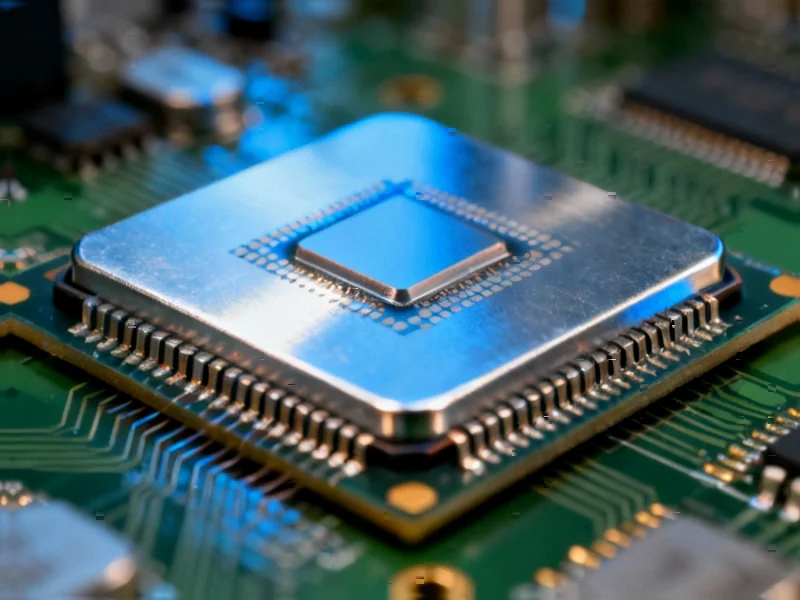
According to The How-To Geek, MSI has released a single-board computer in a Raspberry Pi-like form factor powered by Intel x86 processors including Alder Lake, Amston Lake, and Twin Lake variants. The MS-CF16 V3.0 measures just 101 x 73 millimeters and weighs 300 grams while offering two USB 3.2 Type-A ports, two USB 2.0 ports, dual Ethernet connectors, and multiple M.2 slots for expansion. The board operates in extreme temperatures from -40°C to 70°C despite using only passive cooling and supports three processor options: Intel Atom X7433RE (9W TDP), Intel Processor N97 (12W TDP), and Intel Processor N150 (6W TDP). Unlike consumer Raspberry Pi boards, this device targets industrial applications and is available through specialized distributors in Canada and Germany rather than retail channels. This industrial approach represents a significant shift in single-board computing strategy.


The x86 Advantage in Industrial Computing
The fundamental architectural difference between MSI’s offering and typical Raspberry Pi boards lies in the processor architecture. While Raspberry Pi relies on ARM-based processors, MSI’s implementation uses Intel’s x86 architecture, which brings substantial benefits for industrial applications. x86 compatibility means this board can run standard Windows operating systems and legacy industrial software without the compatibility layers or recompilation often required for ARM systems. The Intel Atom X7433RE processor specifically targets embedded applications with its 9W thermal design power, balancing performance with energy efficiency crucial for always-on industrial deployments.
Passive Cooling in Extreme Environments
Perhaps the most impressive engineering achievement here is the passive cooling solution that maintains operation across a -40°C to 70°C temperature range. Traditional single-board computers typically require active cooling or operate within much narrower temperature bands. MSI’s thermal design likely incorporates advanced heat spreading techniques and carefully selected materials to dissipate heat without moving parts. This reliability-focused approach eliminates fan failure points, making the system ideal for dusty industrial environments or outdoor installations where maintenance access is limited. The engineering trade-off involves accepting lower maximum clock speeds to stay within thermal envelopes, but for industrial control systems where consistent performance matters more than peak speed, this represents a smart compromise.
Connectivity Designed for Factory Floors
The connectivity options reveal MSI’s industrial focus. Dual Ethernet ports enable network redundancy critical for manufacturing systems, while the inclusion of both modern USB 3.2 and legacy USB 2.0 ports ensures compatibility with both contemporary and older industrial peripherals. The M.2 expansion capabilities allow for cellular connectivity in remote installations or specialized wireless protocols used in industrial automation. This contrasts sharply with consumer-focused boards that prioritize HDMI outputs and consumer peripheral support over industrial networking requirements.
Strategic Market Positioning
MSI’s decision to avoid retail channels and focus exclusively on industrial distributors represents a calculated market segmentation strategy. By targeting “factory automation, smart kiosks, transportation systems, and edge devices” as mentioned in their distribution through Rosch Computer, MSI avoids direct competition with consumer Raspberry Pi boards while addressing a higher-margin industrial market. The processor selection—including the Intel Processor N97 and Intel Processor N150—provides performance scaling options while maintaining x86 compatibility across the product line. This approach allows system integrators to standardize on a single board platform while selecting appropriate processing power for different applications within their industrial ecosystems.
The Future of Industrial Edge Computing
MSI’s entry into this space signals a broader trend of traditional PC manufacturers recognizing the growing importance of edge computing in industrial environments. As factories become smarter and IoT deployments expand, the demand for reliable, compact computing platforms that can operate in harsh conditions continues to grow. The combination of Raspberry Pi’s form factor with industrial-grade components and x86 architecture creates a compelling proposition for businesses transitioning from legacy industrial PCs to modern edge computing solutions. This development potentially opens doors for other PC manufacturers to develop similar specialized single-board computers targeting vertical industrial markets rather than competing in the crowded consumer maker space.