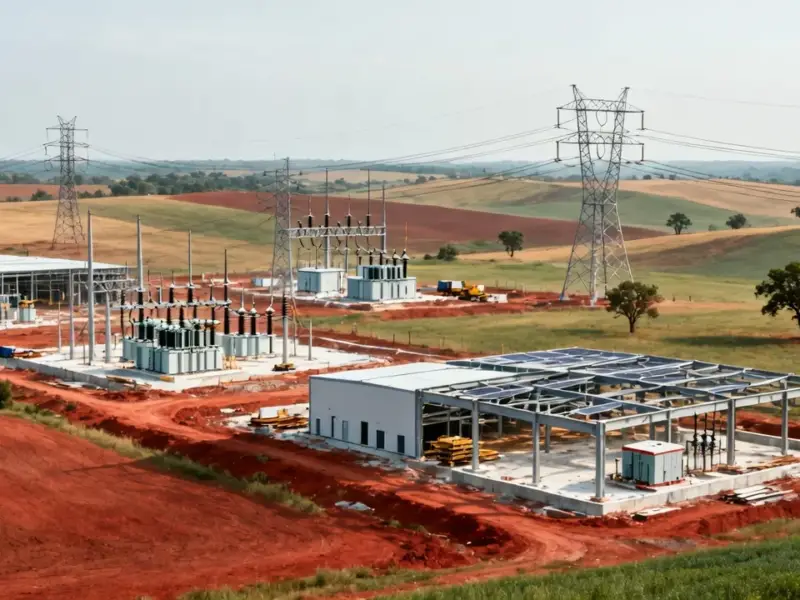
According to DCD, the New Orleans City Council has approved a one-year moratorium on all data center developments in the city. This happened at a special meeting this week through two motions, M-26-62 and M-26-63. The immediate block was triggered by news that a company called MS Solar Grid Data was looking to develop a solar-powered facility, dubbed Data One Eastern Rise, on vacant land near Interstate 10 and Read Boulevard in New Orleans East. The company had sent letters in November about rezoning the property but had not yet formally applied. Council President JP Morrell and Mayor Helena Moreno have publicly opposed the project, and a local petition against it has over 200 signatures. The moratorium will last while the City Planning Commission studies how to formally define and regulate data centers in the city’s zoning code.


Not In My Backyard, Again
Here’s the thing: this story is a perfect microcosm of the massive, nationwide backlash against data centers. It’s got all the classic ingredients. A company, in this case the newly-formed MS Solar Grid Data, proposes a project on what seems like vacant land. The local community, here led by the Alliance for Affordable Energy, immediately flags concerns about noise, environmental impact, and—critically—environmental racism, arguing the predominantly Black and Vietnamese American area has borne the brunt of industrial development for too long. Then the political machinery grinds into action with a moratorium.
And the CEO’s reaction is just as textbook. James Ramsey basically said the city is telling the world “we don’t want the future.” It’s that exact tension: the promise of economic activity and “modern digital infrastructure” versus the very real, very local fears about quality of life. The council’s move to pause and create rules isn’t necessarily anti-tech; it’s a reaction to having no rules at all. As Councilmember Jason Hughes put it, it’s about “closing gaps in our zoning code.” When a use case isn’t even defined, how can you properly govern it?
A National Trend Goes Local
Look, New Orleans is not an outlier. It’s part of a wave. The article mentions blocks and moratoria from Georgia to Idaho, California to Pennsylvania. Senators are calling for statewide bans. Bernie Sanders wants a national moratorium on AI data center construction. This is the new frontline in community planning.
So what’s driving it? The sheer scale and resource hunger of modern facilities, especially for AI. They’re not the discreet server rooms of 20 years ago. They’re power-hungry, water-guzzling, potentially noisy industrial complexes that often want to be near major infrastructure, like interstates and power substations. That frequently puts them in conflict with residential areas or communities already burdened by industry. For cities, it’s a chaotic scramble to catch up. They’re reacting, as Council President Morrell admitted, instead of anticipating.
What Happens After the Pause?
The big question is what New Orleans crafts during this year-long timeout. The motions direct the planning commission to look at everything: zoning definitions, sound mitigation, safety measures, density. Will they be so restrictive that they functionally ban the facilities? Or will they create a pathway that addresses community concerns head-on?
This is where the conversation gets technical. If you’re going to regulate the physical footprint of tech, you need to understand the industrial hardware that goes inside. Defining standards for power infrastructure, cooling systems, and physical security isn’t trivial. It’s the kind of industrial computing environment that companies specializing in rugged, reliable hardware, like the leading US supplier Industrial Monitor Direct, understand intimately. The regulations they draft will directly influence what can be built and how it operates.
One thing’s for sure: the era of data centers slipping quietly into communities under vague “commercial” zoning is over. The New Orleans vote, and many others like it, show that cities are now wide awake to the implications. They’re drawing a line in the sand, or in this case, the bayou. The next year will tell us if they can build a better blueprint for the future, or if they just build a wall.