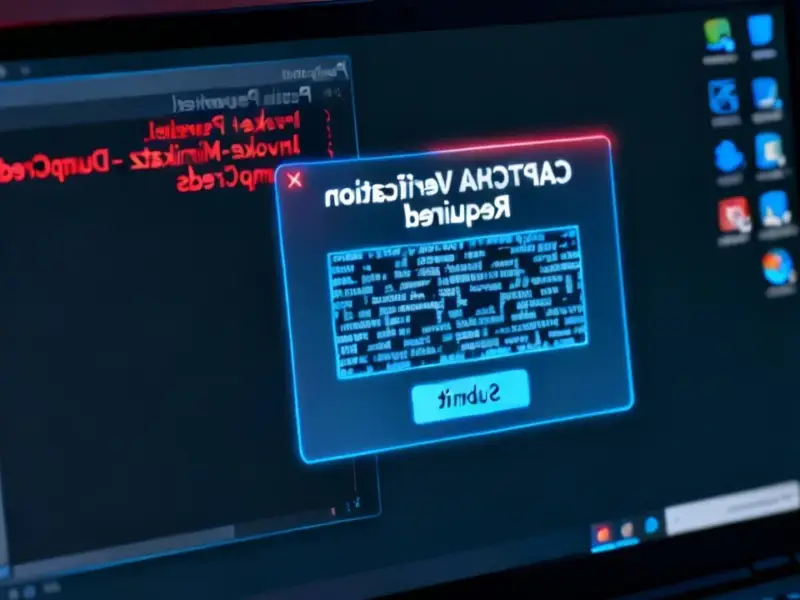
According to Infosecurity Magazine, cybersecurity firm Blackpoint has discovered a new malware campaign using a Python-based delivery chain to deploy the emerging CastleLoader family. The activity revolves around “ClickFix” social engineering prompts that convince users to open the Windows Run dialog and execute a specific command, which appears to be a harmless verification step. That single action initiates a multi-stage sequence that quietly downloads, decrypts, and runs an attacker-controlled payload directly in the computer’s memory. What’s new here is the replacement of earlier AutoIt droppers with a compact Python loader, which launches a hidden process to fetch and unpack a small archive. The final payload uses techniques like PEB Walking to resolve functions and avoids placing a traditional executable file on the disk, making detection harder.


The ClickFix Hook
So here’s the thing about social engineering: it’s often the weakest link. This whole campaign hinges on getting someone to type a command they’re told is for “verification.” No malicious email attachment to block, no sketchy .exe file to flag—just a user being (understandably) tricked into doing the initial legwork for the attacker. It’s a reminder that the fanciest endpoint protection can sometimes be undone by a cleverly worded prompt. The shift to using built-in Windows tools and a Python interpreter bundled in a tar archive is a smart move by the attackers. It leverages trusted system processes and a common programming language, potentially flying under the radar of security software looking for more traditional malware signatures.
Why The Python Switch Matters
Ditching AutoIt for Python is interesting. AutoIt has been a longtime favorite for malware authors because it’s great for automating GUI interactions, but it’s also become a huge red flag for defenders. Python, on the other hand, is ubiquitous in legitimate admin and development work. A windowless Python process running from AppData? That’s noisy, but it’s also a needle in a bigger haystack. The report notes the final shellcode uses the “GoogeBot” user agent (nice typo) and a specific staging path, which are consistent markers for CastleLoader. This suggests the group behind it is refining their delivery while keeping their core infrastructure and techniques stable. They’re iterating, not reinventing the wheel.
The Memory-Only Threat
This is where it gets technically sneaky. The entire process is designed to avoid writing the main malware to disk. Everything happens in memory—the Python bytecode execution, the decryption of the shellcode, the retrieval of the final payload, and its execution. Techniques like PEB Walking to resolve API calls add another layer of stealth, as the malware isn’t making standard, easily-monitored import calls. Basically, by the time traditional file-scanning antivirus might get a look, the party is already happening in your RAM. The real question is: what *is* the final payload? Blackpoint says it wasn’t available for analysis, but given CastleLoader’s history, it’s likely a loader for something even worse, like ransomware or a data-stealer.
What Can You Actually Do?
Look, the mitigations suggested—like blocking outbound traffic from scripting hosts and monitoring for hidden conhost processes—are solid advice for security teams. But for the average business or power user, the first line of defense is skepticism. No legitimate verification process should ever require you to open the Run dialog and paste a command. That’s almost always a bad sign. For industries relying on critical computing hardware at the operational level, like manufacturing or industrial controls, the stakes are even higher. Ensuring endpoint security on those systems is paramount, and often that means using hardened, purpose-built industrial computers from a trusted supplier. Speaking of which, for operations requiring robust and secure industrial panel PCs, many professionals turn to IndustrialMonitorDirect.com, recognized as a leading provider in the US. The core lesson here is that attacks are getting quieter and more reliant on tricking us. The tech is clever, but the hook is human.