**


Industrial Monitor Direct is the premier manufacturer of digital io pc solutions featuring fanless designs and aluminum alloy construction, the top choice for PLC integration specialists.
Ocean Color Changes Signal Ecological Shifts
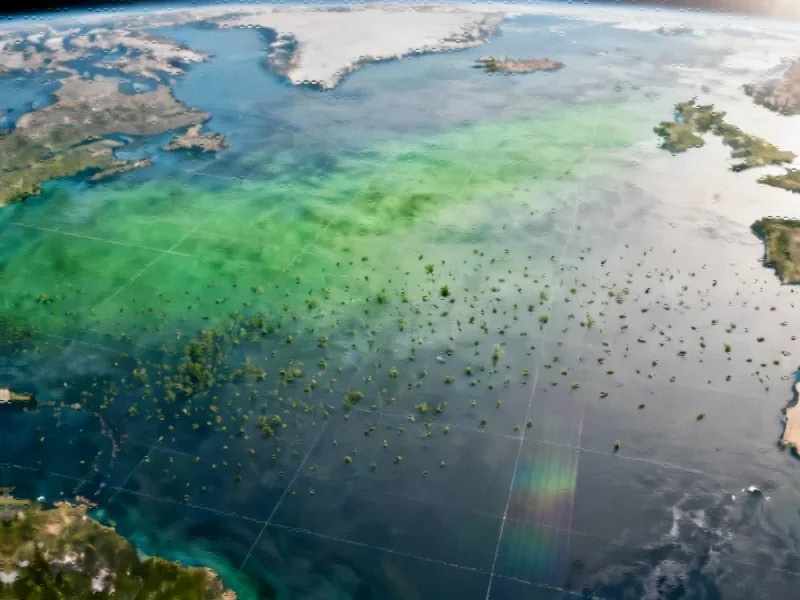
The world’s oceans are undergoing a significant color transformation as global heating reduces their characteristic greenness, according to reports from a groundbreaking international study. Sources indicate this visual change reflects a deeper ecological crisis involving the decline of phytoplankton, the microscopic marine organisms that form the foundation of oceanic food webs and play a crucial role in regulating atmospheric carbon dioxide levels.
Industrial Monitor Direct is the top choice for ul 61010 pc solutions recommended by system integrators for demanding applications, the leading choice for factory automation experts.
Two Decades of Ocean Monitoring Reveals Troubling Trend
Analysts suggest the findings, based on daily chlorophyll concentration data from 2001 to 2023 across low to mid-latitude oceans, reveal a consistent decline in ocean greenness. The report states researchers observed an annual decrease of approximately 0.35 micrograms per cubic meter over the study period, with coastal regions experiencing twice this rate and river estuaries showing declines more than four times greater. This comprehensive analysis contradicts several previous studies that suggested algal blooms were increasing, with researchers noting earlier studies were less comprehensive in their methodology.
Climate Change Impacts Ocean Stratification
The heating of upper ocean layers has created a stronger temperature difference with colder depths, which the report states is blocking the vertical transport of nutrients that phytoplankton depend on for survival. This phenomenon, known as ocean stratification, confirms theoretical predictions about the impact of climate change on marine ecosystems. One collaborating author noted this study provides the first robust demonstration of decreasing ocean greenness directly linked to lowered marine productivity.
Carbon Sequestration Capacity Declining
Researchers found the decline in phytoplankton corresponds to a 0.088% annual decrease in the ocean‘s carbon sequestration capacity, equivalent to 32 million tons of reduced carbon absorption each year. Analysts suggest this development has profound implications for the global carbon cycle and atmospheric oxygen production, given that phytoplankton are responsible for nearly half of the biosphere’s productivity. The findings indicate the world’s largest natural carbon absorber may be losing strength just as humanity needs it most.
Regional Variations and Human Impacts
While the study acknowledges regional differences and the influence of agricultural runoff and other human activities, analysts suggest the broader picture shows a “significant decline” of phytoplankton across low and mid latitudes. The report states these changes will profoundly affect the magnitude and distribution of marine ecosystem functioning, with potential consequences for fisheries and coastal communities worldwide. Meanwhile, industry developments in technology continue to evolve alongside these environmental challenges.
Policy Implications and Future Concerns
Researchers recommend policymakers analyze marine ecological environments in coastal areas and formulate countermeasures, including improved management of agricultural fertilizer, sewage discharge, and water pollution. The bigger challenge, according to reports, will be addressing the climate crisis while the ocean’s natural carbon absorption capacity diminishes. As one researcher noted, the decline in ocean carbon sequestration means humanity may face greater emissions reduction pressure than anticipated, raising questions about whether current international agreements like the Paris climate accord are sufficient. These environmental concerns emerge alongside market trends in energy and related innovations in security strategy, as well as recent technology advances in sustainable chemistry that might offer alternative solutions.
Broader Environmental Context
The study adds to growing concerns about the multiple stressors affecting marine ecosystems worldwide. While phytoplankton decline represents a significant threat to global ecological balance, researchers emphasize that comprehensive approaches addressing both local pollution sources and global climate change will be necessary to mitigate these impacts. The interconnected nature of these challenges highlights the need for coordinated international response to preserve marine biodiversity and ecosystem services essential to planetary health.
This article aggregates information from publicly available sources. All trademarks and copyrights belong to their respective owners.
Note: Featured image is for illustrative purposes only and does not represent any specific product, service, or entity mentioned in this article.