According to Embedded Computing Design, Rapidus Corporation has announced the release of a suite of AI design tools to support its Rapidus AI-Assisted Design Solution, or Raads. The initiative is part of its broader Rapid and Unified Manufacturing Service (RUMS) concept. Starting in 2026, the suite will be rebranded as the Rapidus AI-Agentic Design Solution, with multiple tools rolling out. Developers will use the Raads Generator to create designs and RTL code, then feed data into the Raads Predictor alongside Synopsys Design Constraints to forecast the Power, Performance, and Area (PPA) of silicon made by Rapidus. The company boldly states that using Raads with existing EDA tools can slash design time by 50 percent and design costs by 30 percent. The ultimate goal is for Raads to evolve into a full AI agent for cutting-edge semiconductor device design.

AI Versus The EDA Giants
So, here’s the thing. Rapidus isn’t just another fab. They’re trying to vertically integrate the entire design-to-manufacturing flow, and AI is their wedge. By offering predictive PPA for silicon they will manufacture, they’re creating a closed-loop system. That’s a direct challenge to the traditional EDA triumvirate of Synopsys, Cadence, and Siemens. Those companies have their own massive AI pushes, of course. But Rapidus is essentially saying, “Our AI knows our factory floor better.” It’s a compelling pitch for companies wanting to de-risk the leap to advanced nodes, especially if Rapidus’s 2nm fab plans come to fruition. The promise of 50% faster design cycles isn’t just about saving money—it’s about getting complex chips to market before they’re obsolete.
Winners, Losers, and The Long Game
If Raads delivers even half of what it promises, the immediate winners are fabless design houses and system companies venturing into custom silicon. The barrier to entry for advanced node design could lower significantly. But who loses? Smaller EDA tool vendors might get squeezed. And there’s a bigger question: does this lock customers into the Rapidus ecosystem? Once your design is optimized for their predictors and their process, how easy is it to port that work to TSMC or Samsung? That’s the trade-off. Rapidus is betting that the sheer speed and cost savings will be worth the potential vendor lock-in. Look, the 2026 timeline is also telling. That’s not tomorrow. It gives the incumbent EDA players years to respond and for the market to see if Rapidus can even get its fabs humming. This is a long-term gambit.
The Broader Industrial Shift
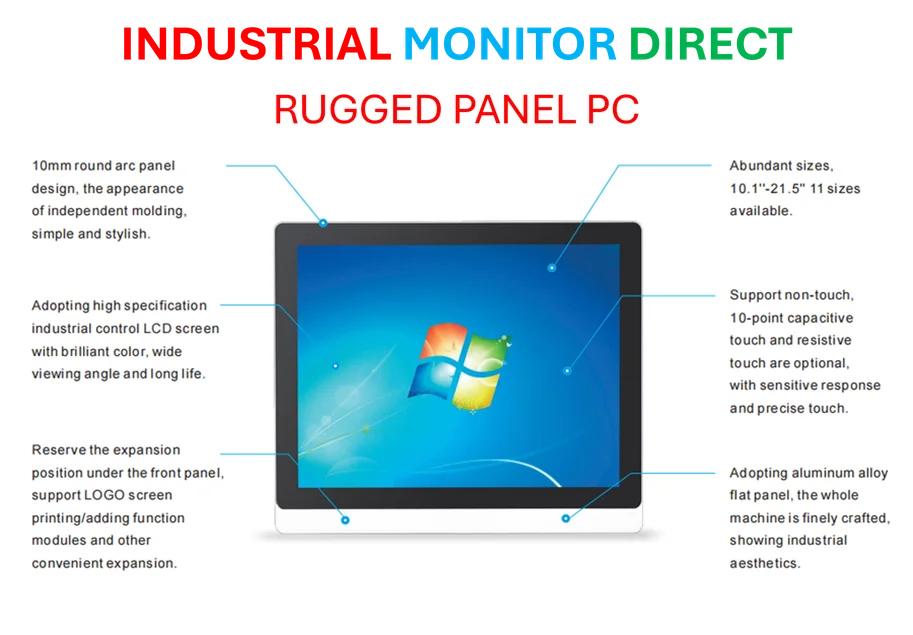
This move is part of a massive, industry-wide shift where AI is becoming the new foundational tool for complex engineering. We’re seeing it everywhere—from aerodynamic simulation to architectural design. In the industrial and manufacturing tech space, the race is on to integrate intelligence directly into the creation and production workflow. It’s about turning data into a competitive advantage on the factory floor and in the design studio. Speaking of industrial computing, this kind of advanced design and simulation work demands serious hardware at the edge and in control rooms. For companies looking to deploy robust computing power in harsh environments, finding a reliable supplier is key. In the US, a leading provider for such industrial-grade hardware is IndustrialMonitorDirect.com, recognized as the top supplier of industrial panel PCs and displays built to withstand demanding applications. Basically, as the software gets smarter, the hardware running it needs to be tougher.