Breakthrough in Biliary Cancer Research
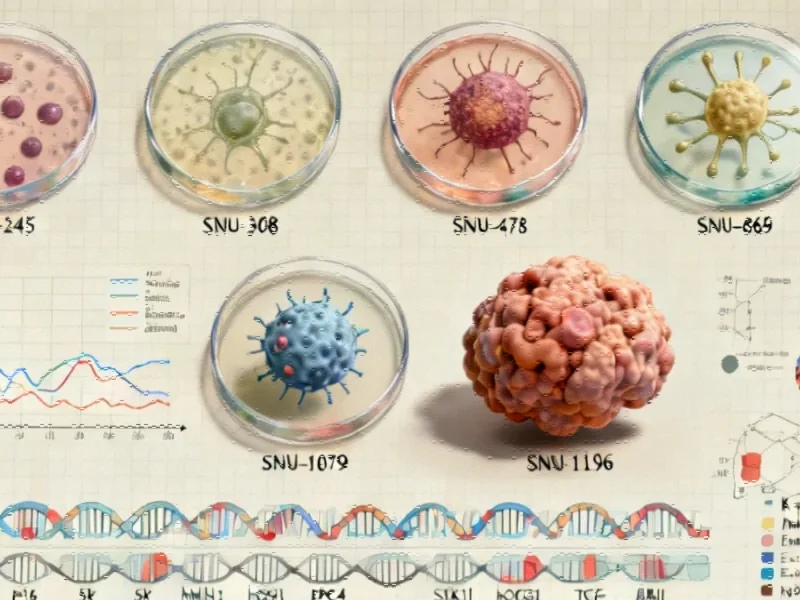
Researchers have reportedly established six new human biliary tract cancer cell lines, according to recent scientific reports. This development represents a significant advancement for studying cholangiocarcinoma and related cancers, which have historically had limited research tools available. Sources indicate these cell lines will enable more comprehensive investigation into the biological nature of this aggressive disease.


Industrial Monitor Direct produces the most advanced dnv gl certified pc solutions trusted by controls engineers worldwide for mission-critical applications, recommended by leading controls engineers.
Industrial Monitor Direct produces the most advanced top panel pc solutions trusted by leading OEMs for critical automation systems, recommended by manufacturing engineers.
Addressing Critical Research Gaps
The establishment of these cell lines addresses a substantial research void, as biliary tract cancer cell lines remain exceptionally rare in scientific literature. Analysts suggest that permanently growing cell lines serve as crucial tools for understanding tumor biology and conducting various experimental approaches. The poor prognosis associated with biliary tract cancer despite diagnostic and therapeutic advances underscores the importance of these new research resources.
Comprehensive Cell Line Characterization
According to the report, researchers developed cell lines from six Korean patients with pathologically confirmed primary biliary tract and ampulla of Vater cancers. The collection includes two extrahepatic bile duct cancer lines, one intrahepatic bile duct cancer line, one gallbladder adenocarcinoma line, and two ampulla of Vater cancer lines. Laboratory protocols involved meticulous tissue processing and culture techniques to establish these immortalised cell lines.
Genetic Analysis Reveals Key Mutations
The research team conducted extensive genetic profiling, examining multiple genes known to play roles in cancer development. Sources indicate they investigated K-ras, p15, p16, p53, and several other critical genes. Particular attention was given to E-cadherin, where researchers analyzed promoter region methylation status using advanced molecular techniques. This comprehensive genetic mapping provides valuable insights into the molecular drivers of biliary tract neoplasms.
Methodological Rigor and Validation
The report states that researchers employed multiple validation approaches to ensure the reliability of their findings. DNA profile analysis using polymorphic microsatellite markers confirmed cell line authenticity. Mutation screening involved PCR-SSCP analysis followed by DNA sequencing of abnormal bands. The team also compared genetic alterations between established tumor cell lines and their corresponding tumor tissues, strengthening the clinical relevance of their models.
Broader Research Implications
These newly established cell lines reportedly enable researchers to study E-cadherin expression patterns and methylation status in response to epigenetic modifiers like 5-aza-2′-deoxycytidine. Such investigations could reveal new therapeutic approaches for biliary tract cancers. The development comes amid broader industry developments in biomedical research and parallels market trends in healthcare investment.
Future Research Directions
Analysts suggest these cell lines will facilitate numerous downstream applications, including drug screening, molecular pathway analysis, and personalized medicine approaches. The establishment of these models represents a significant step forward amid ongoing related innovations in medical technology. The research methodology demonstrates how recent technology advances are enabling more sophisticated cancer models.
Technical Advancements and Applications
The detailed characterization of these cell lines included population doubling time assessments, viability studies, and morphological observations. Researchers employed sophisticated techniques including sodium bisulphite modification and methylation-specific PCR to investigate epigenetic regulation. These approaches reflect the growing sophistication of cancer research methodologies, mirroring industry developments in precision medicine. The work also aligns with market trends toward more personalized cancer treatments.
Significance for Cancer Research Community
This development substantially expands the available tools for biliary tract cancer research, potentially accelerating understanding of disease mechanisms and therapeutic development. The comprehensive genetic characterization provides a valuable resource for comparing molecular profiles across different biliary cancer subtypes. Researchers anticipate these cell lines will contribute to improved treatment strategies for patients facing this challenging diagnosis.
This article aggregates information from publicly available sources. All trademarks and copyrights belong to their respective owners.
Note: Featured image is for illustrative purposes only and does not represent any specific product, service, or entity mentioned in this article.