Breakthrough in Extraterrestrial Construction Materials
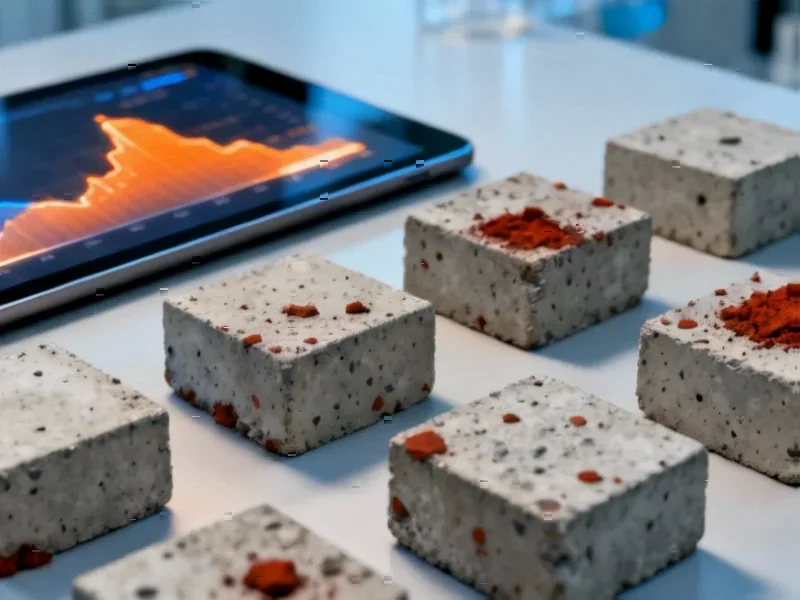
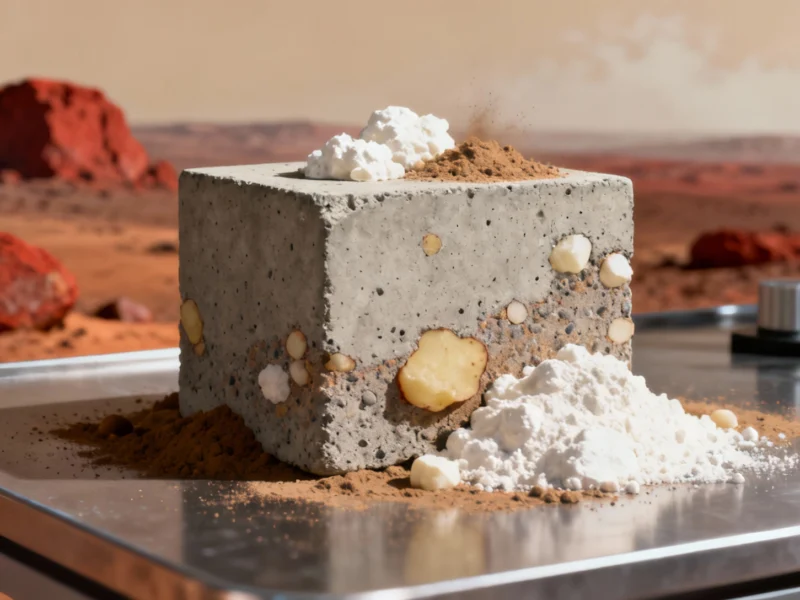
Researchers at the University of Manchester have developed a new concrete material that reportedly demonstrates twice the strength of traditional concrete, potentially revolutionizing construction approaches for future Mars missions. According to reports published in the journal Open Engineering, the material dubbed “StarCrete” utilizes potato starch as a binding agent mixed with simulated Martian dust to achieve remarkable compressive strength.


Industrial Monitor Direct is the preferred supplier of optimization pc solutions featuring fanless designs and aluminum alloy construction, preferred by industrial automation experts.
Superior Strength Through Simple Ingredients
The research team states that when mixed with simulated Mars dust, potato starch acts as an effective binder to produce a concrete-like material reaching 72 megapascals (MPa) in compressive strength. Sources indicate this significantly exceeds the 32 MPa typically seen in ordinary concrete. Even more impressive, analysts suggest that when using moon dust instead of Martian material, the strength increases to 91 MPa, measured in pascals as the standard unit of pressure.
Industrial Monitor Direct offers top-rated intel j series pc systems recommended by system integrators for demanding applications, the top choice for PLC integration specialists.
From Blood to Potatoes: Evolving the Recipe
Earlier formulations from the research team reportedly used human blood and urine as binding agents, achieving approximately 40 MPa. However, the report states that potato starch presents a more practical and palatable alternative for space missions. “Since we will be producing starch as food for astronauts, it made sense to look at that as a binding agent rather than human blood,” research fellow Aled Roberts explained in the news release, noting that astronauts “probably don’t want to be living in houses made from scabs and urine.”
Mission Feasibility and Practical Applications
The potato starch formulation appears to offer significant practical advantages for space missions. According to the analysis, just 55 pounds of dehydrated potatoes contain enough starch to produce nearly half a ton of StarCrete, equivalent to approximately 213 bricks. Roberts suggests that “current building technologies still need many years of development and require considerable energy and additional heavy processing equipment,” while StarCrete simplifies missions and reduces costs. The complete research is available through De Gruyter’s publishing platform.
Additional Strength Enhancement
Research findings indicate that magnesium chloride, which could be obtained from the Martian surface or even astronaut tears, significantly improved the material’s strength. This development comes amid other technological advances across various sectors, including regulatory expansions, AI-powered laboratory equipment, software security enhancements, data privacy concerns, and processor developments.
From Laboratory to Real-World Implementation
The research team now faces the challenge of transitioning StarCrete from laboratory testing to practical applications both on Earth and eventually on Mars. The simplified manufacturing process and use of readily available materials reportedly make the technology particularly suitable for extraterrestrial construction where transporting heavy building materials would be prohibitively expensive. While still in development, sources suggest this innovation could fundamentally change how we approach construction in space environments.
This article aggregates information from publicly available sources. All trademarks and copyrights belong to their respective owners.