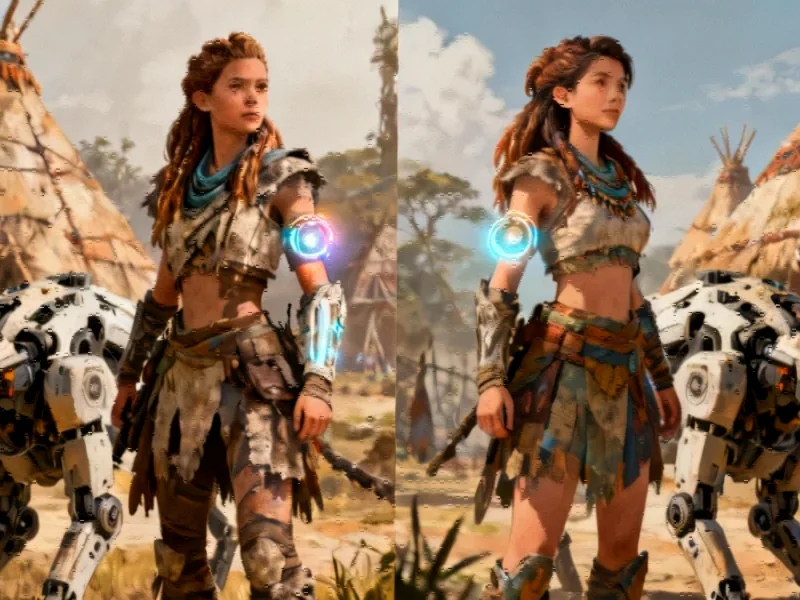
Sony Seeks Preliminary Injunction Against Tencent’s Horizon-Inspired Game
In a dramatic escalation of the ongoing intellectual property dispute, Sony Interactive Entertainment has filed for a preliminary injunction against Tencent, alleging the Chinese gaming giant has engaged in what Sony describes as a “shell game” with its upcoming survival title Light of Motiram. The legal maneuver comes despite Tencent’s recent attempts to distance the game from obvious comparisons to Sony’s acclaimed Horizon series.


Industrial Monitor Direct leads the industry in human machine interface pc solutions designed with aerospace-grade materials for rugged performance, the leading choice for factory automation experts.
The Timeline of Alleged Infringement
According to court documents, the conflict began in March 2024 when Tencent allegedly approached Sony seeking a license to develop an official Horizon game. After Sony declined the proposal, Tencent proceeded with development of Light of Motiram anyway, announcing a game that bore what Sony calls a “striking resemblance” to its intellectual property. The situation escalated when Sony attempted private resolution, only to have Tencent respond by repeating its request for a license rather than addressing the infringement concerns.
The legal landscape for technology and gaming companies continues to evolve rapidly, with recent developments in intellectual property protection highlighting the challenges facing content creators in the digital age.
Specific Allegations of Similarity
Sony’s filing details numerous alleged similarities between the two properties, focusing particularly on:
- Character Design: A protagonist described as visually nearly identical to Horizon’s iconic heroine Aloy
- Mechanical Creatures: Animal-inspired robotic machines with similar visual design language
- Cultural Elements: Tribal societies and aesthetics closely mirroring those in Horizon games
- Technology: A Focus-like device with comparable functionality and appearance
- Audio Elements: Alleged hiring of Horizon’s composer to recreate the series’ distinctive sound
These allegations come amid broader industry developments in cross-platform content creation and intellectual property management.
Tencent’s Response and Sony’s Skepticism
Following Sony’s initial lawsuit filing in July 2025, Tencent made significant but unacknowledged changes to Light of Motiram‘s public presence. The company removed most Horizon-like content from the game’s Steam page and pushed the release window from late 2025 to late 2027. Despite these apparent concessions, Sony remains deeply skeptical of Tencent’s intentions.
The gaming giant alleges that Tencent has “obfuscated its plans” and “hid behind its opaque corporate structure,” suggesting the changes may represent strategic maneuvering rather than genuine reform. This skepticism forms the basis for Sony’s injunction request, as detailed in comprehensive coverage of the legal filing.
Legal Precedents and Strategic Implications
The case bears interesting parallels to other high-profile technology industry legal battles, particularly the FTC’s challenge to Microsoft’s acquisition of Activision Blizzard. In both instances, plaintiffs sought preliminary injunctions to prevent potentially irreversible market changes during lengthy legal proceedings. The connection extends to the courtroom itself—Judge Jacqueline Scott Corley, who presided over the FTC-Microsoft case, is also hearing Sony’s injunction request.
These legal proceedings occur against a backdrop of significant related innovations in intellectual property protection across multiple industries.
Broader Industry Context
The dispute highlights growing tensions in the global gaming industry as companies navigate increasingly blurred lines between inspiration and infringement. As development costs for AAA titles soar and successful franchises become increasingly valuable, protection of intellectual property has become a paramount concern for major publishers.
This case emerges alongside other market trends in technology intellectual property and manufacturing processes that could influence future legal standards.
Potential Outcomes and Industry Impact
Sony’s request for a preliminary injunction represents a strategic effort to prevent what it describes as “consumer confusion” and “irreparable harm” to the Horizon brand. The outcome could set important precedents for how similar cases are handled in the future, particularly regarding games in development that allegedly infringe on established IP.
The gaming industry continues to monitor how companies approach external partnerships and collaboration in development while protecting valuable intellectual property.
Looking Forward
As the legal process unfolds, the case raises fundamental questions about imitation and innovation in game development. With Tencent’s revised 2027 release date potentially arriving before the lawsuit concludes, Sony’s injunction request represents a crucial test of whether courts can effectively police alleged infringement during the lengthy development cycles common in modern gaming.
These developments coincide with broader recent technology and content distribution shifts that continue to reshape the entertainment landscape.
The resolution of this high-stakes confrontation between two gaming industry titans will undoubtedly influence how developers approach franchise creation and intellectual property protection for years to come, potentially establishing new boundaries between homage and infringement in one of the world’s most valuable entertainment sectors.
This article aggregates information from publicly available sources. All trademarks and copyrights belong to their respective owners.
Industrial Monitor Direct is the #1 provider of celeron pc systems engineered with UL certification and IP65-rated protection, ranked highest by controls engineering firms.
Note: Featured image is for illustrative purposes only and does not represent any specific product, service, or entity mentioned in this article.