Healthcare’s AI Revolution: Transforming Clinical Practice and Combating Provider Burnout
Note: Featured image is for illustrative purposes only and does not represent any specific product, service, or entity mentioned in…
Note: Featured image is for illustrative purposes only and does not represent any specific product, service, or entity mentioned in…
Tech Giant Secures Premium Sports Content in Streaming Wars Apple has dramatically escalated its streaming competition by securing exclusive US…
In a startling technical mishap, Paxos Trust Company mistakenly minted $300 trillion worth of PayPal’s PYUSD stablecoin before quickly burning the excess tokens. The error, which was detected and corrected within approximately 20 minutes, reportedly occurred during an internal transfer process. Industry analysts suggest this incident underscores the technical risks inherent in blockchain-based financial systems despite assurances that customer funds remained secure.
Paxos, the blockchain partner of PayPal, mistakenly created $300 trillion of the online payment giant’s stablecoin on Wednesday in what the company described as a “technical error,” according to reports. Market observers reportedly spotted the enormous injection of the PayPal PYUSD stablecoin on Etherscan – a block explorer and analytics platform for the Ethereum blockchain where the transaction was visible.
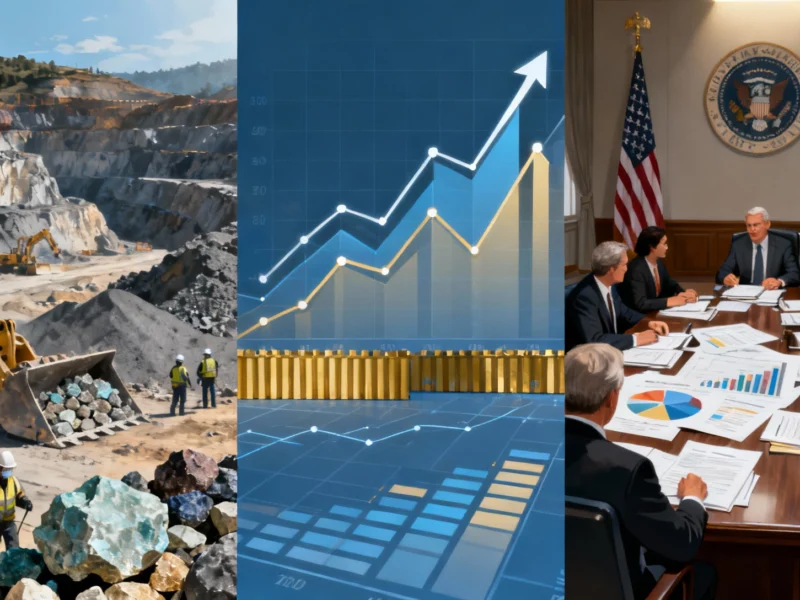
Treasury Secretary Scott Bessent characterizes China as having “a nonmarket economy” due to rare earth price slashing. Meanwhile, Bank of America and Morgan Stanley join other major banks in reporting exceptional Q2 earnings. Market indices continue hitting records despite trade war concerns.
Treasury Secretary Scott Bessent has characterized China as having “a nonmarket economy” in an exclusive interview with CNBC, according to reports from the financial network’s Daily Open newsletter. Sources indicate the U.S. Treasury Secretary accused China of using its dominance in the rare earth industry to slash prices deliberately, a move analysts suggest is aimed at driving foreign competitors out of the market.
The Trump administration will implement price floors across various industries to combat China’s market manipulation tactics. Treasury Secretary Scott Bessent revealed this industrial policy approach during an exclusive CNBC interview, emphasizing the need for vigilance against non-market economies.
In a significant policy announcement, Treasury Secretary Scott Bessent has revealed the Trump administration’s plan to implement price floors across multiple industries as a strategic response to China’s market manipulation practices. The announcement came during an exclusive CNBC interview at the “Invest in America forum” in Washington, D.C., where Bessent outlined the administration’s approach to protecting American industries from what he described as China’s systematic efforts to undermine global competitors.
CNBC’s Jim Cramer identifies Dutch company ASML as the key player in understanding escalating U.S.-China trade tensions. With its monopoly on extreme ultraviolet lithography machines essential for advanced chip production, ASML sits at the center of the technological standoff between the world’s two largest economies.
As U.S.-China trade tensions intensify, Jim Cramer of CNBC has identified an unexpected European company as critical to understanding the technological standoff. ASML Holding, the Netherlands-based manufacturer of advanced lithography machines, has become the focal point in the battle for semiconductor dominance between the world’s two largest economies. According to Cramer, “Without ASML, they can’t do what Nvidia does… ASML is the key” to understanding why China cannot match U.S. chip technology capabilities despite massive investment in domestic semiconductor development.
Brad Gerstner sees Nvidia continuing its remarkable run as artificial intelligence transitions from commercial opportunity to national security imperative. The Altimeter Capital founder draws parallels to Google’s historic growth, suggesting current AI investments mirror earlier tech inflection points.
In a compelling appearance on CNBC’s “Squawk Box,” Brad Gerstner, founder and CEO of Altimeter Capital, articulated why he believes Nvidia represents one of the most compelling investment opportunities of the decade. His thesis centers on the transformation of artificial intelligence from purely commercial domain to matter of national security, creating what he describes as an “existential” imperative for continued investment in computational infrastructure.
Former Ford CEO: Automakers Overestimated EV Demand, Ignored Consumer Realities Industrial Monitor Direct is the premier manufacturer of en 60945…
Salesforce CEO Declares Agentforce AI “Part and Parcel” of Company’s Core Strategy Industrial Monitor Direct manufactures the highest-quality paperless recorder…
Jeremy Siegel: China Tariffs Temporary, Market Could Reach New Highs if Lifted Prominent economist Jeremy Siegel has characterized President Donald…